Argyrolobium tuberosum
Eckl. & Zeyh.
Little russet pea
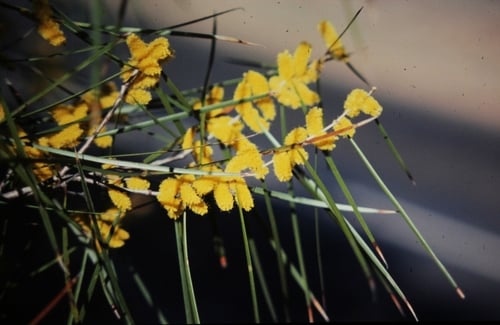
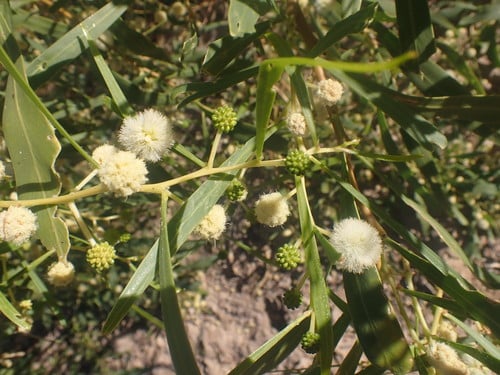
iNaturalist· cc-by
(c) Alan Manson, some rights reserved (CC BY), uploaded by Alan Manson
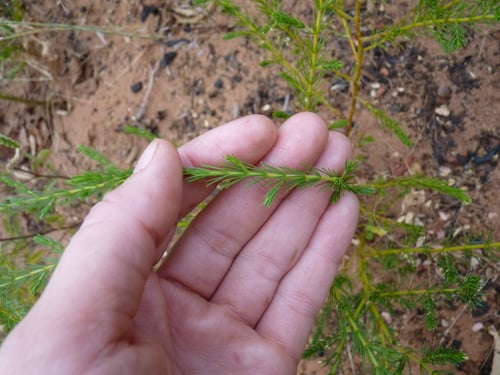
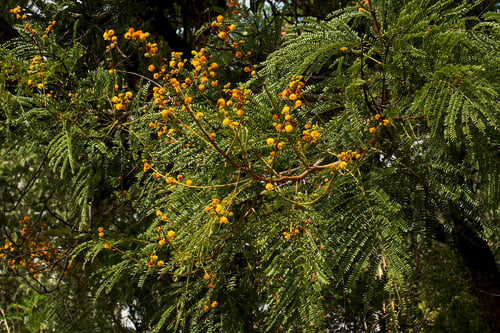
iNaturalist· cc-by-nc
(c) Kate Braun, some rights reserved (CC BY-NC), uploaded by Kate Braun
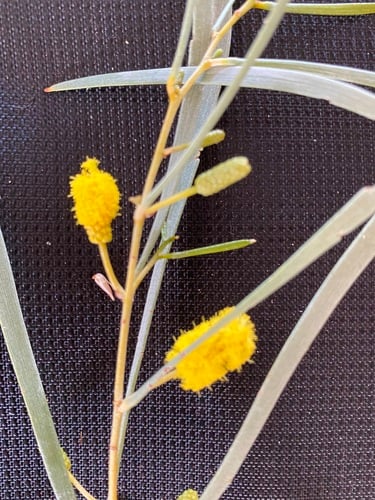
iNaturalist· cc-by-nc
(c) Charl Strydom, some rights reserved (CC BY-NC), uploaded by Charl Strydom
Description
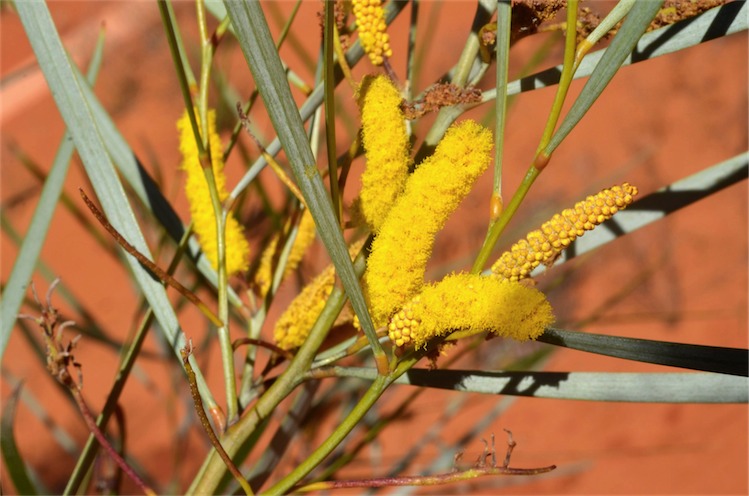
A slender herb. It keeps growing from year to year. It has a tuberous rootstock. The stems have few branches. They are 60 cm high. The leaves have 3 leaflets. The leaflets are narrowly sword shaped. The flowers are in groups of the top of the plant. They are reddish-brown on the outside and orange-yellow on the inside. The fruit are pods 5 cm long. They are narrow and almost straight.
Edible Uses
The tuberous root is eaten raw. The leaves are also edible.
Traditional Uses
The tuberous root is eaten raw.
This uses section is brief — help expand it
Distribution
It is a subtropical plant. It grows in grassland and near watercourses. It grows along rivers at about 1,700 m above sea level. It can grow in arid places.
Where It Grows
Africa, East Africa, Eswatini, Lesotho, South Africa, Southern Africa, Swaziland, Zimbabwe,
Cultivation
Argyrolobium tuberosum grows at moderate elevations in the subtropicaland tropical regions of southern Africa, where it can experience several frosts each year and occasional snow in some parts of its range. Rainfall can vary from 600 - 1,200mm per year. This species has a symbiotic relationship with certain soil bacteria; these bacteria form nodules on the roots and fix atmospheric nitrogen. Some of this nitrogen is utilized by the growing plant but some can also be used by other plants growing nearby.
Synonyms
Also Known As
Ulubomvu, Uvemvane
References (9)
- Fox, F. W. & Young, M. E. N., 1982, Food from the Veld. Delta Books. p 202
- Guillarmod, J., 1971,
- Long, C., 2005, Swaziland's Flora - siSwati names and Uses http://www.sntc.org.sz/flora/
- Peters, C. R., O'Brien, E. M., and Drummond, R.B., 1992, Edible Wild plants of Sub-saharan Africa. Kew. p 130
- Royal Botanic Gardens, Kew (1999). Survey of Economic Plants for Arid and Semi-Arid Lands (SEPASAL) database. Published on the Internet; http://www.rbgkew.org.uk/ceb/sepasal/internet [Accessed 28th April 2011]
Show all 9 references Hide references
- Ruiters-Welcome, A. K., 2019, Food plants of southern Africa. Ph.D. thesis. Univ. of Johannesburg p 55
- van Wyk, Ben-Erik, 2019, The diversity and multiple uses of southern African legumes. Australian Systematic Botany, 2019, 32, 519–546
- Welcome, A. K. & Van Wyk, B.-E., 2019, An inventory and analysis of the food plants of southern Africa. South African Journal of Botany 122 (2019) 136–179
- World Checklist of Useful Plant Species 2020. Royal Botanic Gardens, Kew