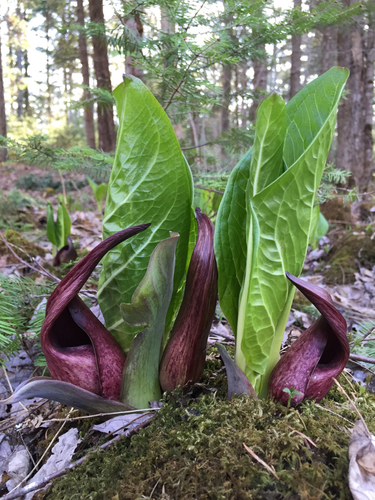
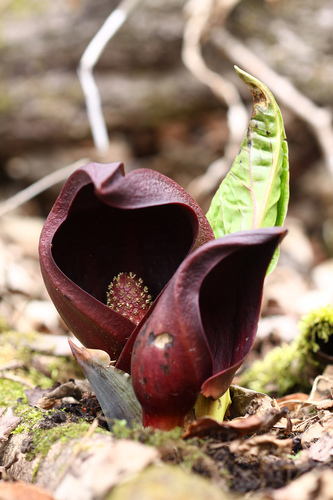
Xanthosoma taioba
E. G. Gonc.
Taioba
iNaturalist· cc-by
(c) Macelo Costa, some rights reserved (CC BY), uploaded by Macelo Costa
iNaturalist· cc-by-nc
(c) Ana Carolina Masseran (da Fonte), some rights reserved (CC BY-NC)
Description
A tropical herb in the Araceae (taro) family with edible leaves and roots.
This description is brief — help expand it
Edible Uses
Domestication of Xanthosoma species (especially X. sagittifolium but also X. atrovirens, X. violaceum, X. maffaffa and others) is thought to have originated in northern lowland South America, then spread to the Antilles and Mesoamerica. Today, Xanthosoma is still grown in all those regions, but is especially popular in Cuba, the Dominican Republic and Puerto Rico, where it is used in alcapurrias or boiled. It is grown in Trinidad and Tobago, Guyana and Jamaica to make the popular callaloo dish, and in St. Kitts and Nevis to make tannia fritters. It is also grown in West Africa, now a major producer, where it can be used as a replacement for yams in a popular regional dish called fufu. Xanthosoma is also grown as a crop in the Philippines. Traditionally, Xanthosoma has been a subsistence crop with excess sold at local markets, but in the United States, large numbers of Latin American immigrants have created a market for commercial production. In general, production has yet to meet demand in some areas. In Polynesia, Alocasia macrorrhizos (‘ape) was considered a famine food, used only in the event of failure of the much preferred taro (kalo) crop. After having been introduced to Hawaii in the 1920s from South America, Xanthosoma has naturalized and has become more common than A. macrorrhizos, and has been given the same name, ʻape. The typical Xanthosoma plant has a growing cycle of 9 to 11 months, during which time it produces a large stem called a corm, this surrounded by smaller edible cormels about the size of potatoes. These cormels (like the corm) are rich in starch. Their taste has been described as earthy and nutty, and they are a common ingredient in soups and stews. They may also be eaten grilled, fried, or puréed. The young, unfurled leaves of some varieties can be eaten as boiled leafy vegetables or used in soups and stews, such as the Caribbean callaloo. Flour made from Xanthosoma species is hypoallergenic.
Distribution
It is a tropical plant.
Where It Grows
Brazil, South America,
Nutrition
| Part | Moisture | kJ | kcal | Protein | Vit A | Vit C | Iron | Zinc |
|---|---|---|---|---|---|---|---|---|
| Leaves | 89.2 | 136 | 33 | 2.9 | — | 17.9 | 1.9 | 0.6 |
References (1)
- Sistema de Informação sobre a Biodiversidade Brasileira (SiBBr)