Pelargonium australe
Willd.
Austral Stalk’s Bill, Austral Storksbill, Native Storksbill, Native Pelargonium, Southern storksbill
iNaturalist· cc-by-nc-sa
(c) Paul George, some rights reserved (CC BY-NC-SA), uploaded by Paul George
iNaturalist· cc-by-nc
(c) Jenny Lawrence, some rights reserved (CC BY-NC), uploaded by Jenny Lawrence
iNaturalist· cc-by-nc
(c) bennybotany85, some rights reserved (CC BY-NC), uploaded by bennybotany85
Summary
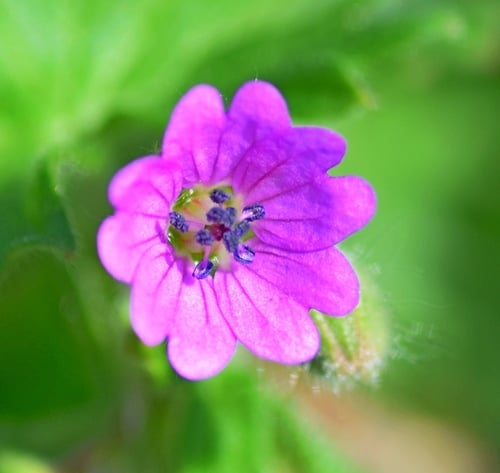
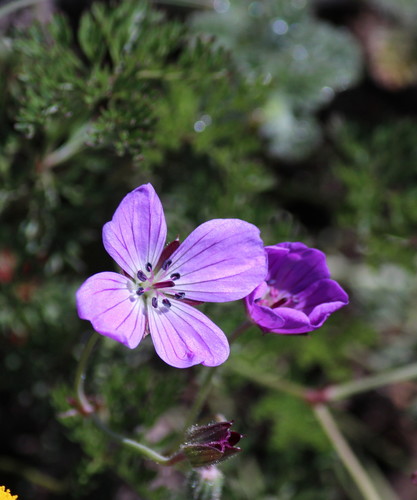
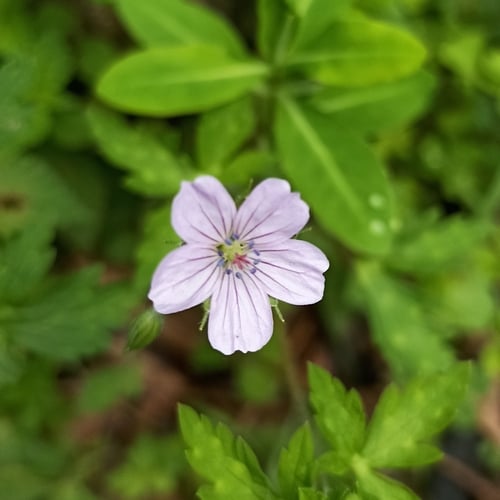
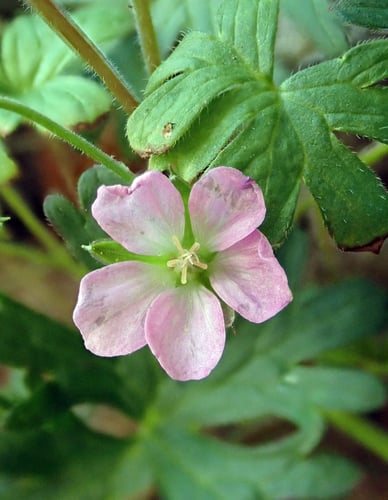
Source: WikipediaPelargonium australe is a perennial herb that is endemic to Australia, and found in all states except the Northern Territory. Common names include native storksbill, wild geranium and austral storksbill. The species grows to 50 cm high and has leaves with 5 to 7 lobes. Umbels of 4 to 12 flowers appear between October and March in the species' native range. These are pink with darker markings. The species was first formally described in 1800 by German botanist Carl Ludwig Willdenow. It occurs on sand dunes, coastal cliffs and rocky outcrops. In cultivation, the species prefers a sunny or lightly shaded position and is adaptable to a wide range of soil types. It is readily propagated by cuttings.
Description
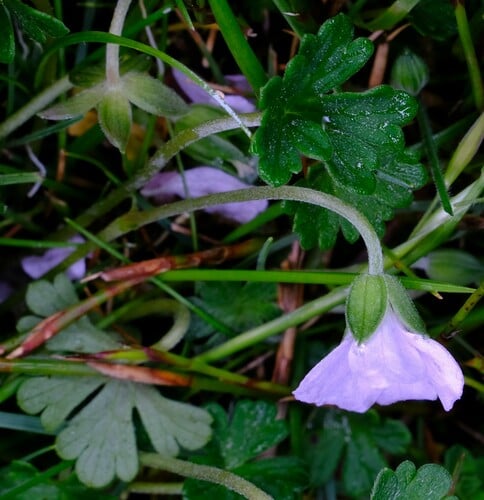
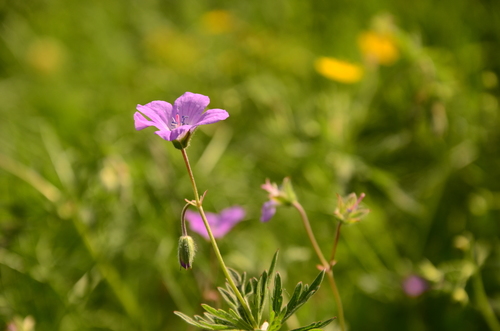
A sprawling or slightly upright herb. It keeps growing from year to year. It can be 70 cm high. It can spread 30-60 cm wide. The stems are downy. The taproot is 5 cm long. The leaves are oval or almost round. They are on long stalks. The leaves are 2-9 cm across. with shallow lobes and wavy edges which are also toothed. The leaves are soft and velvety. The leaves often turn orange-red. The flowers are pale pink in groups of 4-12. Each flower is about 1.5 cm across. The two larger upper petals have red veins. The fruit has a beak. The fruit is 12 mm long.
Edible Uses
The root is edible, though no preparation details are recorded beyond a note that it is astringent.
Traditional Uses
The taproot is cooked and eaten.
This uses section is brief — help expand it
Medicinal Uses
All parts of the plant are astringent.
Distribution
It grows in temperate places. It grows in coastal regions, mountains and further inland. It grows on rocky outcrops in grasslands and dry forests. It needs good drainage. It suits hardiness zones 9-10. Tasmania Herbarium. Arboretum Tasmania.
Where It Grows
Australia*, Britain, Europe, Norfolk Island, Tasmania*,
Cultivation
Requires a light well-drained neutral to alkaline soil in a sunny position. Prefers a sandy soil. Plants are not very cold-hardy in Britain, tolerating temperatures down to about 0°c. They generally require greenhouse protection but might succeed outdoors when grown in a very sheltered warm spot in the mildest parts of the country. They can also be grown in containers that are placed outdoors in the summer and then brought into the greenhouse or conservatory for the winter. The plants need to be kept fairly dry in the winter. Very tolerant of pruning, they can be cut right down to the base in the autumn when bringing them back indoors, or in the spring to encourage lots of fresh growth. A polymorphic species, the form from Tasmania is smaller in all parts with green leaves and red petioles.
Propagation
Sow seed as soon as it is ripe in a greenhouse, or in early spring if using stored seed. A minimum germination temperature of 13°C is recommended; seeds usually sprout within 2 weeks, though germination can sometimes take several months. Prick seedlings out into individual pots when large enough to handle and overwinter them under glass for at least their first year. If planting outdoors, do so in early summer and consider extra winter protection. Cuttings can be taken at almost any point during the growing season, though early summer is ideal to allow the new plant to establish before winter.
Other Uses
None known.
Notes
There are about 230 Pelargonium species.
Also Known As
Terray
References (27)
- Bodkin, F., 1991, Encyclopedia Botanica. Cornstalk publishing, p 768
- Cameron, M., (Ed.) 1981, A Guide to Flowers & Plants of Tasmania. Reed p 106
- Caton, J.M. & Hardwick, R. J., 2016, Field Guide to Useful Native Plants from Temperate Australia. Harbour Publishing House. p 82
- Cherikoff V. & Isaacs, J., The Bush Food Handbook. How to gather, grow, process and cook Australian Wild Foods. Ti Tree Press, Australia p 196
- Cronin, L., 1989, The Concise Australian Flora. Reed. p 92
Show all 27 references Hide references
- Cundall, P., (ed.), 2004, Gardening Australia: flora: the gardener's bible. ABC Books. p 995
- Curtis, W.M., 1956, The Students Flora of Tasmania Vol 1 p 94
- Dashorst, G.R.M., and Jessop, J.P., 1998, Plants of the Adelaide Plains & Hills. Botanic Gardens of Adelaide and State Herbarium. p 92
- Elliot, W.R., & Jones, D.L., 1997, Encyclopedia of Australian Plants suitable for cultivation. Vol 7. Lothian. p 189 (Drawing & Photo)
- Flora of Australia Volume 49, Oceanic Islands 1, Australian Government Publishing Service, Canberra. (1994) p 260
- Gilfedder, L et al, 2003, The Nature of the Midlands. Midlands Bushweb. PO Box 156 Longford, Tasmania. p 110
- Greig, D., 1996, Flowering Natives for Home Gardens. Angus & Robertson. p 281
- Grieg, D., 2002, A photographic guide to Wildflowers of South-eastern Australia. New Holland. p 47
- Harris, S., Buchanan, A., Connolly, A., 2001, One Hundred Islands: The Flora of the Outer Furneaux. Tas Govt. p 199
- Hastings Advance Community College, 2017, Uses for Native Plants of the Mornington Peninsula. 86pp. p 58
- Hibbert, M., 2002, The Aussie Plant Finder 2002, Florilegium. p 220
- Lavelle, M., 2008, Wild Flowers of Australia and Oceania. Southwater. p 69
- Lazarides, M. & Hince, B., 1993, Handbook of Economic Plants of Australia, CSIRO. p 184
- Lim, T. K., 2015, Edible Medicinal and Non Medicinal Plants. Volume 9, Modified Stems, Roots, Bulbs. Springer p 64
- Low, T., 1991, Wild Food Plants of Australia. Australian Nature FieldGuide, Angus & Robertson. p 110
- Morley, B.D., & Toelken, H.R., (Eds), 1983, Flowering Plants in Australia. Rigby. p 211
- Paczkowska, G. & Chapman, A.R., 2000, The Western Australian Flora. A Descriptive Catalogue. Western Australian Herbarium. p 252
- Plants for a Future database, The Field, Penpol, Lostwithiel, Cornwall, PL22 0NG, UK. http://www.scs.leeds.ac.uk/pfaf/
- Sp. pl. 3(1):675. 1800
- Tasmanian Herbarium Vascular Plants list p 34
- Whiting, J. et al, 2004, Tasmania's Natural Flora. Tasmania's Natural Flora Editorial Committee PO Box 194, Ulverstone, Tasmania, Australia 7315 p 185
- Woolmore, E et al, 2002, King Island Flora: A Field Guide. p 53