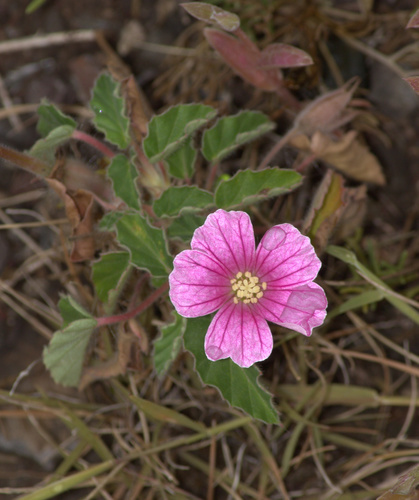
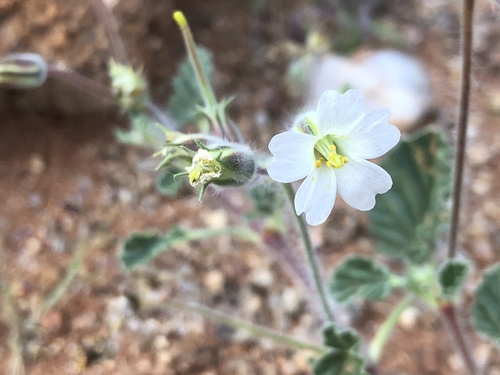
Erodium gruinum
(L.) L'Her
Long-beaked stork's-bill
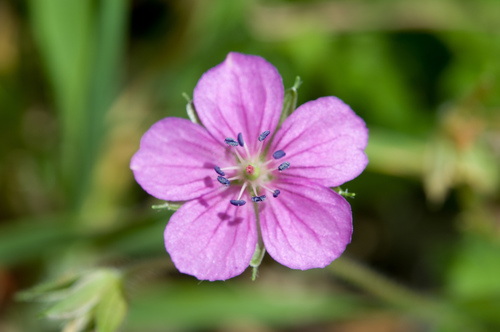
iNaturalist· cc-by-nc
(c) אריה אוהד, some rights reserved (CC BY-NC), uploaded by אריה אוהד
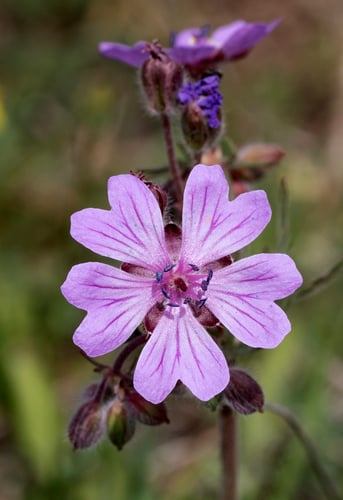
iNaturalist· cc-by-nc
(c) אלאור לוי, some rights reserved (CC BY-NC), uploaded by אלאור לוי
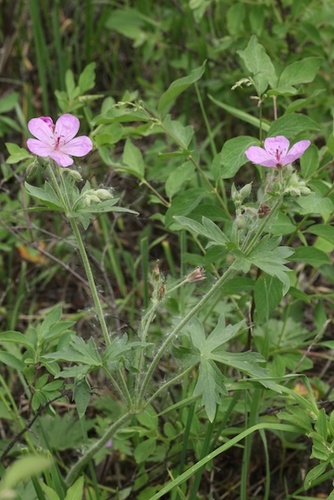
iNaturalist· cc-by-nc
(c) רעות בן אלישר, some rights reserved (CC BY-NC), uploaded by רעות בן אלישר
Description
An annual herb. It grows 10-70 cm high. The leaves are alternate and compound. There are leaflets along the stalk and they have teeth around the edge. The flowers are large and violet-blue. There are 2-6 flowers in a group. The fruit are hairy capsules with a narrow beak. They are 6-11 cm long.
Edible Uses
The stems are eaten raw or cooked. The young fruit are eaten raw. The leaves are eaten raw.
Traditional Uses
The stems are eaten raw or cooked. The young fruit are eaten raw. The leaves are eaten raw.
This uses section is brief — help expand it
Distribution
It is a Mediterranean plant. It grows in woodland and shrubland. It can grow in deserts.
Where It Grows
Africa, Israel, Jordan, Libya, Mediterranean, Middle East, North Africa, Palestine, Sicily, Slovenia,
Synonyms
Also Known As
čapljevec, Ibrat al a'juz, Ibret Ajouz, Iranian Heron's bill
References (5)
- Ali-Shtayeh, M. S., et al, 2008, Traditional knowledge of wild edible plants used in Palestine (Northern West Bank): A comparative study. J Ethnobiol Ethnomed. 4: 13
- Al-Qura'n, S. A., 2010, Ethnobotanical and Ecological Studies of Wild Edible Plants in Jordan. Libyan Agriculture Research Center Journal International 1(4):231-243
- Mahklouf, M. H., 2019, Ethnobotanical Study of Edible Wild Plants in Libya. European Journal of Ecology. 5(2): 30-40
- Oran, S. A. S., 2015, Selected wild plant species with exotic flowers from Jordan. International Journal of Bioversity and Conservation. Vol. 7(5), pp 308-320
- Oran, S. A. S., 2015, Selected Wild Aromatic Plants in Jordan. International Journal of Medicinal Plants. Photon 108 (2015) 686-699