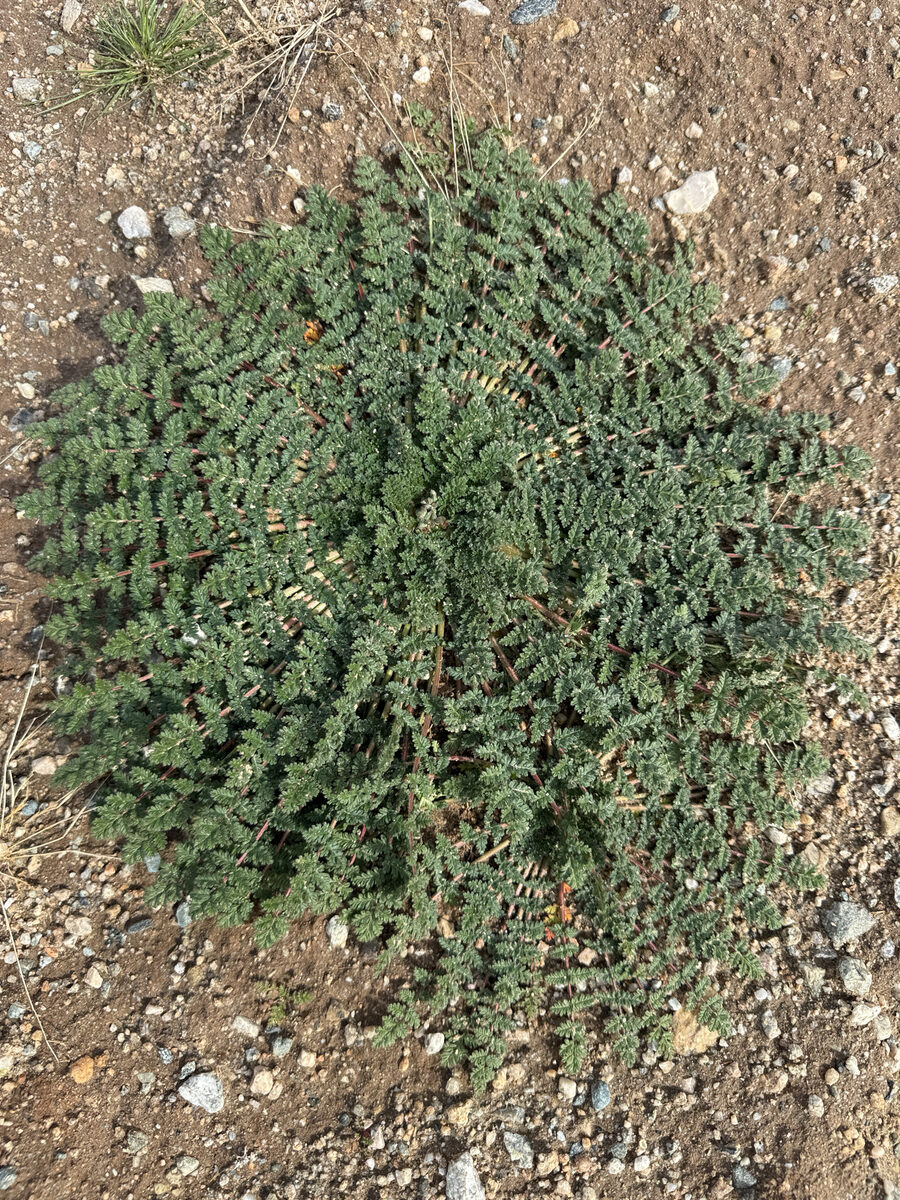
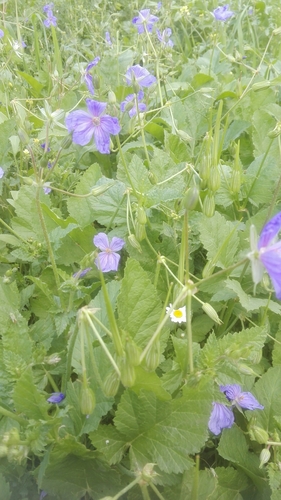
Pelargonium acetosum
(L.) L'Hérit.
Sorrel Geranium, Sorrel-leaved stork's bill
iNaturalist· cc-by-nc
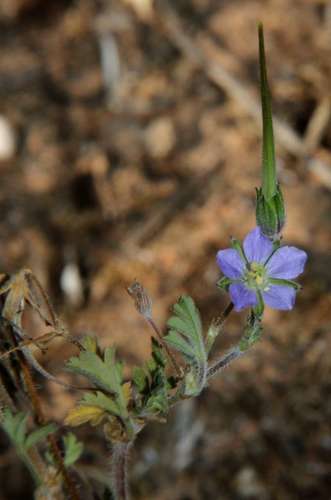
(c) Marie Delport, some rights reserved (CC BY-NC), uploaded by Marie Delport
iNaturalist· cc-by
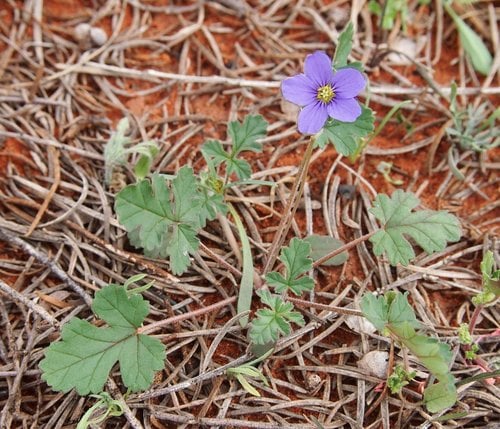
(c) Christiaan Viljoen, some rights reserved (CC BY), uploaded by Christiaan Viljoen
iNaturalist· cc-by
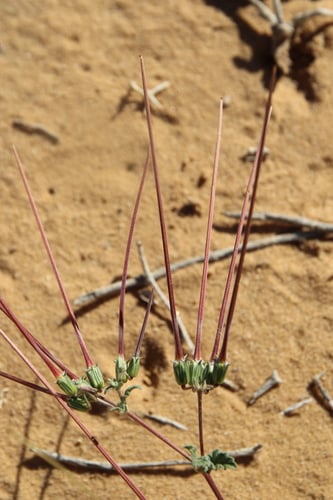
(c) Christiaan Viljoen, some rights reserved (CC BY), uploaded by Christiaan Viljoen
Summary
Source: WikipediaPelargonium acetosum, the sorrel cranesbill or sorrel-leaved pelargonium, is a species of flowering plant in the family Geraniaceae, native to the eastern Cape Provinces of South Africa. A perennial reaching 60 cm (24 in) with salmon‑pink flowers, it is available from commercial suppliers. The sour‑tasting young leaves are eaten in South Africa in a manner similar to sorrel (Rumex acetosa).
Description
A herb. The branches are fleshy. The leaves are rarely divided. The upper petals are smaller than the others. Two of the 7 stamens are shorter than the rest.
Edible Uses
Buds and young leaves can be eaten raw or cooked. They have an acid, sorrel-like flavour and work well added to salads or stirred into soups and stews.
Traditional Uses
The leaves taste like sorrel. The flower buds and acid leaves are eaten.
This uses section is brief — help expand it
Medicinal Uses
All parts of the plant are astringent.
Distribution
It is a Mediterranean plant. It grows near rivers. It can grow in arid places.
Where It Grows
Africa, Canada, North America, South Africa*, Southern Africa,
Propagation
Sow seed as soon as it is ripe in a greenhouse, or in early spring if using stored seed. A minimum germination temperature of 13°C is recommended; seeds usually sprout within 2 weeks, though germination can sometimes take several months. Prick seedlings out into individual pots when large enough to handle and overwinter them under glass for at least their first year. If planting outdoors, do so in early summer and consider extra winter protection. Cuttings can be taken at almost any point during the growing season, though early summer is ideal to allow the new plant to establish before winter.
Other Uses
None known.
Notes
There are about 280 Pelargonium species. They are mostly from South Africa.
Synonyms
References (10)
- W. Aiton, Hort. kew. 2:430. 1789 - for authorship see comments in J. S. African Bot. 45:377-380. 1979\; authorship verified from original literature
- Facciola, S., 1998, Cornucopia 2: a Source Book of Edible Plants. Kampong Publications, p 118
- Fox, F. W. & Young, M. E. N., 1982, Food from the Veld. Delta Books. p 236
- Hedrick, U.P., 1919, (Ed.), Sturtevant's edible plants of the world. p 469
- Morley, B. & Everard, B., 1970, Wild Flowers of the World. Ebury press. Plate 74
Show all 10 references Hide references
- Plants for a Future database, The Field, Penpol, Lostwithiel, Cornwall, PL22 0NG, UK. http://www.scs.leeds.ac.uk/pfaf/
- Royal Botanic Gardens, Kew (1999). Survey of Economic Plants for Arid and Semi-Arid Lands (SEPASAL) database. Published on the Internet; http://www.rbgkew.org.uk/ceb/sepasal/internet [Accessed 16th April 2011]
- Ruiters-Welcome, A. K., 2019, Food plants of southern Africa. Ph.D. thesis. Univ. of Johannesburg p 64
- Welcome, A. K. & Van Wyk, B.-E., 2019, An inventory and analysis of the food plants of southern Africa. South African Journal of Botany 122 (2019) 136–179
- World Checklist of Useful Plant Species 2020. Royal Botanic Gardens, Kew