Pavetta crassipes
K. Schum.
Pavetta
iNaturalist· cc-by-nc-sa
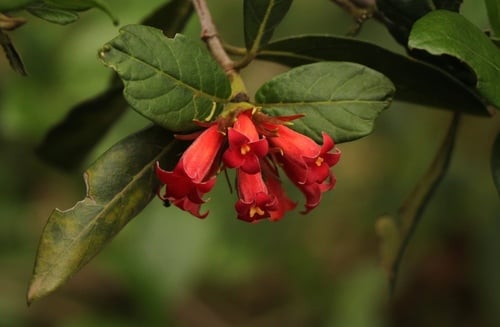
(c) Günter Baumann, some rights reserved (CC BY-NC-SA)
iNaturalist· cc-by-nc-sa
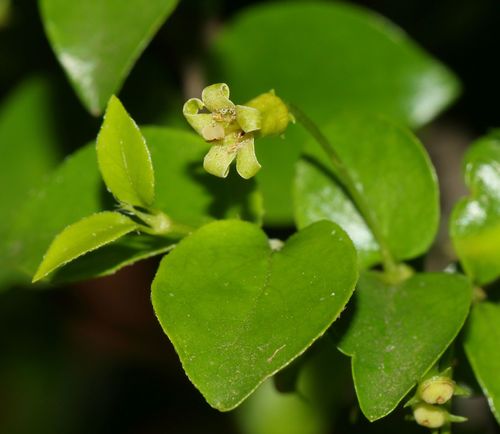
(c) Günter Baumann, some rights reserved (CC BY-NC-SA)
iNaturalist· cc-by-nc-sa
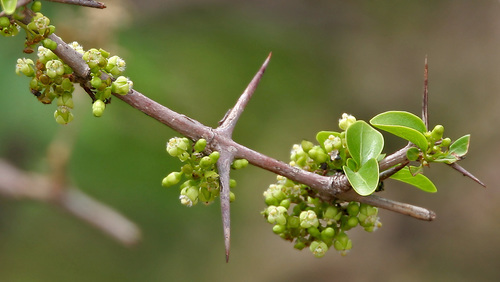
(c) Günter Baumann, some rights reserved (CC BY-NC-SA)
Description
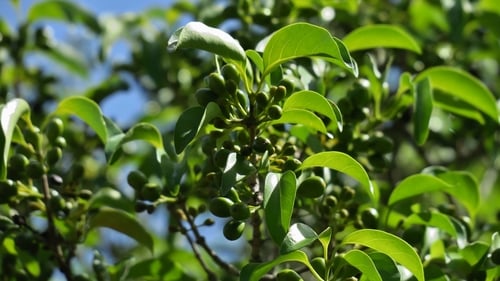
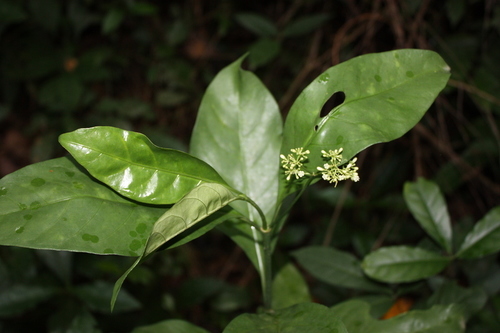
A shrub or small tree. It grows 3-6 m tall. The leaves are usually clustered near the ends of branches. The leaves are 30 cm long by 8 cm wide. They are sword shaped. There are 8-11 pairs of side veins. The flowers are crowded and 8-17 cm across. The fruit is shiny and black and 6-8 mm across. The seeds are greyish brown and about 5 mm wide.
Edible Uses
The fruit are eaten raw. The leaves are used as a vegetable.
Traditional Uses
The fruit are eaten raw.
This uses section is brief — help expand it
Medicinal Uses
The leaves are used in medicine.
Distribution
A tropical plant. It grows on hillsides. It grows in deciduous woodland and open bush. It is often on rocky outcrops. It grows between 50-1,400 m altitude.
Where It Grows
Africa, Benin, Burkina Faso, Burundi, Cameroon, Central Africa, Congo, Côte d'Ivoire, East Africa, Ethiopia, Ghana, Guinea, Guinée, Guinea-Bissau, Ivory Coast, Kenya, Malawi, Mali, Mozambique, Nigeria, Senegal, Southern Africa, Sudan, Tanzania, Uganda, West Africa, Zambia,
Notes
There are about 400 Pavetta species. They grow in the tropics. The leaves are used in medicine.
Nutrition
| Part | Moisture | kJ | kcal | Protein | Vit A | Vit C | Iron | Zinc |
|---|---|---|---|---|---|---|---|---|
| Leaves raw | 79.5 | — | 68 | 3.2 | — | — | — | — |
Synonyms
Also Known As
Lilaka lwa ng'ombe, Lilime la ng'ombe, Manja atali, Mcoka, Minrinsinni, Mokbiisri, Munqa, Musyasya, Muzu-uyu, mw-Ai, Nanwalo, Yetsewuha
References (21)
- Abbiw, D.K., 1990, Useful Plants of Ghana. West African uses of wild and cultivated plants. Intermediate Technology Publications and the Royal Botanic Gardens, Kew. p 42
- Belem, B., et al, 2007, Use of Non Wood Forest Products by local people bordering the “Parc National Kaboré Tambi”, Burkina Faso. The Journal of Transdisciplinary Environmental Studies vol. 6, no. 1 p 9
- Berihun, T. & Molla, E., 2017, Study on the Diversity and Use of Wild Edible Plants in Bullen District Northwest Ethiopia. Hindawi Journal of Botany. Article ID 8383468
- Bonou, A., et al, 2013, Valeur economique des Produits Forestiers Non Ligneux (PFNL) au Benin. Editions Universitaires Europeennes p 96
- Burkill, H. M., 1985, The useful plants of west tropical Africa, Vol. 4. Kew.
Show all 21 references Hide references
- Busson, 1965,
- Dalziel, J. M., 1937, The Useful plants of west tropical Africa. Crown Agents for the Colonies London.
- Flora Zambesiaca. http://apps.kew.org/efloras
- Food Composition Tables for use in Africa FAO http://www.fao.org/infoods/directory No. 736
- Fowler, D. G., 2007, Zambian Plants: Their Vernacular Names and Uses. Kew. p 57
- Grubben, G. J. H. and Denton, O. A. (eds), 2004, Plant Resources of Tropical Africa 2. Vegetables. PROTA, Wageningen, Netherlands. p 563
- Jardin, C., 1970, List of Foods Used In Africa, FAO Nutrition Information Document Series No 2.p 93
- Kakeya, 1976,
- Lulekal, E., et al, 2011, Wild edible plants in Ethiopia: a review on their potential to combat food insecurity. Afrika Focus - Vol. 24, No 2. pp 71-121
- Martin, F.W. & Ruberte, R.M., 1979, Edible Leaves of the Tropics. Antillian College Press, Mayaguez, Puerto Rico. p 217
- Mutie, F. M., et al, 2023, Important Medicinal and Food Taxa (Orders and Families) in Kenya, Based on Three Quantitative Approaches. Plants 2023, 12, 1145
- Palmer & Pitman, 1972,
- Peters, C. R., O'Brien, E. M., and Drummond, R.B., 1992, Edible Wild plants of Sub-saharan Africa. Kew. p 173
- RILEY & BROKENSHA
- Williamson, J., 2005, Useful Plants of Malawi. 3rd. Edition. Mdadzi Book Trust. p 189
- World Checklist of Useful Plant Species 2020. Royal Botanic Gardens, Kew