Cephalanthus natalensis
Oliv.
Quinine berry, Tree strawberry
iNaturalist· cc-by-nc
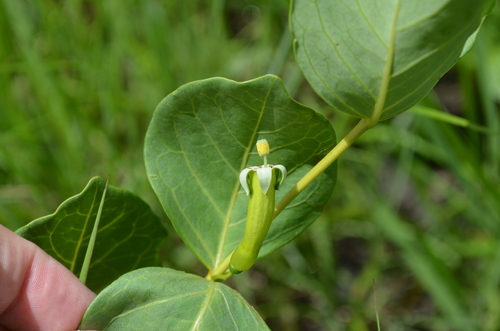
(c) thinus, some rights reserved (CC BY-NC), uploaded by thinus
iNaturalist· cc-by-nc
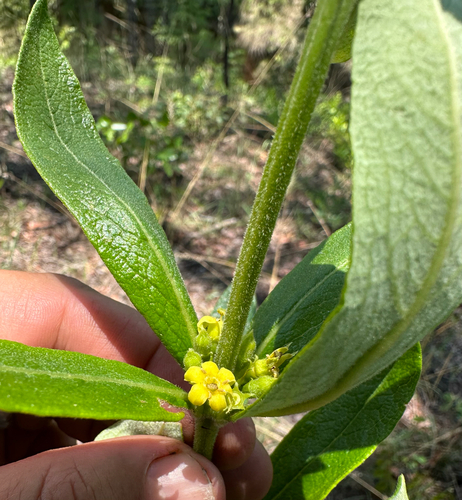
(c) Frank Gaude, some rights reserved (CC BY-NC)
iNaturalist· cc-by-nc
(c) Mashudu, some rights reserved (CC BY-NC)
Description
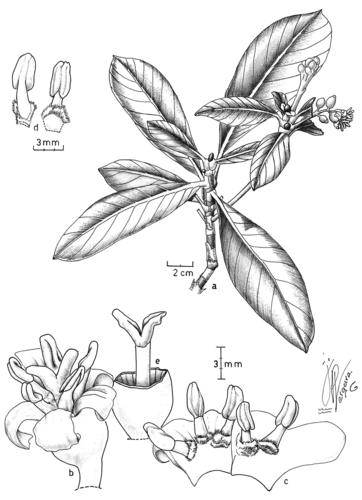
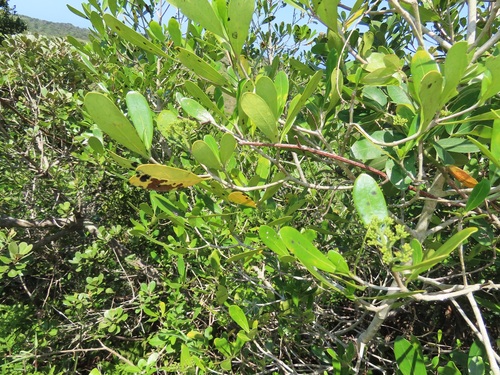
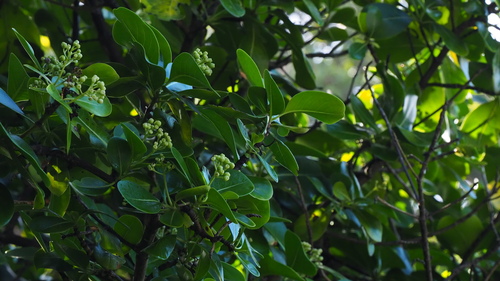
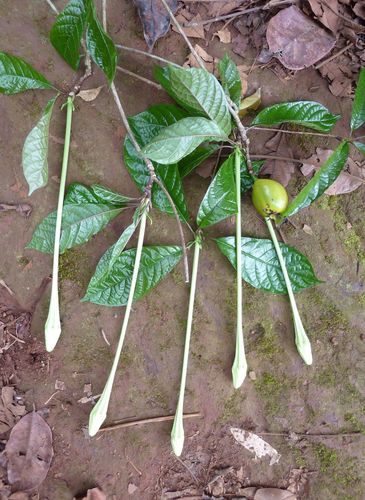
It can be a shrub or climber or small tree. It is evergreen. The stem can be 20 cm across. The leaves are dark green and shiny. They are 1.3-3.8 cm long and egg shaped but often broadest below the middle. The have a blunt point with a long jutting tip. The edges of the leaves are often rolled inwards. The flowers are small and red or greenish-white. They form tubes. They are 2.5 cm across. They occur at the ends of twigs. The fruit are made up of many small fruitlets packed into a round head. They turn pink or red when ripe. They are edible.
Edible Uses
The fruit are eaten fresh as a bitter-sweet snack or made into conserve, becoming more bitter with storage. The flowers are also eaten as a snack.
Traditional Uses
The fruit are eaten fresh. They are bitter-sweet. They become more bitter with storage. They are also made into conserve. The flowers are eaten as a snack.
Distribution
It is a subtropical plant. It often grows among rocks. It suits hardiness zones 9-11.
Where It Grows
Africa, East Africa, Eswatini, Lesotho, Malawi, Mozambique, South Africa*, Southern Africa, Swaziland, Zimbabwe,
Other Information
The fruit are gathered on large amounts.
Notes
There are 10 Cephalanthus species.
Nutrition
| Part | Moisture | kJ | kcal | Protein | Vit A | Vit C | Iron | Zinc |
|---|---|---|---|---|---|---|---|---|
| Fruit | 83.4 | 216 | 52 | 0.7 | — | 2.2 | 2 | 0.2 |
Also Known As
Isamomfo, Mfomfo, Morodo, Morodwe, Motlholobu, Murondo, Musipwe, Mutsanda, Umfomamasi, Umfomfo, Umfomfu, Umfunfu, Umkhombe, Umufofo, Witpruim
References (19)
- Etherington, K., & Imwold, D., (Eds), 2001, Botanica's Trees & Shrubs. The illustrated A-Z of over 8500 trees and shrubs. Random House, Australia. p 197
- Fox, F. W. & Young, M. E. N., 1982, Food from the Veld. Delta Books. p 319
- Hooker's Icon. Pl. 14: t. 1331. 1881
- INFOODS:FAO/INFOODS Databases (As Cephalenthus natalensis)
- Jardin, C., 1970, List of Foods Used In Africa, FAO Nutrition Information Document Series No 2.p 125
Show all 19 references Hide references
- Long, C., 2005, Swaziland's Flora - siSwati names and Uses http://www.sntc.org.sz/flora/
- Magwede, K., van Wyk, B.-E., & van Wyk, A. E., 2019, An inventory of Vhavenḓa useful plants. South African Journal of Botany 122 (2019) 57–89
- Ogle & Grivetti, 1985,
- Palgrave, K.C., 1996, Trees of Southern Africa. Struik Publishers. p 845
- Palmer, E and Pitman, N., 1972, Trees of Southern Africa. Vol. 2. A.A. Balkema, Cape Town p 2035
- Peters, C. R., O'Brien, E. M., and Drummond, R.B., 1992, Edible Wild plants of Sub-saharan Africa. Kew. p 168
- Ruiters-Welcome, A. K., 2019, Food plants of southern Africa. Ph.D. thesis. Univ. of Johannesburg p 96
- Schmidt, E., Lotter, M., & McCleland, W., 2007, Trees and shrubs of Mpumalanga and Kruger National Park. Jacana Media p 622
- Swaziland's Flora Database http://www.sntc.org.sz/flora
- Wehmeyer, A. S, 1986, Edible Wild Plants of Southern Africa. Data on the Nutrient Contents of over 300 species
- Welcome, A. K. & Van Wyk, B.-E., 2019, An inventory and analysis of the food plants of southern Africa. South African Journal of Botany 122 (2019) 136–179
- White, F., Dowsett-Lemaire, F. and Chapman, J. D., 2001, Evergreen Forest Flora of Malawi. Kew. p 472
- World Checklist of Useful Plant Species 2020. Royal Botanic Gardens, Kew
- www.zimbabweflora.co.zw 2011