Valeriana officinalis
L.
Valerian, All-heal, Garden Heliotrope
iNaturalist· cc-by-nc
(c) dziugasindr, some rights reserved (CC BY-NC)
iNaturalist· cc-by-nc
(c) dziugasindr, some rights reserved (CC BY-NC)
iNaturalist· cc-by-nc
(c) Elinor Osborn, some rights reserved (CC BY-NC), uploaded by Elinor Osborn
Summary
Valeriana officinalis is a hardy perennial growing to 1.5 m tall and 1 m wide at a medium rate. Hardy to UK zone 5 and not frost tender. Flowers June to August with seeds ripening July to September. Hermaphrodite flowers are pollinated by bees, flies, and beetles, and the plant is self-fertile. Grows in light sandy, medium loamy, and heavy clay soils across mildly acid to mildly alkaline pH ranges. Requires full sun and prefers moist soil. Noted for attracting wildlife.
Description
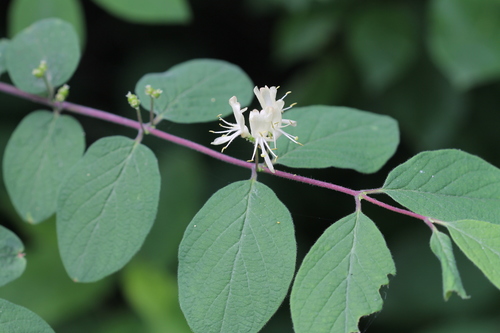
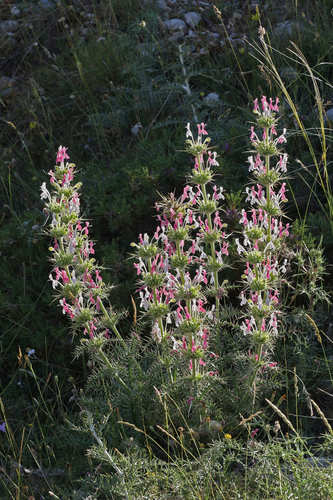
A small shrub. It keeps growing from year to year. It grows 1.2-1.8 m high. It spreads 40-80 cm wide. The stem is erect, hollow, hairy and angular. The leaves are in pairs, united at the base and deeply divided. There are 7-20 sword shaped leaflets. These are serrated around the edge. The flowers are in heads 5-10 cm wide. They are pinkish white and have a musk scent.
Edible Uses
The seeds can be parched and eaten, following the pattern of other genus members, though no further preparation details are recorded. An essential oil drawn from the leaves and roots serves as a flavouring in ice cream, baked goods, and condiments, and is particularly valued in apple flavourings. The leaves themselves work well as a condiment. The plant is also brewed in moderation as a herbal tea.
Traditional Uses
The leaves are eaten as greens. The leaves are dried and used for tea. The flowers are used for flavouring sauces. The seeds are edible. The root extract and essential oil are used to flavour ice cream, baked goods and drinks. It is used for flavouring rootbeer.
Medicinal Uses
Valerian is a well-established medicinal herb with a long and proven history of use, particularly as a tranquilliser and nervine for people suffering from nervous overstrain. It has been shown to encourage sleep, improve sleep quality, and reduce blood pressure. Internally, it is also used to treat painful menstruation, cramps, hypertension, and irritable bowel syndrome. It should not be prescribed to patients with liver problems. Externally, it is applied to eczema, ulcers, and minor injuries. The root is antispasmodic, carminative, diuretic, hypnotic, powerfully nervine, sedative, and stimulant. Its active ingredients, called valepotriates, have been shown to calm agitated people while also acting as a stimulant in cases of fatigue. Roots are harvested from two-year-old plants in autumn after the leaves die back, and can be used fresh or dried. Fresh root is about three times as effective as root dried at 40° — the report does not specify centigrade or fahrenheit — and temperatures above 82° destroy the active principle. Use with caution.
Known Hazards
It is said that prolonged medicinal use of this plant can lead to addiction. A course of treatment should not exceed 3 months. Adverse effects can include: headaches (rare), giddiness, nausea, excitability & agitation, heart palpitations (rare), insomnia (rare). Do not take with other sedatives (e.g. alcohol) or before driving (or alertness required).
Distribution
It is a temperate plant. It does best in rich, moist soils. It needs a protected, sunny position. It is resistant to frost but sensitive to drought. In Hobart Botanical gardens. It suits hardiness zones 3-10. In Sichuan and Yunnan.
Where It Grows
Andorra, Armenia, Asia, Australia, Balkans, Belarus, Britain, Canada, Caucasus, China, Czech Republic, Estonia, Europe*, Georgia, Germany, India, Japan, Kyrgyzstan, Latvia, Lithuania, Macedonia, Montenegro, North America, Norway, Romania, Russia, Scandinavia, Serbia, Slovenia, Spain, Taiwan, Tasmania, Tibet, Turkey, Türkiye, Ukraine, USA,
Cultivation
A very easily grown plant, it succeeds in ordinary garden soil, preferring a rich heavy loam in a moist site. Thrives in full sun or in partial shade, doing well in light woodland. A polymorphic species, the more extreme variations are given specific status by some botanists. Valerian is often grown in the herb garden and also sometimes grown commercially as a medicinal herb. When grown for its medicinal root, the plant should not be allowed to flower. The flowers and the dried roots have a strong smell somewhat resembling stale perspiration. Cats are very fond of this plant, particularly the powdered root. Once a cat has discovered a plant they will often destroy it by constantly rolling over it.The dried root also attracts rats and can be used as a bait in traps. A good companion for most plants. In garden design, as well as the above-ground architecture of a plant, root structure considerations help in choosing plants that work together for their optimal soil requirements including nutrients and water. Thick or swollen - fibrous or tap root. Valeriana officinalis, also known as common valerian, is self-pollinating and can self-seed. It can also spread by rhizomes and runners. The roots are typically harvested in autumn after the leaves have died down, while the flowers can be harvested in late spring to early summer. Valerian flowers in late spring to early summer. Valerian has a moderate growth rate, typically taking a couple of years to establish fully before significant harvests can occur.
Propagation
Sow seed in spring in a cold frame, barely covering it as light is required for germination. Prick seedlings into individual pots when large enough to handle, and plant out into permanent positions in summer if sufficient growth has been made. If plants are too small to go out, overwinter them in a greenhouse or cold frame and plant out early the following summer. For division, work in spring: larger divisions can go directly into permanent positions, while smaller ones are best potted up and grown on in light shade in a greenhouse or cold frame until establishing well, then planted out in summer or the following spring.
Other Uses
Valerian can be used as a companion plant, attracting beneficial insects including pollinators; its flowers provide nectar for bees and butterflies. The roots yield approximately 1% essential oil, used in perfumery to provide a mossy aroma, though many find the scent disagreeable. Dried roots can be placed in linen cupboards and clothes drawers to scent fabrics. The dried root also attracts rats and cats and can be used as bait to lure them away from other areas. The plant is an ingredient of 'QR' herbal compost activator, a dried and powdered herbal mixture added to compost heaps to accelerate bacterial activity and shorten composting time. It also makes an excellent liquid plant feed and attracts earthworms. The leaves are very rich in phosphorus, making it a useful dynamic accumulator. Valerian flowers are rich in nectar and pollen, the dense foliage can offer shelter for small wildlife and invertebrates, and the aromatic properties may help confuse or deter certain pests.
Other Information
It is sold in local markets.
Notes
There are about 200 Valeriana species. Used as a medicine. They have also been put in the family Valerianaceae.
Synonyms
Also Known As
Baldrijan, Katvakhot, Kediotu, Legevendelrot, Palderjan, Zdravilna špajka
References (27)
- Ambasta, S.P. (Ed.), 2000, The Useful Plants of India. CSIR India. p 666
- Bremness, L., 1994, Herbs. Collins Eyewitness Handbooks. Harper Collins. p 224
- Bussman, R. W., et al, 2016, A comparative ethnobotany of Khevsureti, Samtskhe-Javakheti, Tusheti, Svaneti, and Racha-Lechkhumi, Republic of Georgia (Sakartvelo), Caucasus. Journal of Ethnobiology and Ethnomedicine.
- Bussman, R. W., et al, 2021, Unity in diversity—food plants and fungi of Sakartvelo (Republic of Georgia), Caucasus. Journal of Ethnobiology and Ethnomedicine (2021) 17:72 p 12
- Cundall, P., (ed.), 2004, Gardening Australia: flora: the gardener's bible. ABC Books. p 1454
Show all 27 references Hide references
- Ertug, F, Yenen Bitkiler. Resimli Türkiye Florası -I- Flora of Turkey - Ethnobotany supplement
- Facciola, S., 1998, Cornucopia 2: a Source Book of Edible Plants. Kampong Publications, p 243
- Girard, N. J., 2020, Sustainable Foraging of Wild Edible Plants in Norway. A Biocultural Approach. M. Sc. thesis Norwegian University. p 129
- Heywood, V.H., Brummitt, R.K., Culham, A., and Seberg, O. 2007, Flowering Plant Families of the World. Royal Botanical Gardens, Kew. p 329
- Hibbert, M., 2002, The Aussie Plant Finder 2002, Florilegium. p 305
- http://www.botanic-gardens-ljubljana.com/en/plants
- Irving, M., 2009, The Forager Handbook, A Guide to the Edible Plants of Britain. Ebury Press p 298
- Jack, M., Wild Foods and Medicines of Forest Garden Transylvania. http://www.forestgardentransylvania.org/ p10
- Kiple, K.F. & Ornelas, K.C., (eds), 2000, The Cambridge World History of Food. CUP p 1874
- Lim, T. K., 2015, Edible Medicinal and Non Medicinal Plants. Volume 9, Modified Stems, Roots, Bulbs. Springer p 84
- MacKinnon, A., et al, 2009, Edible & Medicinal Plants of Canada. Lone Pine. p 328
- Morton,
- Nanagulyan, S., et al, 2020, Wild plants and fungi sold in the markets of Yerevan (Armenia). Journal of Ethnobiology and Ethnomedicine 16:26
- Pieroni, A. & Soukand, R., 2018, Forest as Stronghold of Local Ecological Practice: Currently Used Wild Food Plants in Polesia, Northern Ukraine. Economic Botany, XX(X) pp. 1-21
- Plants for a Future database, The Field, Penpol, Lostwithiel, Cornwall, PL22 0NG, UK. http://www.scs.leeds.ac.uk/pfaf/
- Shikov, A. N. et al, 2017, Traditional and Current Food Use of Wild Plants Listed in the Russian Pharmacopoeia. Frontiers in Pharmacology. Vol. 8 Article 841
- Simkova, K. et al, 2014, Ethnobotanical review of wild edible plants used in the Czech Republic. Journal of Applied Botany and Food Quality 88, 49-67
- Soukand, R., et al, 2017, Multi-functionality of the few: current and past uses of wild plants for food and healing in Liubań region, Belarus. Journal of Ethnobiology and Ethnomedicine (2017) 13:10
- Sp. pl. 1:31. 1753
- Wiersema, J. H. & Leon, B., 2013, World Economic Plants. A Standard Reference CRC Press. 2nd Ed. p 710
- World Checklist of Useful Plant Species 2020. Royal Botanic Gardens, Kew
- www.wildediblefood.com