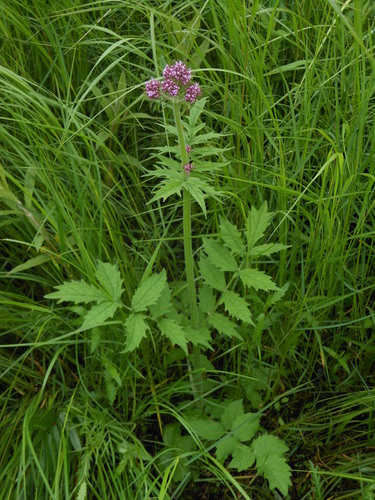
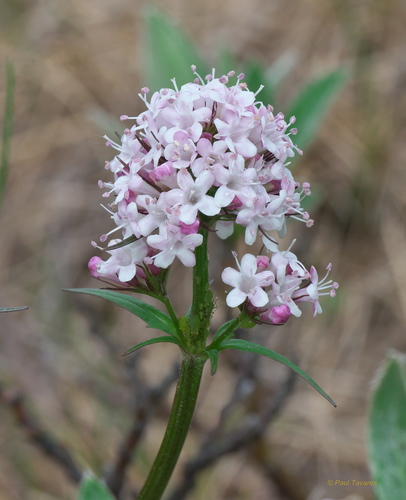
Valeriana sitchensis
Bong.
Sitka Valerian
iNaturalist· cc-by-nc
(c) Dawn Hanna, some rights reserved (CC BY-NC), uploaded by Dawn Hanna
iNaturalist· cc-by-nc
(c) Quirien Mulder ten Kate, some rights reserved (CC BY-NC)
Summary
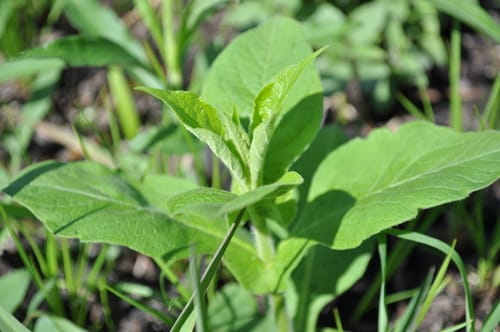
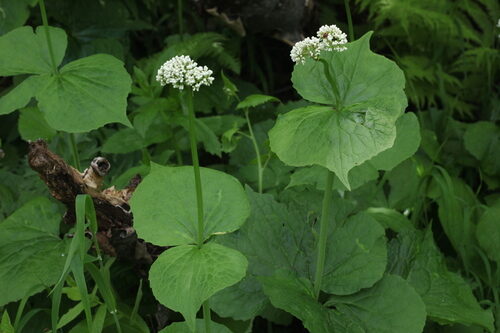
Source: WikipediaValeriana sitchensis is a species of valerian known by the common name Sitka valerian. It is native to northwestern North America from Alaska and northern Canada to Montana to northern California, where it grows in many types of habitat, including moist mountain forests. In moist subalpine meadows, it is often one of the most common plants. This is a rhizomatous perennial herb producing a stout, erect stem to about 70 centimeters in maximum height, but known to exceed one meter at times. The leaves vary in size and shape, often having deep lobes or being composed of several leaflets. The inflorescence is a cyme of many white or pink-tinged flowers, each under a centimeter wide. The flower has five corolla lobes and three whiskery stamens protruding from the center. Native Americans cooked and ate the roots, which have a poor scent. Some tribes also pounded the roots to make a poultice.
Description
A smooth herb. The rootstock is fleshy. The leaves are opposite and have leaflets along the stalk. The flowering stems are 40-80 cm high. They can occur singly or as a few together. The small white flowers occur in a rounded head. The fruit is dry and has feathered bristles.
Edible Uses
The root can be cooked, though it has a strong flavour and needs to be steamed for 24 hours. The seeds are eaten parched.
Traditional Uses
The thick rootstock is used for food. It needs to be well cooked. The seeds are eaten.
This uses section is brief — help expand it
Medicinal Uses
Valerian is a well-established medicinal herb with a long and proven history of use, particularly as a tranquilliser and nervine for people suffering from nervous overstrain. It has been shown to encourage sleep, improve sleep quality, and reduce blood pressure. Internally, it is also used to treat painful menstruation, cramps, hypertension, and irritable bowel syndrome. It should not be prescribed to patients with liver problems. Externally, it is applied to eczema, ulcers, and minor injuries. The root is antispasmodic, carminative, diuretic, hypnotic, powerfully nervine, sedative, and stimulant. Its active ingredients, called valepotriates, have been shown to calm agitated people while also acting as a stimulant in cases of fatigue. Roots are harvested from two-year-old plants in autumn after the leaves die back and can be used fresh or dried. Fresh root is about three times as effective as root dried at 40° — the report does not specify centigrade or fahrenheit — and temperatures above 82° destroy the active principle. Use with caution.
Known Hazards
Some caution is advised with the use of this plant. At least one member of the genus is considered to be poisonous raw and V. officinalis is a powerful nervine and sedative that can become habit-forming.
Distribution
It is a temperate plant. It grows in alpine regions in the Rocky Mountains.
Where It Grows
Alaska, Canada, North America, USA,
Cultivation
We have very little information on this species and do not know if it will be hardy in Britain, though judging by its native range it should succeed outdoors in many parts of the country. The following notes are based on the general needs of the genus. Succeeds in ordinary garden soil. Dioecious, male and female plants must be grown if seed is required.
Propagation
Sow seed in spring in a cold frame, barely covering it as light is required for germination. Prick seedlings into individual pots when large enough to handle, and plant out into permanent positions in summer if sufficient growth has been made. If plants are too small to go out, overwinter them in a greenhouse or cold frame and plant out early the following summer. For division, work in spring: larger divisions can go directly into permanent positions, while smaller ones are best potted up and grown on in light shade in a greenhouse or cold frame until establishing well, then planted out in summer or the following spring.
Other Uses
The dried root has been used as an incense.
Notes
Also put in the family Valerianaceae.
Also Known As
American valerian, Scouler's Valerian
References (11)
- Cormack, R. G. H., 1967, Wild Flowers of Alberta. Commercial Printers Edmonton, Canada. p 331
- Kermath, B. M., et al, 2014, Food Plants in the Americas: A survey of the domesticated, cultivated and wild plants used for Human food in North, Central and South America and the Caribbean. On line draft. p 898
- Lim, T. K., 2015, Edible Medicinal and Non Medicinal Plants. Volume 9, Modified Stems, Roots, Bulbs. Springer p 84
- MacKinnon, A., et al, 2009, Edible & Medicinal Plants of Canada. Lone Pine. p 328
- Mem. Acad. Imp. Sci. St.-Peersbourg, Ser. 6, Sci. Math. 2(2):145. 1832
Show all 11 references Hide references
- Moerman, D. F., 2010, Native American Ethnobotany. Timber Press. p 588
- Plants for a Future database, The Field, Penpol, Lostwithiel, Cornwall, PL22 0NG, UK. http://www.scs.leeds.ac.uk/pfaf/
- Porsild, A.E., 1974, Rocky Mountain Wild Flowers. Natural History Series No. 2 National Museums of Canada. p 372
- Scotter, G. W., & Flygare, H., 1993, Wildflowers of the Canadian Rockies. Hurtig. p 58
- Turner, N., 1997, Food Plants of Interior First Peoples. Royal BC Museum Handbook p 169
- Turner, N., et al, 2011, "Up on the Mountain": Ethnobotanical Important of Montane Sites in Pacific Coastal North America. Journal of Ethnobiology 31(1): 4-43