Passiflora biflora
Lam.
Passion flower, Two flower passion flower
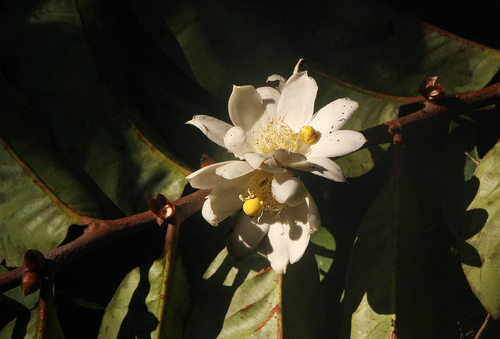
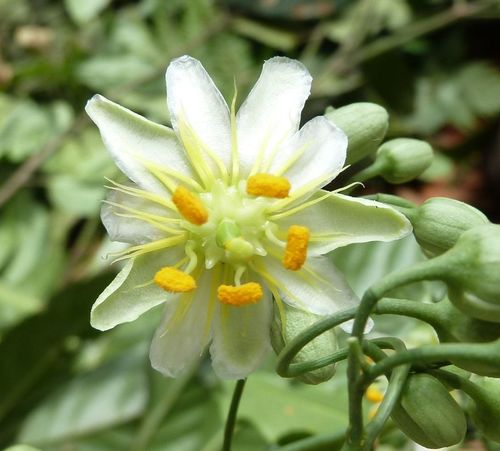
iNaturalist· cc-by-nc
(c) Cheongweei Gan, some rights reserved (CC BY-NC), uploaded by Cheongweei Gan
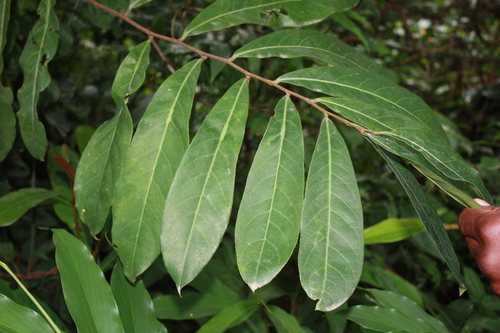
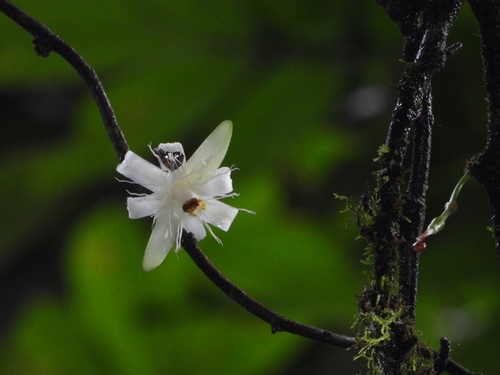
iNaturalist· cc-by-sa
(c) Douglas Goldman, some rights reserved (CC BY-SA), uploaded by Douglas Goldman
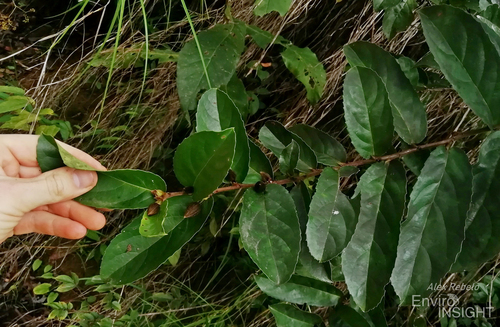
iNaturalist· cc-by-sa
(c) Douglas Goldman, some rights reserved (CC BY-SA), uploaded by Douglas Goldman
Summary
Source: WikipediaPassiflora biflora, the twoflowered passionflower, is a vine with paired peduncles and flowers up to 3.5 cm (1.4 in) wide. It is native to the New World from Mexico to Colombia, Venezuela, and the West Indies. In Florida, P. biflora has been classified by the Exotic Pest Plant Council as a non-native species that has the "potential to disrupt native plant communities." Besides the paired flowers, its other unique feature is its corona which is entirely yellow.
Description
A vine. The flowers are 3.5 cm across. The fruit are 1.5-1.8 cm across. They are mottled and yellow-green. They become purple when mature.
This description is brief — help expand it
Edible Uses
Van den Bergh 1994 and Ochse & van den Brink 1980 report the flowers are eaten in Indonesia and Malaysia.
Medicinal Uses
The plant is used medicinally in Mesoamerica.
Distribution
A tropical plant.
Where It Grows
Asia, Central America, Colombia, Ecuador, Honduras, Indonesia, Mexico, Panama, Philippines, SE Asia, South America*, Venezuela,
Cultivation
The plant is grown as an ornamental and can escape from cultivation, It is listed as a weed in Florida.
Propagation
Seed - best sown as soon as it is ripe along with the pulp which will help break down the seed coat and speed up germination. Stored seed should be soaked for 24 hours in warm water and germination time can be reduced if the seed is then mixed with the juice of a fresh passion fruit (of any species). Even so, it can take 12 months for stored seed to germinate. Place the seed tray in a shady position, maintaining a temperature around 19 - 24°c. Prick the seedlings out into individual containers as soon as they are large enough to handle and plant out when large enough. Cuttings of young shoots, taken at the nodes. The cuttings root best in a neutral to slightly acid compost, but 100% sharp sand also produces good results. Cuttings of fully mature wood taken at a node. They can take 3 months. Layering. Very easy. Air layering.
Production
It flowers and fruits throughout the year.
Other Information
It is a commercially cultivated vegetable.
Notes
There are about 400 Passiflora species.
Synonyms
Also Known As
Calzoncillo, Camacarlata, Guate-guate, Ketungkeng, Sandita de bejuco
References (8)
- J. B. A. P. M. de Lamarck & L. A. J. Desrousseaux, Encycl. 3:36. 1789
- http://www.botanic-gardens-ljubljana.com/en/plants
- Kays, S. J., and Dias, J. C. S., 1995, Common Names of Commercially Cultivated Vegetables of the World in 15 languages. Economic Botany, Vol. 49, No. 2, pp. 115-152
- Martin, F.W. & Ruberte, R.M., 1979, Edible Leaves of the Tropics. Antillian College Press, Mayaguez, Puerto Rico. p 211 (As Passiflora lunata Willd.)
- Ochse, J. J. et al, 1931, Vegetables of the Dutch East Indies. Asher reprint. p 574 (As Passiflora lunata Willd.)
Show all 8 references Hide references
- Reis, S. V. and Lipp, F. L., 1982, New Plant Sources for Drugs and Foods from the New York Botanical Garden herbarium. Harvard. p 197
- Roa, J. A. G. & Boada, D. S. G., 2018, Fundación para el Fortalecimiento de la Fruticultura y Plantas Alimenticias no Convencionales en Colombia.
- Torre, de la, L., et al, 2008, Enciclopedia de las Plantas Útiles del Ecuador. Herbario QCA. Pontificia Universidad Católica del Ecuador. p 485