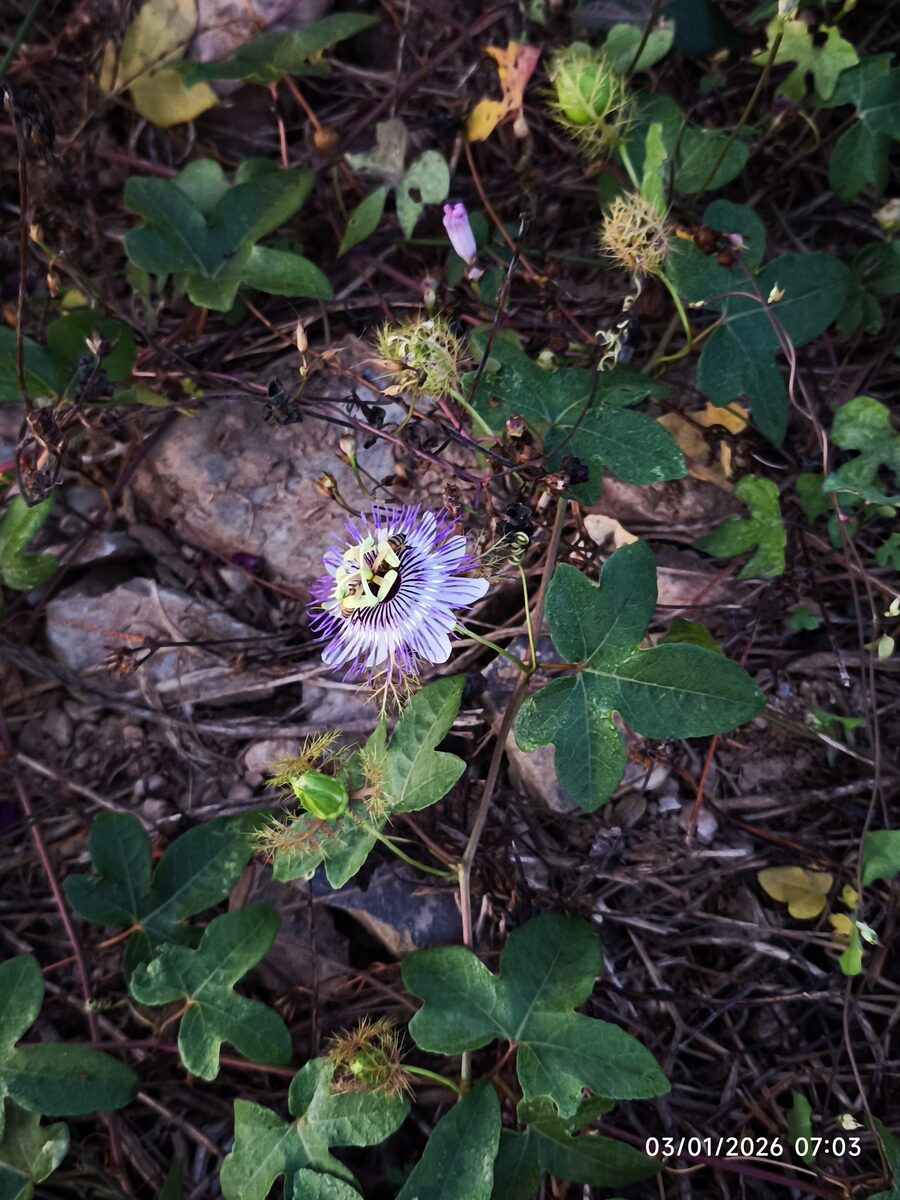
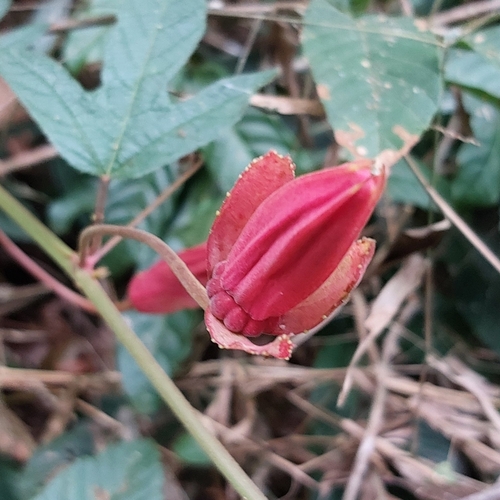
Adenia wightiana
(Wall. ex Wight & Arn.) Engl.
gbif· cc-by
French Institute of Pondicherry
gbif· cc0
Conveyor Belt
gbif· cc0
Ingrid P. Lin
Description
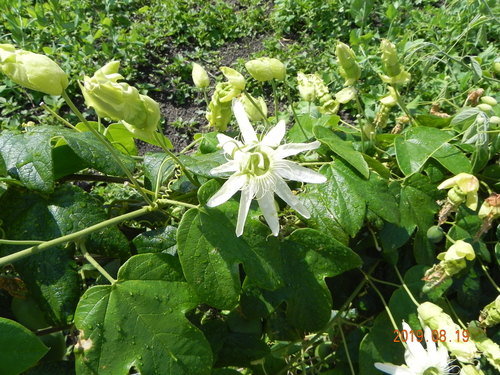
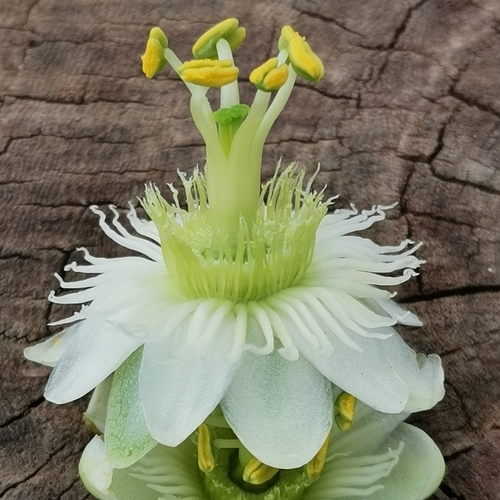
A climber. It grows 8 m long. It has a tuberous rootstock. The leaves are grey-green and can be deeply lobed with 3-5 lobes. They are 12 cm long by 11 cm wide. There can be teeth long the edge. The flower stalks are 2-15 cm long. The male flowers can be in groups of 30 and the female flowers in groups of 2-6. There are tendrils. There are 1-2 fruit per flower. They are oval and 2-3 cm long by 1-2 cm wide. They are red. There are 10-25 seeds.
Edible Uses
The ripe fruit are eaten.
Traditional Uses
The ripe fruit are eaten. CAUTION: The roots and fruits are reported as poisonous.
This uses section is brief — help expand it
Known Hazards
The roots and fruits are reported as poisonous.
Distribution
It is a tropical plant. It grows in dry deciduous forest.
Where It Grows
Africa, Asia, East Africa, India, Sri Lanka,
Notes
There are 95 Adenia species. They are common in the semiarid regions of Africa.
Synonyms
Also Known As
Kanvalikizanghu, Vidari
References (4)
- Ambasta S.P. (Ed.), 2000, The Useful Plants of India. CSIR India. p 14
- Bot. Jahrb. Syst. 15:573. 1893 (H. G. A. Engler & K. A. E. Prantl, Nat. Pflanzenfam. 3(6a):84. 1893 Dec)
- Ramachandran, V.S., 1987, Further Notes on the Ethnobotany of Cannanore District, Kerala. J. Econ. Tax. Bot. Vol. 11 No. 1 pp 47-
- Ramachandran, V. S., 2007, Wild edible plants of the Anamalais, Coimbatore district, western Ghats, Tamil Nadu. Indian Journal or Traditional Knowledge. 6(1) pp 173-176