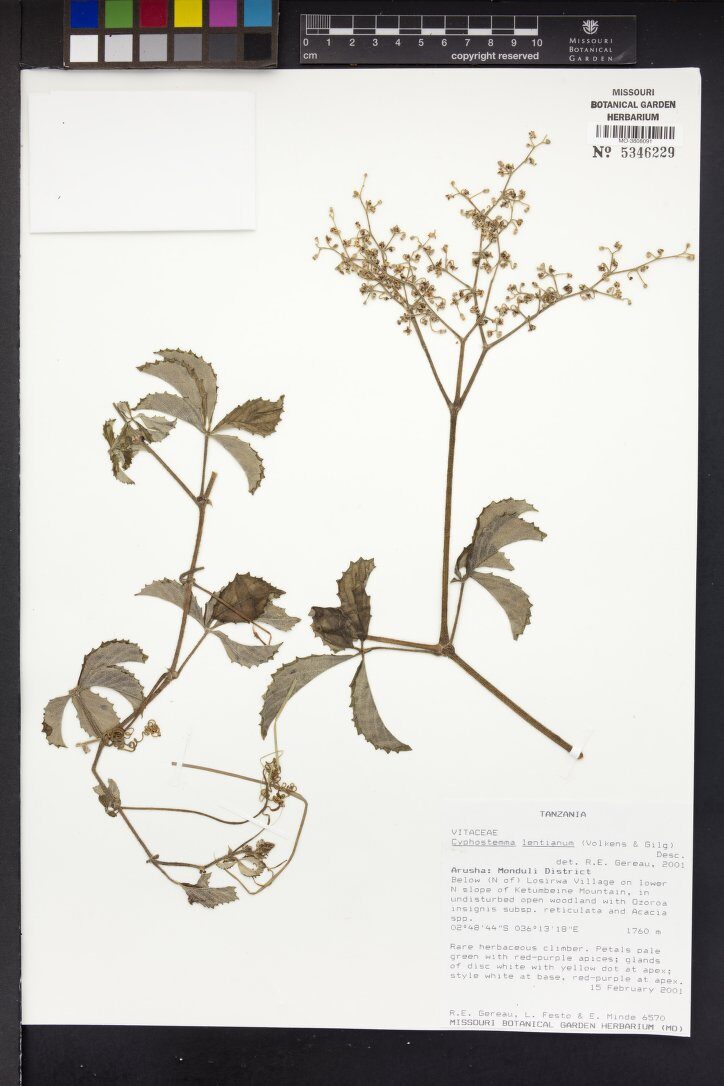
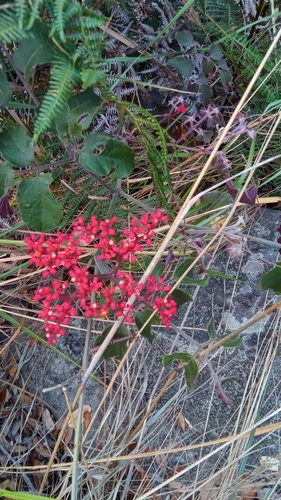
Parthenocissus quinquefolia
(L.) Planch.
Virginia Creeper
iNaturalist· cc-by-nc
(c) Carolyn Gritzmaker, some rights reserved (CC BY-NC), uploaded by Carolyn Gritzmaker
iNaturalist· cc-by-nc
(c) Josué Amoroso, some rights reserved (CC BY-NC), uploaded by Josué Amoroso
iNaturalist· cc-by-sa
(c) Douglas Goldman, some rights reserved (CC BY-SA), uploaded by Douglas Goldman
Summary
Source: WikipediaParthenocissus quinquefolia, commonly known as Virginia creeper, woodbine, five-leaved ivy, or five-finger, is a species of flowering vine in the grape family Vitaceae. The species is native to eastern and central North America, with its range extending from south-eastern Canada and the eastern United States, west to Manitoba and Utah, and as far south as eastern Mexico and Guatemala. It has been introduced globally and is considered an invasive species to varying degrees in the European Union, the United Kingdom, China, Australia, and Cuba.
Description
A climber. It can be 30 m long. The leaves are made up of 3 or 5 leaflets. These have coarse teeth around the edge. The leaves are 12 cm long. The leaves turn bright red before falling off. The tendrils have suction cups.
Edible Uses
Although there is a documented history of medicinal use by Native American tribes (see Medicinal Uses section) it is generally not recommended for human consumption: The berries of the Virginia Creeper contain oxalic acid, which when consumed will irritate your stomach and kidneys. The sap of the plant also contains oxalate crystals and can cause skin irritation and rashes in some people. Humans mostly use the plant for ornamental purposes, but it is also used to control soil erosion, to attract birds, and for a few medicinal purposes (the bark and twigs are made into cough syrup).
Traditional Uses
Dye: A pink dye can be obtained from the fruit.
This uses section is brief — help expand it
Medicinal Uses
Virginia creeper (Parthenocissus quinquefolia) has a history of traditional medicinal use by Native American tribes to treat ailments such as jaundice, diarrhea, swelling, and kidney issues. Historically, bark and twig decoctions served as cough syrups, while leaf poultices treated rashes, including poison ivy. Modern studies indicate potential antioxidant and anti-inflammatory properties. Traditional Medicinal Uses: A decoction of the bark and twigs has been used as a cough syrup and expectorant for respiratory issues. It was traditionally used to treat jaundice and liver issues, and a hot decoction of the bark served as a poultice to reduce swelling, edema, and rheumatism. Topically, it was applied as a wash to treat eczema and poison ivy rashes. Other historical uses include treating diarrhea, urinary disorders, and as a diuretic. Important Safety Warning: The berries contain high levels of oxalic acid and are considered toxic to humans, potentially causing vomiting, kidney damage, or death if ingested in large quantities. The sap also contains oxalate crystals, which can cause skin irritation or dermatitis upon contact. Active Compounds and Pharmacological Research: The plant contains tannins (including parthenocissin A and B), flavonoids (like quercetin and rutin), and organic acids (oxalic, malic). Research suggests antioxidant and anti-inflammatory mechanisms through the reduction of oxidative stress and downregulation of inflammatory markers.
Known Hazards
The dark blue-black berries contain high concentrations of oxalic acid and raphides (needle-like calcium oxalate crystals). Ingestion by humans can cause nausea, abdominal pain, diarrhea, vomiting, and in some cases, can be fatal. They are considered highly toxic to humans, though they are safe for birds to consume.
Distribution
It is a temperate plant. It grows in woods and on rocky banks. During the dormant stage plants can survive heavy frosts. It suits hardiness zones 3-10.
Where It Grows
Andorra, Argentina, Asia, Australia, Britain, Canada, Central America, Central Asia, China, Cuba, Europe, Guatemala, Indochina, Korea, Mexico, North America, SE Asia, South America, Tajikistan, Tasmania, Thailand, Turkey, Türkiye, USA*, West Indies,
Cultivation
Plants can be grown from seed. Stored seed needs cold treatment by being stored at 5°C for 6 weeks. Cuttings of half ripe wood can be used. They should be 7-10 cm long. They can also be grown from basal hardwood cuttings and by layering. The plants make a good ground cover when spaced about 3 m apart. It is a vigorous climber and ground cover plant.
Propagation
Seed - best sown as soon as it is ripe in a cold frame. Stored seed requires stratifying for 6 weeks at 5°c and should be sown as early in the year as possible. Germination is variable. When they are large enough to handle, prick the seedlings out into individual pots and grow them on in the greenhouse for at least their first winter. Plant them out into their permanent positions in late spring or early summer, after the last expected frosts. Cuttings of half-ripe wood, 7 - 10cm taken at a node (ensure that it has at least 2 true buds), July/August in a frame. Easy to root but they do not always survive the first winter. Basal hardwood cuttings of current seasons growth, 10 - 12cm long, autumn in a frame. Layering. Plants often self-layer.
Other Uses
A pink dye is obtained from the fruit. The plant can be allowed to fall down banks as a spreading ground cover, with plants spaced about 3 metres apart each way. They are very vigorous and would soon swamp smaller plants.
Production
It is fast growing. Fruit is only produced after a long hot summer.
Notes
There are about 10 Parthenocissus species.
Synonyms
Also Known As
Virginia-creeper, Woodbind, Woodbine, Yaban Asmasi
References (15)
- Beckstrom-Sternberg, Stephen M., and James A. Duke. "The Foodplant Database." http://probe.nalusda.gov:8300/cgi-bin/browse/foodplantdb.(ACEDB version 4.0 - data version July 1994)
- Brickell, C. (Ed.), 1999, The Royal Horticultural Society A-Z Encyclopedia of Garden Plants. Convent Garden Books. p 754
- Cundall, P., (ed.), 2004, Gardening Australia: flora: the gardener's bible. ABC Books. p 990
- A. L. P. P. de Candolle & A. C. de Candolle, Monogr. phan. 5:448. 1887
- Etkin, N.L. (Ed.), 1994, Eating on the Wild Side, Univ. of Arizona. p 73
Show all 15 references Hide references
- Hibbert, M., 2002, The Aussie Plant Finder 2002, Florilegium. p 219
- Joyce, D., 1998, The Garden Plant Selector. Ryland, Peters and Small. p 185
- Kachenchart, B., et al, 2008, Phenology of Edible Plants at Sakaerat Forest. In Proceedings of the FORTROP II: Tropical Forestry Change in a Changing World. Bangkok, Thailand.
- Kermath, B. M., et al, 2014, Food Plants in the Americas: A survey of the domesticated, cultivated and wild plants used for Human food in North, Central and South America and the Caribbean. On line draft. p 609
- Kremer, B.P., 1995, Shrubs in the Wild and in Gardens. Barrons. p 192 (Listed as mildly poisonous)
- Lord, E.E., & Willis, J.H., 1999, Shrubs and Trees for Australian gardens. Lothian. p 334
- Moerman, D. F., 2010, Native American Ethnobotany. Timber Press. p 378
- Plants for a Future database, The Field, Penpol, Lostwithiel, Cornwall, PL22 0NG, UK. http://www.scs.leeds.ac.uk/pfaf/
- Ryan, S., 2008, Dicksonia. Rare Plants Manual. Hyland House. p 78
- Toupal, R. S. & Hollenback, K., 2009, An Ethnobotany of Indiana Dunes National Lakeshore: Plant Uses of the Ojibwa People. Bureau of Applied Research in Anthropology. University of Arizona