Parkinsonia aculeata
L.
Jerusalem thorn
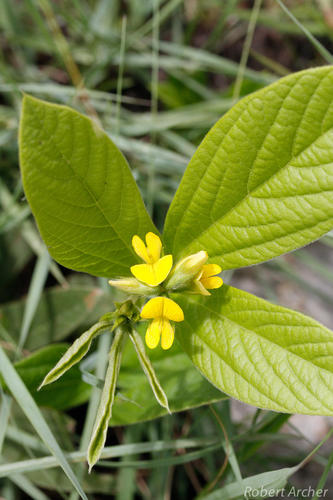
iNaturalist· cc-by-nc
(c) Roberto R. Calderón, some rights reserved (CC BY-NC), uploaded by Roberto R. Calderón
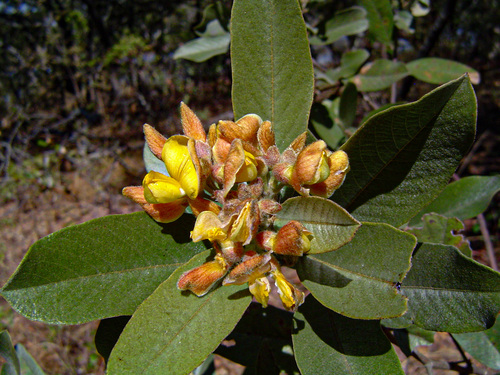
iNaturalist· cc-by-nc
(c) Mary, some rights reserved (CC BY-NC), uploaded by Mary
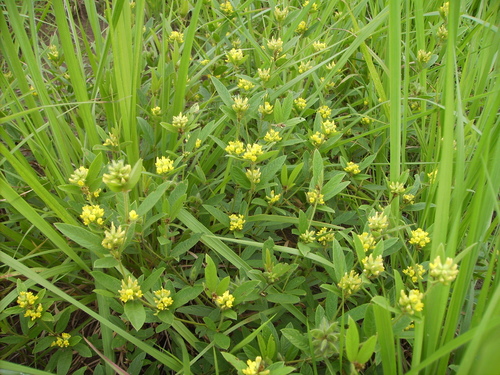
iNaturalist· cc-by-sa
(c) Douglas Goldman, some rights reserved (CC BY-SA), uploaded by Douglas Goldman
Summary
Source: WikipediaParkinsonia aculeata is a species of perennial flowering tree in the pea family, Fabaceae. Common names include palo verde, Mexican palo verde, Parkinsonia, Jerusalem thorn, jelly bean tree, palo de rayo, and retama.
Description
A shrub or small tree. It grows 3-4 m tall but can be 10 m tall. It can have one or several stems. The bark is smooth and green. The smooth branches are zigzagged. It is spiny and has drooping branches. The spines are at the base of each leaf. The leaves are long and thin. They are compound with unusual leaflets. They are small and widely spaced along the flattened leaf stalk. There is a spine at the end. The flowers are yellow and have one red-brown petal. They have a scent. The fruit are straight pods 10 cm long. These are constricted between the seeds. The pods turn brown when ripe. The seeds are oblong and dark brown.
Edible Uses
The mature seeds are dried and then cooked when required. They are rich in protein (approximately 21% protein, 62% carbohydrate, and 8% fat) and have potential as a human food source. Dried powdered seed has a digestibility rating of 76%, rising to 85% when cooked — higher than many commonly eaten legumes. The seeds do contain antinutritional factors including trypsin inhibitors, phenols, alkaloids, and haemagglutinin, but not in concentrations high enough to pose a major nutritional problem; these factors are soluble in saline solutions and can be removed by soaking or cooking. The pulp inside the seedpod can be eaten raw and has a sweet flavour with up to 60% sugars.
Traditional Uses
The immature seeds are eaten raw. Ripe seeds are roasted and ground and used as a coffee substitute. The seeds are also parched, sun dried and cooked and eaten. The fruit pulp is sweet and edible.
Medicinal Uses
Decoctions of the leaf, fruit, and stem are taken orally and applied externally to treat fever, atony, and malaria. The decoction is also reported to be abortifacient. Extractions of flowers and leaves in alcohol are applied as a poultice to treat rheumatism.
Known Hazards
The leaves are reported to contain hydrocyanic acid and to be toxic.
Distribution
A tropical and subtropical plant. It is native from Mexico to Honduras. It grows in warm subtropical and tropical places. It suits semi-arid places. It grows in areas with a rainfall between 200-1,000 mm per year. It grows along drainage lines and on flood plains. It grows in dry lowland grassland and coastal regions. It grows in the Sahel. In East Africa it grows from sea level to 1,400 m above sea level. It can grow in alkaline and salty soils. It can grow in arid places. It suits hardiness zones 9-11.
Where It Grows
Afghanistan, Africa, Angola, Antilles, Asia, Argentina, Aruba, Australia, Bahamas, Bangladesh, Belize, Bolivia, Botswana, Brazil*, Burkina Faso, Cambodia, Cameroon, Cape Verde, Caribbean, Central Africa, Central America, Chad, Chile, China, Colombia, Congo DR, Costa Rica, Cuba, Cyprus, Dominican Republic, East Africa, Ecuador, Egypt, El Salvador, Eritrea, Eswatini, Ethiopia, Galapagos, Ghana, Guadeloupe, Guatemala, Guiana, Guianas, Guyana, Haiti, Hawaii, Honduras, India, Indochina, Indonesia, Iraq, Israel, Jamaica, Kenya, Lesser Antilles, Libya, Marquesas, Martinique, Mediterranean, Mexico, Middle East, Morocco, Mozambique, Myanmar, Namibia, Netherlands Antilles, New Caledonia, Nicaragua, Nigeria, North Africa, North America, Pacific, Pakistan, Panama, Paraguay, Peru, Puerto Rico, Sahel, SE Asia, Senegal, Sierra Leone, Slovenia, Somalia, South Africa, Southern Africa, South America, Sri Lanka, Sudan, Suriname, Swaziland, Tanzania, Thailand, Uganda, United Arab Emirates, UAE, Uruguay, USA*, Venezuela, Vietnam, West Africa, West Indies, Yemen, Zimbabwe,
Cultivation
It grows best in areas where annual daytime temperatures are within the range 24 - 32°c, but can tolerate 16 - 36°c. When dormant, the plant can survive temperatures down to about -4°c, but young growth can be severely damaged at -1°c. It prefers a mean annual rainfall in the range 300 - 700mm, but tolerates 200 - 1,000mm. Requires a sunny position. Succeeds in well-drained, sandy to loamy soils. Tolerant of poor, gravely or sandy soils. Plants can tolerate moderate levels of salt in the soil. Prefers a pH in the range 6.5 - 7.5, tolerating 6 - 8.5. Plants can withstand droughts of up to 9 months. The tree reproduces so easily that it can escape from controlled cultivation and become a weed. It forms impenetrable thorny thickets that compete with and exclude native species. The tree is fast-growing but short-lived. It can reach a height of 2.5 metres within 2 years from seed. Young fertilized plants can grow up to 1 metre annually. The branches of wild plants are often hollow and inhabited by ants. There are conflicting reports on whether or not this tree has a symbiotic relationship with certain soil bacteria, so it is unclear as to whether this tree fixes atmospheric nitrogen.
Propagation
The hard seedcoat benefits from scarification before sowing. Pour a small amount of nearly boiling water over the seeds (taking care not to cook them) and soak in warm water for 12–24 hours until swollen. If they have not swollen, carefully nick the seedcoat without damaging the embryo and soak for a further 12 hours. Sow in a sunny position in a nursery seedbed or in individual containers. A high germination rate can be expected, with sprouting within 8–16 days. Plants should be ready to set out 8–10 months later.
Other Uses
The tree is used for erosion control and reforestation in sandy, arid areas and is useful for reclaiming wastelands, gullied areas, and mining spoil. It produces large amounts of leaf litter suitable for use as a soil mulch. The plant forms impenetrable hedges and makes an effective windbreak. The heartwood is light brown, clearly demarcated from a thick band of yellowish sapwood. The wood is close-grained, moderately heavy, hard, very compact, and highly durable. Where available in sufficient size it is used for general carpentry; otherwise it is used for light poles and posts. The wood burns well and makes good fuel and charcoal. Pods and leaves are used as fodder.
Production
It grows quickly.
Other Information
The seeds are eaten especially by children.
Notes
There are (2-3) 12-29 Parkinsonia species. The thorns make it a weed problem. Also as Caesalpinaceae.
Synonyms
Also Known As
Adanti, Balati kikar, Barbados flower fence, Cemaraan, Cina cina, Espinillo, Garabato, Geed walaayo, Kim tuoc chi, Kunto-barbariae, Mexican palo verde, Muk-bee, Mya-sein, Myinsa-goni, Okwato, Palo verde, Pardeshi baval, Parkinsonia, Ram baval, Ratamah, Ratta-maa, Retamo rojo, Retma, Shauk al-bahr, Sima tumma, Vilayati babul, Vilayati kikar
References (57)
- Addis, G., et al, 2005, Ethnobotanical Study of Edible Wild Plants in Some Selected Districts of Ethiopia. Human Ecology, Vol. 33, No. 1, pp. 83-118
- Addis, G., Asfaw, Z & Woldu, Z., 2013, Ethnobotany of Wild and Semi-wild Edible Plants of Konso Ethnic Community, South Ethiopia. Ethnobotany Research and Applications. 11:121-141
- Addis, G., et al, 2013, The Role of Wild and Semi-wild Edible Plants in Household Food Sovereignty in Hamer and Konso Communities, South Ethiopia. Ethnobotany Research & Applications. 11:251-271
- Ambasta, S.P. (Ed.), 2000, The Useful Plants of India. CSIR India. p 430
- Asfaw, Z. and Tadesse, M., 2001, Prospects for Sustainable Use and Development of Wild Food Plants in Ethiopia. Economic Botany, Vol. 55, No. 1, pp. 47-62
Show all 57 references Hide references
- Bahru, T., et al, 2013, Wild Edible Plants: Sustainable Use and Management by Indigenous Communities in and the Buffer Area of Awah National Park, Ethiopia. Ethiop. J. Sci., 36(2): 93-108
- Barwick, M., 2004, Tropical and Subtropical Trees. A Worldwide Encyclopedic Guide. Thames and Hudson p 311
- Bekele-Tesemma A., Birnie, A., & Tengnas, B., 1993, Useful Trees and Shrubs for Ethiopia. Regional Soil Conservation Unit. Technical Handbook No 5. p 342
- Bodkin, F., 1991, Encyclopedia Botanica. Cornstalk publishing, p 762
- Brickell, C. (Ed.), 1999, The Royal Horticultural Society A-Z Encyclopedia of Garden Plants. Convent Garden Books. p 751
- Burkill, H. M., 1985, The useful plants of west tropical Africa, Vol. 3. Kew.
- Condit, R., et al, 2011, Trees of Panama and Costa Rica. Princeton Field Guides. p 182
- Cooper, W. and Cooper, W., 2004, Fruits of the Australian Tropical Rainforest. Nokomis Editions, Victoria, Australia. p 106
- Cundall, P., (ed.), 2004, Gardening Australia: flora: the gardener's bible. ABC Books. p 987
- Dharani, N., 2002, Field Guide to common Trees & Shrubs of East Africa. Struik. p 141
- Dunlop, C.R., Leach, G.J. & Cowie, I.D., 1995, Flora of the Darwin Region. Vol 2. Northern Territory Botanical Bulletin No 20. p 34
- Engel, D.H., & Phummai, S., 2000, A Field Guide to Tropical Plants of Asia. Timber Press. p 162
- Etherington, K., & Imwold, D., (Eds), 2001, Botanica's Trees & Shrubs. The illustrated A-Z of over 8500 trees and shrubs. Random House, Australia. p 511
- Flora of Australia Volume 12, Mimosaceae (excl. Acacia) Caesalpiniaceae. Melbourne: CSIRO Australia (1998) p 69
- Flora of Pakistan. www.eFlora.org
- Grandtner, M. M., 2008, World Dictionary of Trees. Wood and Forest Science Department. Laval University, Quebec, Qc Canada. (Internet database http://www.wdt.qc.ca)
- Grandtner, M. M. & Chevrette, J., 2013, Dictionary of Trees, Volume 2: South America: Nomenclature, Taxonomy and Ecology. Academic Press p 483
- Grubben, G. J. H. and Denton, O. A. (eds), 2004, Plant Resources of Tropical Africa 2. Vegetables. PROTA, Wageningen, Netherlands. p 563
- Hahn, K., et al, 2018, The Use of Wild Plants for Food: a National Scale Analysis for Burkina Faso (West Africa) Flora et Vegetatio Sudano-Sambesica 21, 25-33
- Hall, N. et al, 1972, The Use of Trees and Shrubs in the Dry Country of Australia, AGPS, Canberra. p 394
- http://www.botanic-gardens-ljubljana.com/en/plants
- Hussey, B.M.J., Keighery, G.J., Cousens, R.D., Dodd, J., Lloyd, S.G., 1997, Western Weeds. A guide to the weeds of Western Australia. Plant Protection Society of Western Australia. p 124
- Kenneally, K.E., Edinger, D. C., and Willing T., 1996, Broome and Beyond, Plants and People of the Dampier Peninsula, Kimberley, Western Australia. Department of Conservation and Land Management. p 76
- Karim, F. M. & Dakheel, A, J., 2006, Salt-tolerant plants of the United Arab Emirates. 2006. International Center for Biosaline Agriculture, Dubai, UAE. p 113
- Kermath, B. M., et al, 2014, Food Plants in the Americas: A survey of the domesticated, cultivated and wild plants used for Human food in North, Central and South America and the Caribbean. On line draft. p 608
- Kew Plants of the World Online
- Krishen P., 2006, Trees of Delhi, A Field Guide. DK Books. p 281
- Lamp, C & Collet F., 1989, Field Guide to Weeds in Australia. Inkata Press. p 201
- Llamas, K.A., 2003, Tropical Flowering Plants. Timber Press. p 205
- Lord, E.E., & Willis, J.H., 1999, Shrubs and Trees for Australian gardens. Lothian. p 63
- Loughmiller, C & L., 1985, Texas Wildflowers. A Field Guide. University of Texas, Austin. p 134
- Mahony, D., 1991, Trees of Somalia. A Field Guide for Development Workers. Oxfam Research Paper 3. p 9
- Malezas Comestibles del Cono Sur, INTA, 2009, Buernos Aires
- Maydell, H. von, 1990, Trees and shrubs of the Sahel: their characteristics and uses. Margraf. p 343
- Mbuya, L.P., Msanga, H.P., Ruffo, C.K., Birnie, A & Tengnas, B., 1994, Useful Trees and Shrubs for Tanzania. Regional Soil Conservation Unit. Technical Handbook No 6. p 380
- McMakin, P.D., 2000, Flowering Plants of Thailand. A Field Guide. White Lotus. p 23
- Milson. J., 2000, Trees and Shrubs of north-west Queensland. DPI p 22
- Moerman, D. F., 2010, Native American Ethnobotany. Timber Press. p 377
- Paczkowska, G. & Chapman, A.R., 2000, The Western Australian Flora. A Descriptive Catalogue. Western Australian Herbarium. p 191
- Palgrave, K.C., 1996, Trees of Southern Africa. Struik Publishers. p 289
- Plants of Haiti Smithsonian Institute http://botany.si.edu/antilles/West Indies
- Petheram, R.J. and Kok, B., 2003, Plants of the Kimberley Region of Western Australia. UWA Press p 511
- Pham-Hoang Ho, 1999, An Illustrated Flora of Vietnam. Nha Xuat Ban Tre. p 846
- Pullaiah, Y., Krishnamurthy, K. V. & Bahadur, B., (Eds.), 2016, Ethnobotany of India, Volume 1: Eastern Ghats and Deccan.
- Roa, J. A. G. & Boada, D. S. G., 2018, Fundación para el Fortalecimiento de la Fruticultura y Plantas Alimenticias no Convencionales en Colombia.
- Royal Botanic Gardens, Kew (1999). Survey of Economic Plants for Arid and Semi-Arid Lands (SEPASAL) database. Published on the Internet; http://www.rbgkew.org.uk/ceb/sepasal/internet [Accessed 21st April 2011]
- Sp. pl. 1:375. 1753
- Staples, G.W. and Herbst, D.R., 2005, A tropical Garden Flora. Bishop Museum Press, Honolulu, Hawaii. p 334
- Swaminathan, M.S., and Kochnar, S.L., 2007, An Atlas of Major Flowering Trees in India. Macmillan. p 124
- Swaziland's Flora Database http://www.sntc.org.sz/flora
- Wheeler, J.R.(ed.), 1992, Flora of the Kimberley Region. CALM, Western Australian Herbarium, p 350
- www.worldagroforestrycentre.org/treedb/