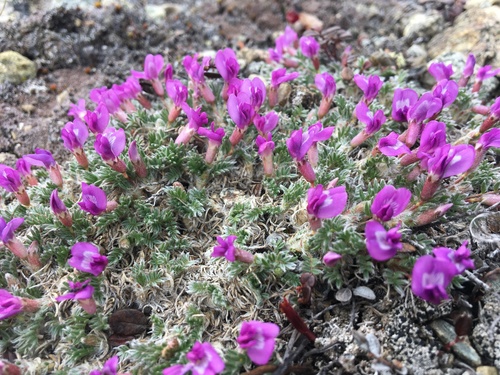
Parkia timoriana
(DC.) Merr.
Petai hutan, Forest sataw tree
iNaturalist· cc-by
(c) Forest & Kim Starr, some rights reserved (CC BY)
iNaturalist· cc-by-sa
(c) Renaudsechet, some rights reserved (CC BY-SA)
iNaturalist· cc-by-nc
(c) Soh Kam Yung, some rights reserved (CC BY-NC)
Summary
Source: WikipediaParkia timoriana is a species of flowering plant in the Mimosa subfamily (Mimosoideae) of the legume family. English common names include tree bean. It is native to Thailand, Malaysia, Myanmar, Indonesia, and Assam and Manipur in India. It is widely cultivated for food and wood, and as an ornamental. The tree is vulnerable to the pest insect Cadra cautella, a moth. The larva bores into the seed to pupate, feeding on the seed interior and filling it with webbing. It also consumes the flower heads.
Description
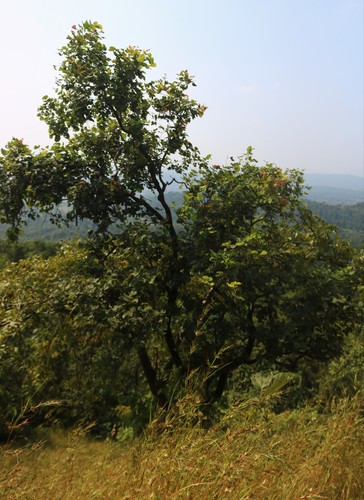
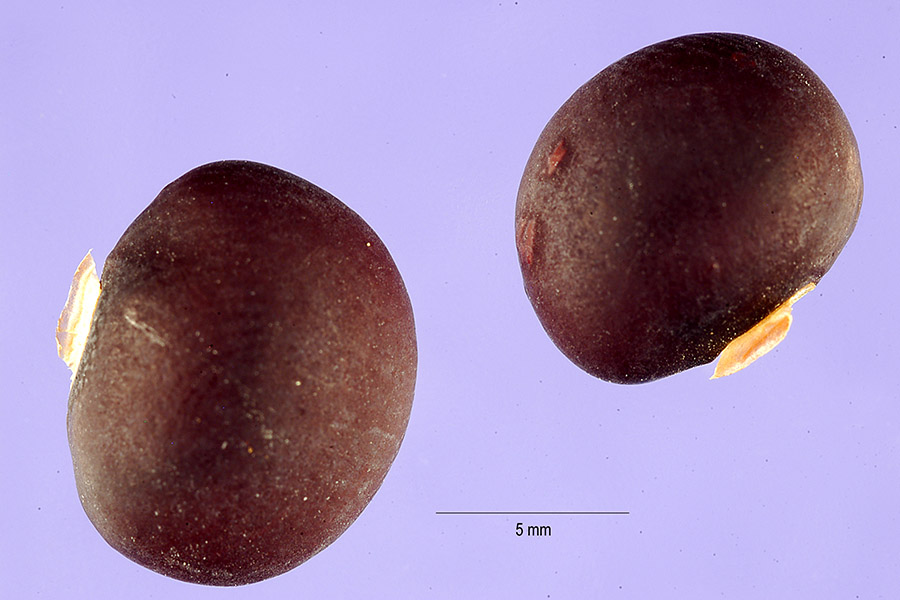
A large tree. It grows up to 50 m high and can be 2.5 m across the trunk. There are often buttresses. The bark is smooth and can be finely cracked. The leaves are compound. The first leaf stalk and axis is 18-42 cm long. There is a gland on the leaf stalk 1.5-4 cm from the base. There are 14-32 pairs of branches of the leaf and 52-72 pairs of leaflets. They are slightly S shaped and 6-11 mm long by 1-2 mm wide. The edges of the leaflets overlap. There are stiff white hairs around the edges of the leaflets. The flower stalks have a compound flower cluster. The fruit are pods which are flat and strap shaped. The pods are 20-33 cm long by 3.9-5.5 cm wide. There are 12-19 seeds per pod. They lie horizontally across the pod. They are 1.4-2 cm long. The seed coat is hard and dark brown.
Edible Uses
There are a number of human uses for this tree. The wood is used for firewood and lumber. In Africa the wood is not generally used, but the tree is often planted for ornamental purposes. It is a popular garden tree in India, particularly in Assam and Manipur, where it is a "characteristic feature" of Meitei backyards. It is tolerant of sun and shade. Tree bean is a common food in Thailand and Indonesia. In Thai cuisine this vegetable is known as nitta sprout, and it is added to curry. When the seeds are mature, they have a hard, black seed coat. The seeds can be dried and stored. The seeds have a strong "sulphur smell," which is due to the presence of thioproline. The treebean therefore requires an acquired taste In some areas, the seeds of the related tree species Parkia speciosa (also known as yongchaak, petai or stink beans) are much more popular, and tree bean will be consumed as a second choice.
Traditional Uses
The seeds are bitter but may be eaten after roasting or boiling. The ripe fruit are eaten. The fruit are also used for chutney. The germinated seeds are eaten. The young tender pods are cooked and eaten, especially with fish. The leaves are boiled and eaten.
Medicinal Uses
The seeds are considered beneficial in the treatment of hepatalgia, oedema, nephritis, diabetes and colic, probably as a result of their diuretic and relaxing activity. They are also used as an anthelmintic. The ripe seeds, roasted and powdered, can be ingested as a medicine for colic, flatulence and stomach ache, or can be used in remedies for cholera or menstrual cramps. Powdered seeds are applied externally to wounds, ulcers, and the abdomen to relieve pain. The leaves can be ground up as an ingredient in a remedy for colic. The leaves and/or the bark are applied topically in order to clean wounds and ulcers, and as a cure for scabies. The bark is used externally as a treatment against scabies, boils, and abscesses.
Distribution
A tropical plant. It grows in lowland rainforest and dry evergreen forest. They occur from sea level to 600 m altitude but occasionally up to 1,300 m.
Where It Grows
Asia, Bangladesh, Brunei, Dominican Republic, East Timor, Haiti, Hawaii, India, Indochina, Indonesia, Malaysia, Myanmar, New Guinea, Northeastern India, Pacific, Philippines, Puerto Rico, SE Asia, Taiwan, Thailand, Timor-Leste, USA, West Indies,
Cultivation
Plants are grown from seeds.
Propagation
Seed - it has a hard testa and germinates over several weeks after sowing. The seed benefits from scarification before sowing in order to speed up and improve germination. This can usually be done by pouring a small amount of nearly boiling water on the seeds (being careful not to cook them!) and then soaking them for 12 - 24 hours in warm water. By this time they should have imbibed moisture and swollen - if they have not, then carefully make a nick in the seedcoat (being careful not to damage the embryo) and soak for a further 12 hours before sowing.
Other Uses
The pods, pounded with water, are used as a hair shampoo. The tree is sometimes grown to provide shade in coffee plantations and nurseries.
Production
In Nagaland pods are available June to November.
Other Information
The pods are popular.
Notes
Various parts are used in medicine. Also as Mimosaceae.
Synonyms
Also Known As
Alai, Amarang, Bairithai, Batai hutan, Dhemka, Gacher shim, Kedawung, Kerayong, Kharial, Kupang, Manipuri urahi, Nkampi, Petai kerayong, Peundung, Pohon petai hutan, Riang, Sa riang, Themuke, Thenuk, Waikra, Yangchak, Yonchak, Yongchak, Zawng-tah-lay, Zongta
References (27)
- Argent, G et al, nd, Manual of the Larger and More important non Dipterocarp Trees of Central Kalimantan Indonesia. Volume 2 Forest Research Institute, Samarinda, Indonesia. p 365
- Arora, R. K., 2014, Diversity in Underutilized Plant Species - An Asia-Pacific Perspective. Bioversity International. p 50
- Biswas, S. C., et al, 2018, Diversity of wild edible minor fruits used by the ethnic communities of Tripura, India. Indian Journal of Traditional Knowledge. Vol 17(2), April 2018, pp 282-289
- Dobriyal, M. J. R. & Dobriyal, R., 2014, Non Wood Forest Produce an Option for Ethnic Food and Nutritional Security in India. Int. J. of Usuf. Mngt. 15(1):17-37
- Ethnobotany of Karbis. Chapter 4 in p 85
Show all 27 references Hide references
- Gardner, S., et al, 2000, A Field Guide to Forest Trees of Northern Thailand, Kobfai Publishing Project. p 164
- Hopkins, 1992, Flora Malesiana ser 1, 11(1) p 201
- Jacquat, C., 1990, Plants from the Markets of Thailand. D.K. Book House p 42
- Kar, A., & Borthakur, S. K., 2007, Wild vegetables sold in local markets of Karbi Anglong, Assam. Indian Journal of Traditional Knowledge. 6(1) January 2007, pp 169-172
- Kar, A., et al, 2013, Wild Edible Plant Resources used by the Mizos of Mizoram, India. Kathmandu University Journal of Science, Engineering and Technology. Vol. 9, No. 1, July, 2013, 106-126
- Kays, S. J., and Dias, J. C. S., 1995, Common Names of Commercially Cultivated Vegetables of the World in 15 languages. Economic Botany, Vol. 49, No. 2, pp. 115-152
- Medhi, P., Sarma, A and Borthakur, S. K., 2014, Wild edible plants from the Dima Hasao district of Assam, India. Pleione 8(1): 133-148
- Milow, P., et al, 2013, Malaysian species of plants with edible fruits or seeds and their evaluation. International Journal of Fruit Science. 14:1, 1-27
- Nakahara, K. et al, 2002, Antimutagenicity of Some Edible Thai Plants, and a Bioactive Carbazole Alkaloid, Mahanine, Isolated from Micromelum minutum. Journal of Agricultural and Food Chemistry. 50: 4796-4892
- Patiri, B. & Borah, A., 2007, Wild Edible Plants of Assam. Geethaki Publishers. p 47
- Phangchopi, U., et al, 2015, Diversity of wild edible plants in Marat Longri Wildlife Sanctuary, Assam. Indian Journal of Natural Products and Resources Vol. 6(4), December 2015 pp. 305-313
- Philipp. J. Sci., C 5:33. 1910
- Plants of Haiti Smithsonian Institute http://botany.si.edu/antilles/West Indies
- Pradheep, K., et al, 2016, Wild edible plants used by Konyak tribe in Mon district of Nagaland: Survey and inventorisation. Indian Journal of Natural Products and Resources. Vol 7(1) pp 74-81
- PROSEA handbook Volume 13 Spices. p 279
- Sakunpak, A. & Panichayupakaranant, P., 2012, Antibacterial activity of Thai edible plants against gastrointestinal pathogenic bacteria and isolation of a new broad spectrum antibacterial polyisoprenylated benzophenone, chamuangone. Food Chemistry 130 (2012) 826–831
- Slik, F., www.asianplant.net
- Staples, G.W. and Herbst, D.R., 2005, A tropical Garden Flora. Bishop Museum Press, Honolulu, Hawaii. p 334
- Sukarya, D. G., (Ed.) 2013, 3,500 Plant Species of the Botanic Gardens of Indonesia. LIPI p 433
- Teron, R. & Borthakur, S. K., 2016, Edible Medicines: An Exploration of Medicinal Plants in Dietary Practices of Karbi Tribal Population of Assam, Northeast India. In Mondal, N. & Sen, J.(Ed.) Nutrition and Health among tribal populations of India. p 153
- USDA, ARS, National Genetic Resources Program. Germplasm Resources Information Network - (GRIN). [Online Database] National Germplasm Resources Laboratory, Beltsville, Maryland. Available: www.ars-grin.gov/cgi-bin/npgs/html/econ.pl (10 April 2000)
- Wiersema, J. H. & Leon, B., 2013, World Economic Plants. A Standard Reference CRC Press. 2nd Ed. p 496