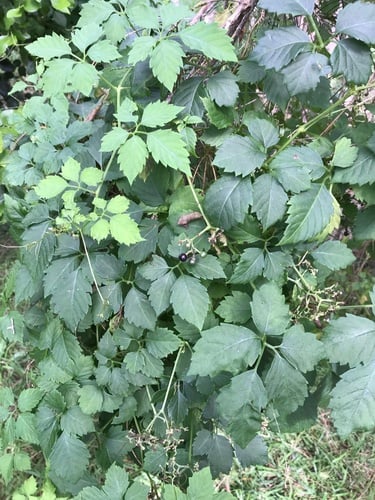
Cayratia trifolia
(L.) Domin
Bush Grape, Threeleaf cayratia
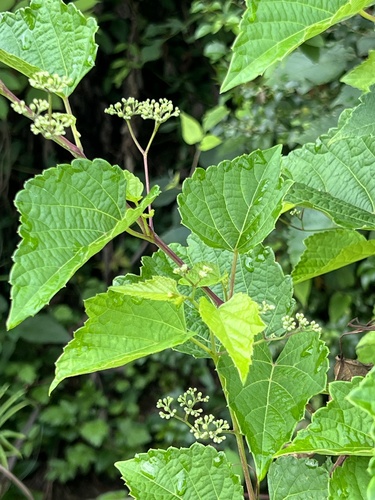
iNaturalist· cc-by-nc
(c) SWETAL JHAVERI, some rights reserved (CC BY-NC)
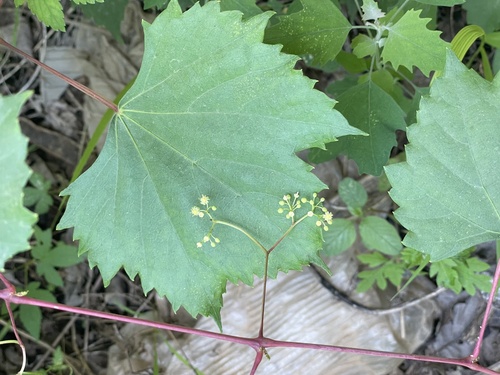
iNaturalist· cc-by-nc
(c) SWETAL JHAVERI, some rights reserved (CC BY-NC)
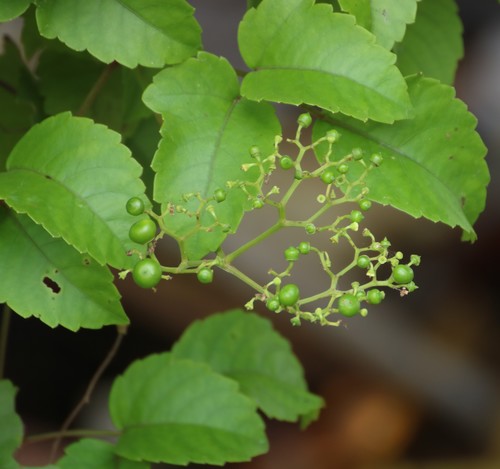
iNaturalist· cc-by-nc
(c) Shiwalee Samant, some rights reserved (CC BY-NC)
Description
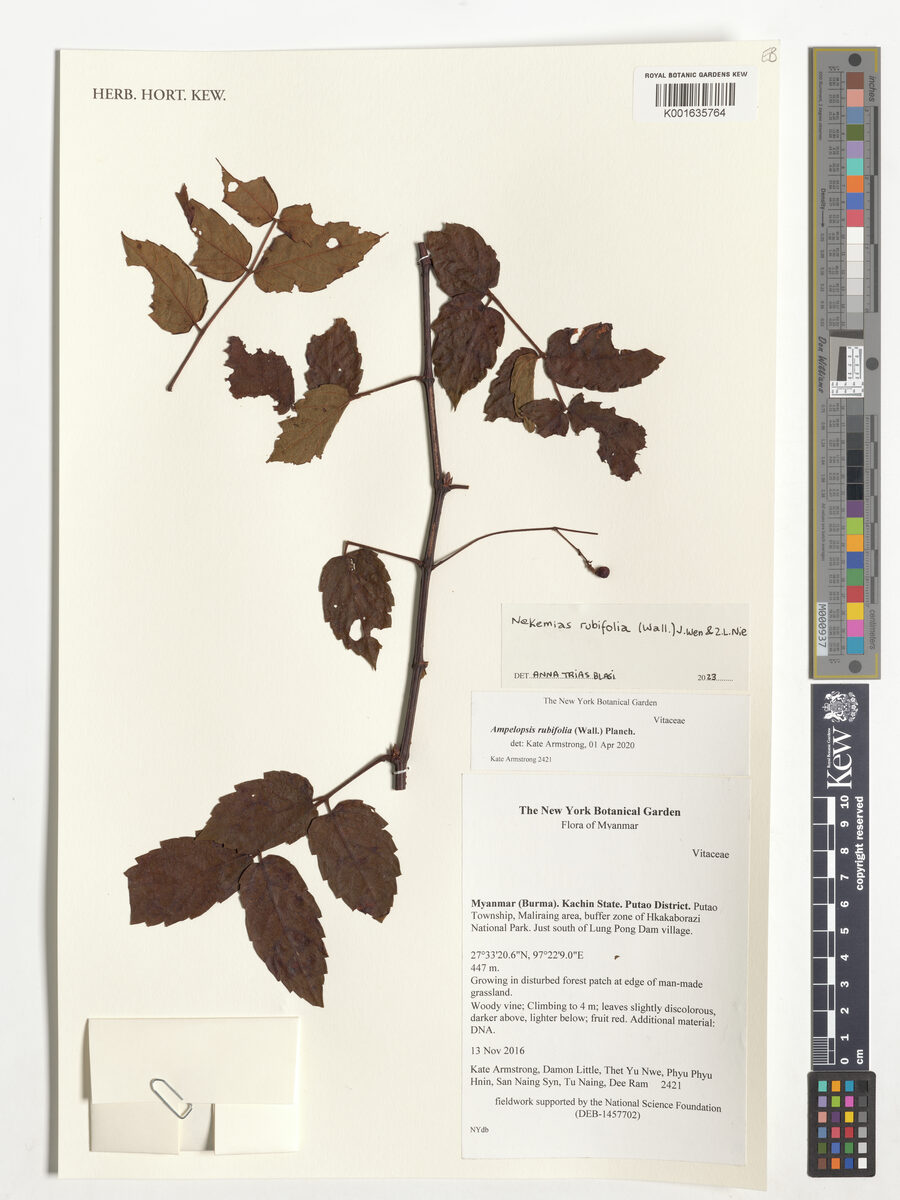
A slightly woody creeper or vine. It has a large taproot system. It climbs by suction pads on the tendrils. The leaves are compound with 3 leaflets. The leaflets are oval and thin and softly hairy. They are 3-8 cm long by 2-4 cm wide. There are coarse teeth along the edge. The flowers are small and greenish. They occur in long clusters. The fruit are flattened berries. They are black and about 0.4 cm across.
Edible Uses
The fruit are eaten raw. The roots are edible after being cooked in hot coals. The sap from cut stalks can be drunk.
Traditional Uses
The sap from cut stalks can be drunk. The roots are edible after they have been cooked in hot coals. The fruit are eaten raw.
This uses section is brief — help expand it
Medicinal Uses
The leaves and roots are astringent and are used as a treatment for fever. The leaves and roots are commonly used for poulticing ulcers of the nose. A decoction of the leaves and roots, or the fresh juice of the leaves and stem, are used in the treatment of high fever. A decoction of the leaves, or the juice of the fresh leaves, is considered to be antiscorbutic The heated leaves are applied as a poultice on boils in order to relieve inflammation. The juice of the leaves, combined with the juice of young pineapple, is used on the head as a treatment for itch and dandruff. The stem is a blood purifier, carminative and expectorant.
Distribution
A tropical plant. It suits tropical and subtropical places. It is often grown near houses. It grows naturally in Northern Australia in open forest. It is damaged by frost. In Yunnan.
Where It Grows
Asia, Australia, Bangladesh, Cambodia, China, East Timor, Himalayas, India*, Indochina, Indonesia, Laos, Malaysia, Maldives, Micronesia, Myanmar, Nepal, Pacific, Palau, Philippines, SE Asia, Thailand, Timor-Leste, Vietnam, Yap,
Cultivation
Plants can be grown from fresh seeds or cuttings. It dies back to the tuber in the dry season.
Production
In China plants flower and fruit June to December.
Notes
There are about 45 Cayratia species. They are mainly in tropical areas.
Nutrition
| Part | Moisture | kJ | kcal | Protein | Vit A | Vit C | Iron | Zinc |
|---|---|---|---|---|---|---|---|---|
| Grape | 72.2 | — | — | 1.1 | — | — | — | — |
| Fruit | 82 | — | — | 0.8 | — | 7 | — | — |
| Tuber | — | — | — | — | — | — | — | — |
| Sap | — | — | — | — | — | — | — | — |
Synonyms
Also Known As
Ambat-vel, Bush grape, Dhavri, Djalwa, Doker bela, Galun, Kudhimarifai, Lenn, Lorwora, Nelerre, Ngiandji, Ow cho, Pulkun, Slender water vine, Takking, Tampara, Taw-sabyit, Threeleaf cayratia, Tradet, Yugali
References (34)
- Anderson, E. F., 1993, Plants and people of the Golden Triangle. Dioscorides Press. p 206
- Bailey, F. M., 1913, Comprehensive Catalogue of Queensland Plants. Queensland Government. p 48 (As Vitis trifolia)
- Biblioth. Bot. 89:370(924). 1927
- Bindon, P., 1996, Useful Bush Plants. Western Australian Museum. p 79
- Bodkin, F., 1991, Encyclopedia Botanica. Cornstalk publishing, p 229
Show all 34 references Hide references
- Cherikoff V. & Isaacs, J., The Bush Food Handbook. How to gather, grow, process and cook Australian Wild Foods. Ti Tree Press, Australia p 154, 198
- Coronel, R.E., 1982, Fruit Collections in the Philippines. IBPGR Newsletter p 9
- Cowie, I, 2006, A Survey of Flora and vegetation of the proposed Jaco-Tutuala-Lore National Park. Timor-Lests (East Timor) www.territorystories.nt/gov.au p 55
- Crawford, I. M., 1982, Traditional Aboriginal Plant Resources in the Kalumburu Area: Aspects in Ethno-economics. Records of the Western Australian Museum Supplement No. 15
- Cribb, A.B. & J.W., 1976, Wild Food in Australia, Fontana. p 74
- Elliot, W.R., & Jones, D.L., 1982, Encyclopedia of Australian Plants suitable for cultivation. Vol 2. Lothian. p 490
- Hedrick, U.P., 1919, (Ed.), Sturtevant's edible plants of the world. p 686 (? As Vitis trifolia)
- Hiddins, L., 1999, Explore Wild Australia with the Bush Tucker Man. Penguin Books/ABC Books. p 167
- Jones, D.L. & Gray, B., 1977, Australian Climbing Plants. Reed. p 87
- Jones D, L, 1986, Ornamental Rainforest Plants in Australia, Reed Books, p 284
- Jadhav, R., et al, 2015, Forest Foods of Northern Western Ghats: Mode of Consumption, Nutrition and Availability. Asian Agri-History Vol. 19, No. 4: 293-317
- Lazarides, M. & Hince, B., 1993, Handbook of Economic Plants of Australia, CSIRO. p 52
- Lim, T. K., 2015, Edible Medicinal and Non Medicinal Plants. Volume 9, Modified Stems, Roots, Bulbs. Springer p 23
- Low, T., 1991, Wild Food Plants of Australia. Australian Nature FieldGuide, Angus & Robertson. p 62
- Morley, B.D., & Toelken, H.R., (Eds), 1983, Flowering Plants in Australia. Rigby. p 229
- Paczkowska, G . & Chapman, A.R., 2000, The Western Australian Flora. A Descriptive Catalogue. Western Australian Herbarium. p 568
- Pandy, R. K. & Saini, S. K., 2007, Edible plants of tropical forests among tribal communities of Madhya Pradesh. Indian Journal of Traditional Knowledge. 6(1), pp 185-190 (As Vitis carnosa)
- Phon, P., 2000, Plants used in Cambodia. © Pauline Dy Phon, Phnom Penh, Cambodia. p 145
- RIRDC, 2010, New Root Vegetables for the Native Food Industry, Australian Government RIRDC Publication 9/161
- Smith, M & Kalotas, A. C., 1985, Bardi Plants: An Annotated List of Plants and Their Use by the Bardi Aborigines of Dampierland, in North-western Australia. Rec. West Aust. Mus. 1985, 12(3): 317-359 (As trifoliata)
- Smith, N and Wightman, G.M., 1990, Ethnobotanical Notes from Belyuen Northern Territory Australia. Northern Territory Botanical Bulletin No 10. Parks and Wildlife Commission of the Northern Territory. p 10.
- Smith, N. M., 1991, Ethnobotanical Field Notes from the Northern Territory, Australia, J. Adelaide Bot. Gard. 14(1): 1-65
- Smith, Nicholas et al. 1993, Ngarinyman Ethnobotany: Aboriginal Plant Use from the Victoria River Area Northern Australia. Northern Territory Botanical Bulletin No 16. Parks and Wildlife Commission of the Northern Territory. p 16, 15.
- Sujanapal, P., & Sankaran, K. V., 2016, Common Plants of Maldives. FAO & Kerala FRI, p 76
- Townsend, K., 1994, Across the Top. Gardening with Australian Plants in the tropics. Society for Growing Australian Plants, Townsville Branch Inc. p 128
- Vigilante, T., et al, 2013, Island country: Aboriginal connections, values and knowledge of the Western Kimberley islands in the context of an island biological survey. Records of the Western Australian Museum Supplement 81: 145-182
- Wheeler, J.R.(ed.), 1992, Flora of the Kimberley Region. CALM, Western Australian Herbarium, p 636
- Wightman, Glenn et al. 1992, Mangarrayi Ethnobotany: Aboriginal Plant Use from the Elsey Area Northern Australia. Northern Territory Botanical Bulletin No 15. Parks and Wildlife Commission of the Northern Territory. p 14, 15.
- Yunupinu Banjgul, Laklak Yunupinu-Marika, et al. 1995, Rirratjinu Ethnobotany: Aboriginal Plant Use from Yirrkala, Arnhem Land, Australia. Northern Territory Botanical Bulletin No 21. Parks and Wildlife Commission of the Northern Territory. p 27.