Ampelocissus gracilipes
Stapf
Abourbee
iNaturalist· cc-by-nc
(c) Carel Jongkind, some rights reserved (CC BY-NC), uploaded by Carel Jongkind
iNaturalist· cc-by-nc
(c) Carel Jongkind, some rights reserved (CC BY-NC)
Summary
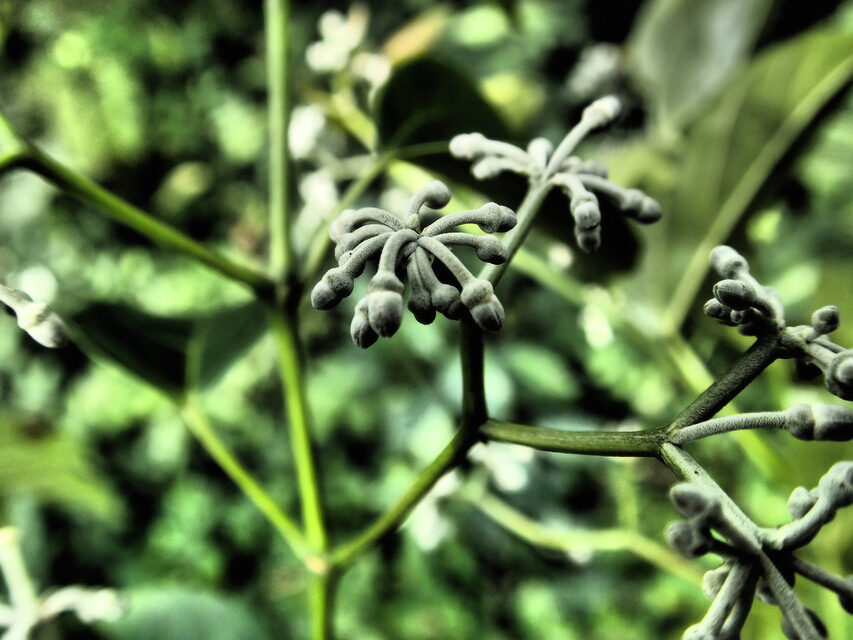
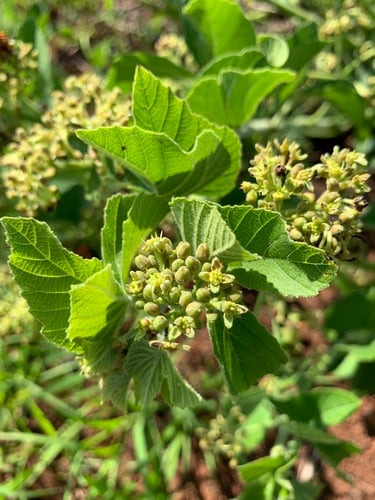
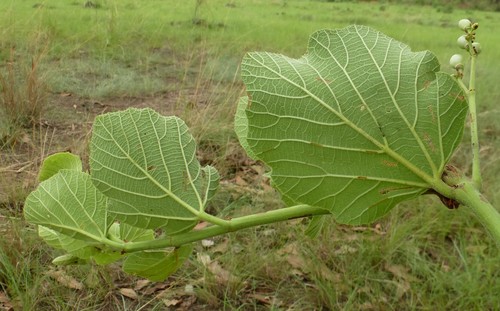
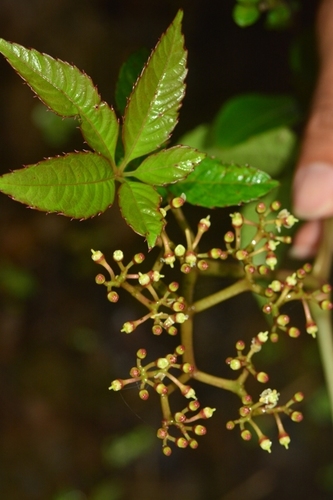
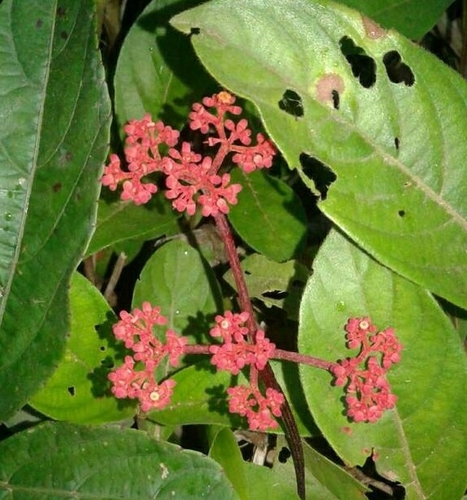
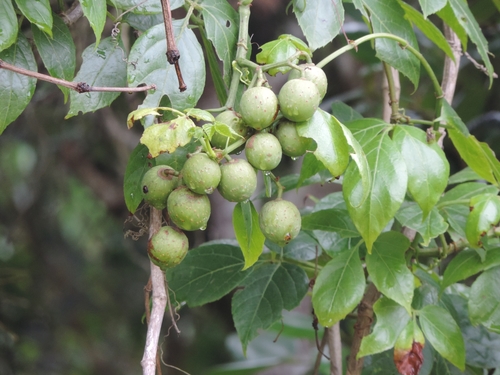
Source: WikipediaAmpelocissus gracilipes, also known as abourbee (Akan-Twi), is a climbing vine or liana in the Grape family of tropical western Africa (Ghana to Liberia), in densely vegetative, forested areas. The stems which are semi-woody, thick and sturdy, but not very hard, start out with a dense covering of washy-brown hairs, giving way over time to a complexion of small warts. Both flowers and fruits are red.
Description
A climber. It has stout softly woody stems. The leaves are broadly oval. The flowers are fruit are red.
This description is brief — help expand it
Edible Uses
The stem sap is potable and abundant, and can be drunk like water. The fruits, whether they have ripened or not, are also edible, but are not consumed in great quantity.
Traditional Uses
The fruit is eaten and can be eaten unripe.
This uses section is brief — help expand it
Distribution
A tropical plant. It grows in closed forest.
Where It Grows
Africa, Ghana, Liberia, West Africa,
Notes
There are about 95 Ampelocissus species.
References (9)
- Abbiw, D.K., 1990, Useful Plants of Ghana. West African uses of wild and cultivated plants. Intermediate Technology Publications and the Royal Botanic Gardens, Kew. p 46
- Bircher, A. G. & Bircher, W. H., 2000, Encyclopedia of Fruit Trees and Edible Flowering Plants in Egypt and the Subtropics. AUC Press. p 25
- Burkill, H. M., 1985, The useful plants of west tropical Africa, Vol. 5. Kew.
- Dalziel, J. M., 1937, The Useful plants of west tropical Africa. Crown Agents for the Colonies London.
- Global Plants JSTOR
Show all 9 references Hide references
- Irvine, 1961,
- Jardin, C., 1970, List of Foods Used In Africa, FAO Nutrition Information Document Series No 2.p 119
- Peters, C. R., O'Brien, E. M., and Drummond, R.B., 1992, Edible Wild plants of Sub-saharan Africa. Kew. p 200
- World Checklist of Useful Plant Species 2020. Royal Botanic Gardens, Kew