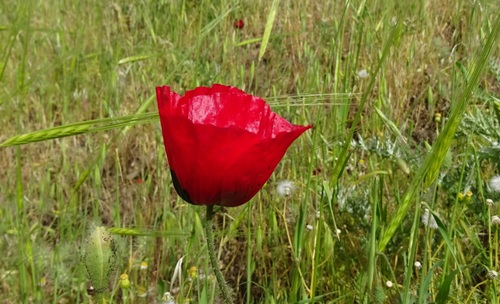
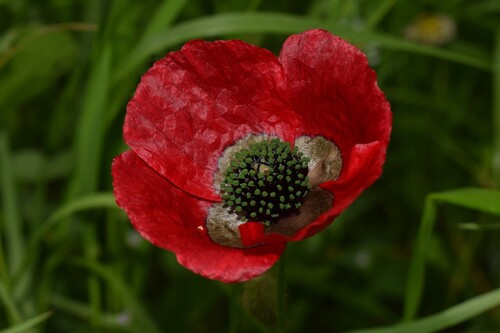
Papaver rhoeas
L.
Shirley Poppies, Corn poppy
iNaturalist· cc-by-sa
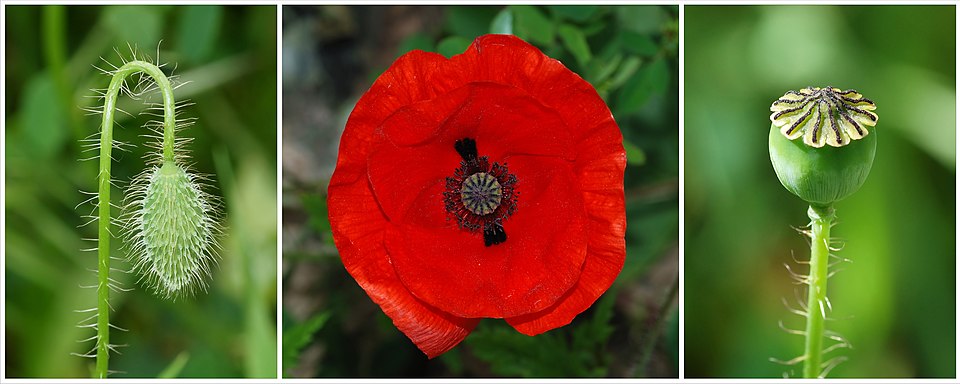
(c) Andreas Rockstein, some rights reserved (CC BY-SA)
iNaturalist· cc-by-sa
(c) Andreas Rockstein, some rights reserved (CC BY-SA)
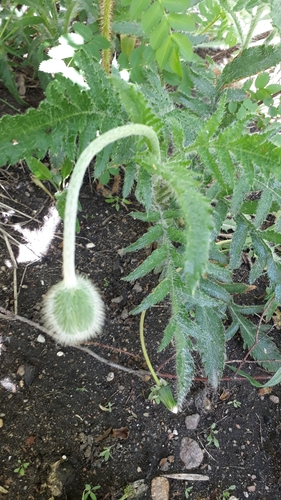
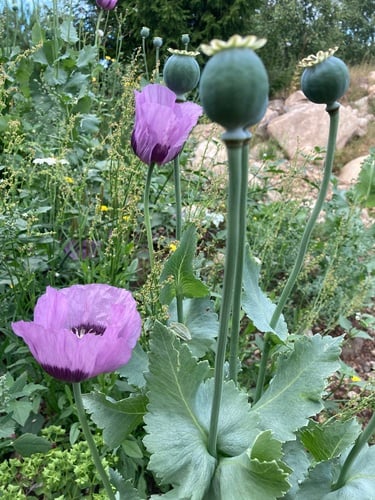
iNaturalist· cc-by-nc-sa
(c) Stefano, some rights reserved (CC BY-NC-SA)
Summary
Source: WikipediaPapaver rhoeas, with common names including common poppy, corn poppy, corn rose, field poppy, Flanders poppy, red poppy, and Odai, is an annual herbaceous species of flowering plant in the poppy family Papaveraceae. It is native to north Africa and temperate Eurasia and is introduced into temperate areas on all other continents except Antarctica. It is regarded as an agricultural weed (hence the common names including "corn" and "field"). As the plant thrives in areas of disturbed soil, it was often abundant in agricultural fields before the advent of herbicides. Flushes of poppies may still appear in fields where herbicides are not used, as well as those in fallow. The corn poppy and its cultivars such as the Shirley poppy are widely grown in gardens, and are frequently found in packets of seed labelled "wildflower mixes". Since World War I, it has been used in the Commonwealth as a symbol of remembrance for fallen soldiers because it commonly grew in fields disturbed by war.
Description
An annual plant which grows up to 60 cm high. It is 15 cm across. The leaf shape and flower colour can vary. The leaves are soft and hairy and deeply divided. The leaves are 5-20 cm long. The leaves are green, not blue-green. The flowers occur singly in the axils of leaves. The flowers are 6-10 cm across. The flower petals have a dark spot at the base. The seed capsules are 0.8-1.5 cm wide. They are smooth.
Edible Uses
The seeds can be eaten raw or cooked and are widely used as a flavouring in cakes, bread, and fruit salads, lending a pleasant nutty taste. Though small, they are easy to harvest thanks to the plant's fairly large seed pods. The seeds are safe to eat and contain none of the alkaloids found in other parts of the plant. Leaves should be harvested and used before flower buds form — either raw or cooked like spinach, or added as a flavouring to soups and salads; some caution is advised regarding their consumption. An edible oil pressed from the seeds is considered an excellent substitute for olive oil, suitable for salad dressings and cooking. A syrup prepared from the scarlet petals can be stirred into soups and gruels, and a red dye extracted from the petals is used as a food colouring, particularly in wine.
Traditional Uses
The seed is eaten raw or cooked. They can be used in stews. They are used in caked, breads and rolls. The young leaves are eaten raw or cooked. They are used in soups. The dried leaves are eaten with honey. An edible oil is obtained from the seed. A syrup can be prepared from the scarlet flower petals. The flowers are chewed and sucked. A red dye from the petals is used to flavour wine.
Medicinal Uses
Corn poppy has a long history of medicinal use, particularly for ailments in the elderly and children. It acts chiefly as a mild pain reliever, a treatment for irritable coughs, and a calmer of nervous over-activity. Unlike the related opium poppy it is non-addictive, though it does contain alkaloids still under investigation and should only be used under the supervision of a qualified herbalist. The flowers and petals are anodyne, emollient, emmenagogue, expectorant, hypnotic, slightly narcotic, and sedative. An infusion is taken internally for bronchial complaints and coughs, insomnia, poor digestion, nervous digestive disorders, minor painful conditions, and jaundice. Petals are harvested as the flowers open and dried, collected on a dry day, or made into a syrup. The latex in the seedpods is narcotic and slightly sedative; in very small quantities and under expert supervision it can be used as a sleep-inducing agent. The leaves and seeds are tonic and useful in treating low fevers. The plant also has anticancer properties.
Known Hazards
Contains alkaloids still under investigation; use only under qualified herbalist supervision. Leaves should not be used after flower buds form.
Distribution
It is a temperate plant. It does not do well on acid soils. It prefers a well drained sandy soil in a sunny position. It can grow in arid places. It Argentina it grows from sea level to 900 m above sea level. It suits hardiness zones 5-9. Tasmania Herbarium.
Where It Grows
Afghanistan, Africa, Albania, Andorra, Argentina, Asia, Australia, Austria, Azores, Balkans, Belgium, Bosnia, Britain, Bulgaria, Canada, Canary Islands, Central America, Chile, China, Crete, Croatia, Cyprus, Czech Republic, Denmark, Dominican Republic, Egypt, Europe, France, Germany, Greece, Haiti, Hungary, India, Iran, Iraq, Ireland, Israel, Italy, Japan, Jordan, Korea, Kuwait, Lebanon, Libya, Lithuania, Luxembourg, Macedonia, Mediterranean, Middle East, Moldova, Morocco, Myanmar, Netherlands, North Africa, North America, Pakistan, Saudi Arabia, Scandinavia, Sicily, SE Asia, Sicily, Slovakia, Slovenia, South Africa, South America, Spain, Sweden, Switzerland, Syria, Taiwan, Tasmania, Turkey, Türkiye, Uruguay, USA, Vietnam, West Indies, Yemen, Yugoslavia,
Cultivation
Prefers a well-drained sandy loam in a sunny position. Does not do well on wet clay soils but succeeds in most other soils. Plants usually self-sow freely when growing in suitable conditions so long as the soil surface is disturbed. There are several named varieties selected for their ornamental value. A polymorphic species, varying in leaf shape and flower colour. When growing in cereal fields, poppies decrease the yields of nearby cereal plants. Members of this genus are rarely if ever troubled by browsing deer or rabbits.
Propagation
Sow seed in spring or autumn directly in situ.
Other Uses
A red dye obtained from the flowers is very fugitive. A syrup made from the petals has historically been used as a colouring for inks. The red petals are also added to pot-pourri for colour.
Other Information
The petals are eaten by children.
Notes
There are 70 Papaver species.
Nutrition
| Part | Moisture | kJ | kcal | Protein | Vit A | Vit C | Iron | Zinc |
|---|---|---|---|---|---|---|---|---|
| Leaves | 91 | 148 | 36 | 2.9 | — | — | 0.9 | 0.2 |
Synonyms
Also Known As
Ababoles, Amapola, Babaol, Beauty Yu, Bein-ni, Bellaman, Belle bimbe, Buk, Bulka, Caramadones, Chovannakashakasha, Corn Poppy, Erba pantanina, Erragassagassala, Errapostakaya, Field Poppy, Flanders poppy, Flilou, Foond, Gelincik, Gulika ereba, Kagma, Kamacik, Kempu gasgase, Kempukkasakhasi, Kukumavotu, Lala, Lalkhaskhas, Lalposht, Lalpost, Mak, Makalj, Makelj, Nunu, Papagna, Paparina, Paparinazzu, Pipacs, Poljski mak, Poppy, Post, Postekebija, Rakta-posta, Rouzel, Ruelles, Shivappupostakachedi, Siguppuppostaka, Sivappugashagasha, Tambadakhasakhasa, Yumeiran
References (84)
- Ambasta, S.P. (Ed.), 2000, The Useful Plants of India. CSIR India. p 428
- Bianchini, F., Corbetta, F., and Pistoia, M., 1975, Fruits of the Earth. Cassell. p 78
- Biscotti, N. & Pieroni, A., 2015, The hidden Mediterranean diet: wild vegetables traditionally gathered and consumed in the Gargano area, Apulia, SE Italy. Acta Societatis Botanicorum Poloniae 84 (3): 327-338
- Biscotti, N. et al, 2018, The traditional food use of wild vegetables in Apulia (Italy) in the light of Italian ethnobotanical literature. Italian Botanist 5:1-24
- Blamey, M and Grey-Wilson, C., 2005, Wild flowers of the Mediterranean. A & C Black London. p 60
Show all 84 references Hide references
- Blanco-Salas, J., et al, 2019, Wild Plants Potentially Used in Human Food in the Protected Area “Sierra Grande de Hornachos” of Extremadura (Spain). Sustainability 2019, 11, 456
- Bodkin, F., 1991, Encyclopedia Botanica. Cornstalk publishing, p 760
- Brickell, C. (Ed.), 1999, The Royal Horticultural Society A-Z Encyclopedia of Garden Plants. Convent Garden Books. p 748
- Burnie, G.(Ed.), 2003, Annuals and Bulbs. The Gardener's Handbooks. Fog City Press. p 203
- Cundall, P., (ed.), 2004, Gardening Australia: flora: the gardener's bible. ABC Books. p 981
- Della, A., et al, 2006, An ethnobotanical survey of wild edible plants of Paphos and Larnaca countryside of Cyprus. J. Ethnobiol. Ethnomed. 2:34
- Demir, I. & Ayaz, N., 2022, Wild edible plants contributing to the traditional foods of Mardin (Turkey) Province. Indian Journal of Traditional Knowledge Vol 21(3), July 2022, pp 569-582
- Denes, A., et al, 2012, Wild plants used for food by Hungarian ethnic groups living in the Carpathian Basin. Acta Societatis Botanicorum Poloniae 81 (4): 381-396
- Diaz-Betancourt, M., et al, 1999, Weeds as a future source for human consumption. Rev. Biol. Trop. 47(3):329-338
- Dogan, Y., et al, 2004, The Use of Wild Edible Plants in Western and Central Anatolia (Turkey). Economic Botany 58(4) pp. 684-690
- Dogan, Y., 2012, Traditionally used wild edible greens in the Aegean Region of Turkey. Acta Societatis Botanicorum Poloniae 81(4): 329-342
- Dogan, Y. et al, 2013, Wild Edible Plants sold in the Local Markets of Izmir, Turkey. Pak. J. Bot. 45(S1): 177-184
- Dolina, K. & Luczaj, L., 2014, Wild food plants used on the Dubrovnik coast (south-eastern Croatia) Acta Soc Bot Pol 83(3):175–181
- Dretakis, M. et al, 2012, Flora and Fauna Biodiversity in an ancient olive grove in Crete (Greece) in Calabrese G. (Ed.) Study on Biodiversity in Century-Old Olive Groves. CIHEAM - Mediterranean Agronomic Institute of Bari. p 94
- Ertug, F., 2000, An Ethnobotanical Study in Central Anatolia (Turkey). Economic Botany Vol. 54. No. 2. pp. 155-182
- Ertug, F., 2004, Wild Edible Plants of the Bodrum Area. (Mugla, Turkey). Turk. J. Bot. 28 (2004): 161-174
- Ertug, F, Yenen Bitkiler. Resimli Türkiye Florası -I- Flora of Turkey - Ethnobotany supplement
- Facciola, S., 1998, Cornucopia 2: a Source Book of Edible Plants. Kampong Publications, p 166
- Geraci, A., et al, 2018, The wild taxa utilized as vegetables in Sicily (Italy): a traditional component of the Mediterranean diet. Journal of Ethnobiology and Ethnomedicine (2018) 14:14
- Ghanimi, R., et al, 2022, Ethnobotanical study on wild edible plants traditionally used by Messiwa people, Morocco. Journal of Ethnobiology and Ethnomedicine. 18:16
- Gurdal, B. & Kultur, S., 2014, The edible and miscellaneous useful plants in Marmaris (Southwest Turkey). İstanbul Ecz. Fak. Derg. / J. Fac. Pharm. Istanbul 44(1) 2014 pp.69-78
- Hadjichambis, A. C., et al, 2007, Wild and semi-domesticated food plant consumption in seven circum-Mediterranean areas. International Journal of Food Sciences and Nutrition. 2007, 1-32.
- Hancer, C. K., et al, 2020, Traditional Knowledge of Wild Edible Plants of Biga (Çanakkale), Turkey. Acta Societatis Botanicorum Poloniae / 2020 / Volume 89 / Issue 1 / Article 8914
- Hedrick, U.P., 1919, (Ed.), Sturtevant's edible plants of the world. p 463
- Hibbert, M., 2002, The Aussie Plant Finder 2002, Florilegium. p 218
- http://www.botanic-gardens-ljubljana.com/en/plants
- Hussey, B.M.J., Keighery, G.J., Cousens, R.D., Dodd, J., Lloyd, S.G., 1997, Western Weeds. A guide to the weeds of Western Australia. Plant Protection Society of Western Australia. p 194
- Huxley, A. (Ed.), 1977, The Encyclopedia of the Plant Kingdom. Chartweil Books. p 24
- Hyde-Wyatt, B.H. & Morris D.I., 1975, Tasmanian Weed Handbook. Dept of Ag Tasmania. p 99
- Irving, M., 2009, The Forager Handbook, A Guide to the Edible Plants of Britain. Ebury Press p 253
- Kargioglu, M. et al, 2010, Traditional Uses of Wild Plants in the Middle Aegean Region. Human Ecology 38:429-450
- Kayabasi, N. P., et al, 2018, Wild edible plants and their traditional use in the human nutrition in Manyas (Turkey). Indian Journal of Traditional Knowledge. Vol. 17(2), April 2018, pp 299-306
- Khan, A. H., et al, 2023, Traditional foraging for ecological transition? Wild food ethnobotany among three ethnic groups in the highlands of the eastern Hindukush, North Pakistan. Journal of Ethnobiology and Ethnomedicine 19:9
- Kizilarslan, C. & Ozhatay, N., 2012, An ethnobotanical study of the useful and edible plants of İzmit. Marmara Pharmaceutical Journal 16: 134-140, 2012.
- Koca, I., et al, 2015, Some Wild Edible Plants and Their Dietary Fiber Contents. Pakistan Journal of Nutrition. 14(4): 188-194
- Lamp, C & Collet F., 1989, Field Guide to Weeds in Australia. Inkata Press. p 198
- Lazarides, M. & Hince, B., 1993, Handbook of Economic Plants of Australia, CSIRO. p 181
- Lentini, F. and Venza, F., 2007, Wild food plants of popular use in Sicily. J Ethnobiol Ethnomedicine. 3: 15
- Loughmiller, C & L., 1985, Texas Wildflowers. A Field Guide. University of Texas, Austin. p 187
- Low, T., 1991, Wild Herbs of Australia and New Zealand. Angus & Robertson. p 80 (Drawing)
- Luczaj et al, 2013, Wild vegetable mixes sold in the markets of Dalmatia (southern Croatia). Journal of Ethnobiology and Ethnomedicine. 8:2
- Luczaj, L. et al, 2013, Wild food plants used in the villages of the Lake Vrana Nature Park (northern Dalmatia, Croatia). Acta Societatis Botanicorum Poloniae, 82(4): 275-281
- Luczaj, L. et al, 2014, Wild Food Plants of Dalmatia (Croatia). in A. Pieroni, C. L. Quave (eds.), Ethnobotany and Biocultural Diversities in the Balkans, p 142
- Mabey, R., 1973, Food for Free. A Guide to the edible wild plants of Britain, Collins. p 145
- Mahklouf, M. H., 2019, Ethnobotanical Study of Edible Wild Plants in Libya. European Journal of Ecology. 5(2): 30-40
- Mattalia, G., et al, 2012, Traditional uses of wild food and medicinal plants among Brigasc, Kye ́, and Provenc ̧al communities on the Western Italian Alps. Genet Resour Crop Evol. Springer
- Miskoska-Milevska, E. et al, 2020, Traditional uses of wild edible plants in the Republic of North Macedonia. PHYTOLOGIA BALCANICA 26(1): 155–162, Sofia, 2020 p 159
- Molina, M. et al, 2014, Weeds and Food Diversity: Natural Yield Assessment and Future Alternatives for Traditionally Consumed Wild Vegetables. Journal of Ethnobiology 34(1): 44–67
- Motti, R. et al, 2009, Traditional Plant Use in the Phlegraean Fields Regional Park (Campania, South Italy). Human Ecology, 37:775-782
- Nassif, F., & Tanji, A., 2013, Gathered food plants in Morocco: The long forgotten species in Ethnobotanical Research. Life Science Leaflets 3:17-54
- Nebel, S., Pieroni, A. & Heinrich, M., 2006, Ta cho`rta: Wild edible greens used in the Graecanic area in Calabria, Southern Italy. Appetite 47 (2006) 333–342
- Paczkowska, G . & Chapman, A.R., 2000, The Western Australian Flora. A Descriptive Calatogue. Western Australian Herbarium. p 416
- Pieroni, A., 1999, Gathered wild food plants in the Upper Valley of the Serchio River (Garfagnana), Central Italy. Economic Botany 53(3) pp 327-341
- Pieroni A, Nebel S, Santoro RF, Heinrich M., 2005, Food for two seasons: culinary uses of non-cultivated local vegetables and mushrooms in a south Italian village. Int J Food Sci Nutr. 56(4):245-72
- Plants for a Future database, The Field, Penpol, Lostwithiel, Cornwall, PL22 0NG, UK. http://www.scs.leeds.ac.uk/pfaf/
- Plants of Haiti Smithsonian Institute http://botany.si.edu/antilles/West Indies
- Polat, R., et al, 2015, Survey of wild food plants for human consumption in Elazig (Turkey). Indian Journal of Traditional Knowledge. Vol. 1(1): 69-75
- Polat, R., et al, 2017, Survey of wild food plants for human consumption in Bingol, (Turkey). Indian Journal of Traditional Knowledge. Vol. 16(3) July 2017, pp. 378-384
- Rigat, M et al, 2009, Ethnobotany of Food Plants in the High River Ter Valley (Pyrenees, catalonia, Iberian Peninsula): Non-Crop Food Vascular Plants and Crop Food Plants with medicinal Properties. Ecology of Food and Nutrition, 48:303-327
- Rivera, C., et al, 2005, The Ethnobotanical Study of Local Mediterranean Food Plants as Medicinal Resources in Southern Spain. Journal of Physiologyand Pharmacology. 56, Suppl. 1, 97-114
- Royal Botanic Gardens, Kew (1999). Survey of Economic Plants for Arid and Semi-Arid Lands (SEPASAL) database. Published on the Internet; http://www.rbgkew.org.uk/ceb/sepasal/internet [Accessed 5th May 2011]
- Sanchez-Mata, M. C., et al, 2010, Wild vegetables of the Mediterranean area as valuable sources of bioactive compounds. Genet. Resourc. Crop Evol. 59:431-443
- Sansanelli, S., et al, 2014, Wild food plants traditionall consumed in the area of Bologna (Emilia Romagna region, Italy). Journal of Ethnobiology and Ethnomedicine 10:69
- Sansanelli, S., et al, 2017, Ethnobotanical survey of wild food plants traditionally collected and consumed in the Middle Agri Valley (Basilicata region, southern Italy). Journal of Ethnobiology and Ethnomedicine (2017) 13:50
- Senkardes, I & Tuzlaci, E., 2016, Wild Edible Plants of Southern Part of Nevsehir inTurkey. Marmara Pharmaceutical Journal 20:34-43
- Siminiuc, R. & Turcanu, D., 2021, Study of Edible Spontaneous Herbs in the Republic of Moldova for Ensuring a Sustainable Food System. Food and Nutrition Sciences, 2021, 12, 703-718 p 709
- Simkova, K. et al, 2014, Ethnobotanical review of wild edible plants used in the Czech Republic. Journal of Applied Botany and Food Quality 88, 49-67
- Skoula, M & Sarpaki, A., 2005, Traditional knowledge on the uses of wild plants in Crete, Greece.
- Sp. pl. 1:507. 1753
- Tasmanian Herbarium Vascular Plants list p 43
- Tardio, J., et al, Ethnobotanical review of wild edible plants in Spain. Botanical J. Linnean Soc. 152 (2006), 27-71
- Taskin, T. and Bitis, L., 2016, In vitro Antioxidant activity of eight wild edible plants in Bursa Province of Turkey. Farmacia 2016, Vol. 64, 5
- Tbatou, M, et al, 2016, Wild Edible Plants traditionally used in the countryside of El Jadida, Coastal Area in the Center of Morocco. Life Sciences Leaflets 75:28-48
- Turner, N. J. et al, 2011, Edible and Tended Wild Plants, Traditional Ecological Knowledge and Agroecology. Critical Reviews in Plant Sciences, 30:198-225
- Uphof,
- Valder, P., 1999, The Garden Plants of China. Florilegium. p 378
- Wiersema, J. H. & Leon, B., 2013, World Economic Plants. A Standard Reference CRC Press. 2nd Ed. p 493
- Wilson, A.J.G., (Ed.), 1994, Flora of Australia Volume 49, Oceanic Islands1, Australian Government Publishing Service, Canberra. p 57
- Zeng, Y., et al, 2014, Evaluation of antioxidant activities of extracts from 19 Chinese edible flowers. SpringerPlus 2014, 3:315