Panicum decompositum
R. Br.
Australian millet, Native millet, Umbrella grass, Papa Grass
iNaturalist· cc-by-nc
(c) fitsher2304, some rights reserved (CC BY-NC)
iNaturalist· cc-by-nc
(c) geoffbyrne, some rights reserved (CC BY-NC)
iNaturalist· cc-by-nc
(c) jenaoide, some rights reserved (CC BY-NC), uploaded by jenaoide
Summary
Source: WikipediaPanicum decompositum, known by the common names native millet, native panic, Australian millet, papa grass, and umbrella grass, is a species of perennial grass native to the inland of Australia. It occurs in every mainland state. The seeds can be cultivated to produce flour typically used in Aboriginal bushfood. The species is also considered to have relatively high palatability by livestock, making it suitable for grazing pastures.
Description
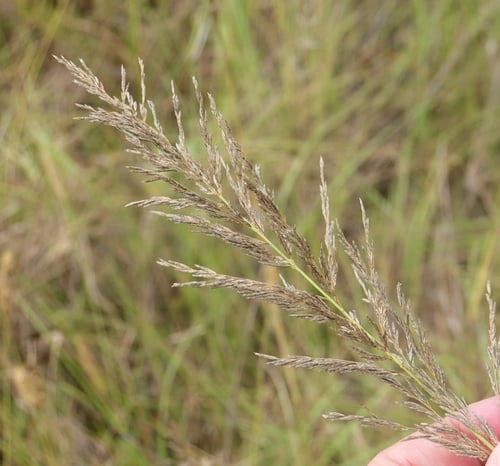
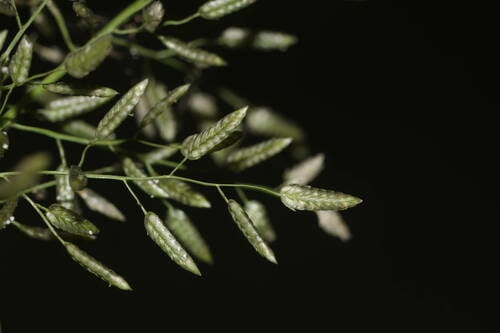
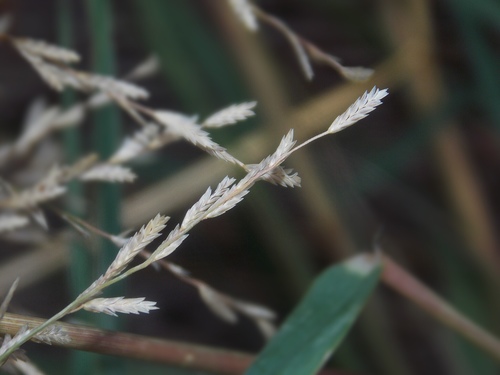
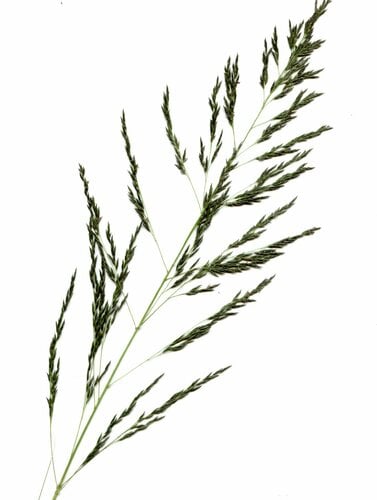
A perennial millet grass plant. It grows up to 30-100 cm tall and spreads 30-80 cm wide. It forms stout tussocks. The stems are hollow and erect. The leaf blades are 15-30 cm long and 1-2 cm wide and flat. They are bluish-green with a white midrib. The seed head is 40 cm long. It spreads out about 40 cm wide. There are only a few spikelets. These are 0.3-0.4 cm long and green to purple. The seeds are dark brown and shiny.
Edible Uses
The seed can be cooked whole or ground into a flour. Considered a type of millet, the seed is rather small and fiddly to use, but has a mild flavour and can serve as a staple food in the manner of millet.
Traditional Uses
The seeds are cooked or ground into a flour.
This uses section is brief — help expand it
Medicinal Uses
None known.
Known Hazards
Some species of the genus Panicum such as Panicum dichotomiflorum are known to cause hepatogenous photosensitisation in ruminant livestock such as sheep. This occurs when the build up of phylloerythrin, a photosentising agent, in the gut reaches the skin and cause a phototoxic reaction which can lead to burning, blisters, or lesions of the skin. P. decompositum has been suspected to be poisonous in association with similar photosensitisation causing species, however, no specific cases were confirmed.
Distribution
A tropical plant. It grows on damp sandy soils. They need a well drained soils and sun. It grows in tropical and subtropical places. It can grow in arid places.
Where It Grows
Asia, Australia, Pacific, Taiwan, Tonga,
Cultivation
Historic Crop Management: Standard Staple Crop: Balanced carbWe have almost no information on this species and do not know if it will be hardy in Britain. The following notes are based on the general needs of the genus. Requires a moderately fertile well-drained soil in full sun.
Propagation
Sow seed in spring in a greenhouse, barely covering it. Germination should take place within a week. Prick out seedlings into trays or individual pots and plant out after the last expected frosts. Propagate also by division in spring. Larger divisions can be planted directly into permanent positions. Smaller divisions are better potted up and grown on in light shade in a cold frame until well established, then planted out in late spring or early summer.
Other Uses
None known.
Production
The seeds are gathered in a bowl by rubbing the heads off the stalks. These are then windowed.
Notes
There are about 500 Panicum species.
Nutrition
| Part | Moisture | kJ | kcal | Protein | Vit A | Vit C | Iron | Zinc |
|---|---|---|---|---|---|---|---|---|
| Seed | 9.2 | 1434 | 343 | 12.7 | — | 1 | — | — |
Synonyms
Also Known As
Guli, Kaltu-kaltu
References (29)
- Anon., 2003, Native Plants for the Fitzroy basin. Society for Growing Australian Plants Inc. (Rockhampton Branch) p 69
- Cancilla, D., 2018, Ethnobotanical and Ethnozoological Values Desktop Assessment - Eliwana Project. p 13
- Cherikoff V. & Isaacs, J., The Bush Food Handbook. How to gather, grow, process and cook Australian Wild Foods. Ti Tree Press, Australia p 190, 196
- Chivers, I., et al, 2015, Native grasses make new products. A review of current and past uses and assessment of potential. Rural Industries Research and Development Corporation. Aust. Gvt. p 17
- Cribb, A.B. & J.W., 1976, Wild Food in Australia, Fontana. p 103
Show all 29 references Hide references
- Elliot, W.R., & Jones, D.L., 1997, Encyclopedia of Australian Plants suitable for cultivation. Vol 7. Lothian. p 161 (Drawing)
- Goddard, C. & Kalotas A. (Eds.), Punu, 2002, Yankunytjatjara plant use. Jukurrpa books. p 81
- Hardwick, G., 2001, Economically Useful Plants for Northern Australia: Master Species List. Crusader eBooks.
- Hedrick, U.P., 1919, (Ed.), Sturtevant's edible plants of the world. p 461
- Hunter, J.T., 2017, Is there a relationship between contemporary high Aboriginal plant resource locations and mapped vegetation communities? Cunninghamia 17:27-34. The Royal Botanic Garden Sydney. ISSN 2200 - 405X
- Isaacs, J., 1987, Bush Food, Aboriginal Food and Herbal Medicine. Weldons. p 108
- Kenneally, K.E., Edinger, D. C., and Willing T., 1996, Broome and Beyond, Plants and People of the Dampier Peninsula, Kimberley, Western Australia. Department of Conservation and Land Management. p 222
- Lang, P. J., et al, 1986, Anangu Pitjantjatjara Lands Biological Survey. p 43
- Latz, P.K., 1996, Bushfires and Bushtucker: Aboriginal plant use in Central Australia. IAD Press Alice Springs p 240
- Lazarides, M. & Hince, B., 1993, Handbook of Economic Plants of Australia, CSIRO. p 180
- Low, T., 1991, Wild Food Plants of Australia. Australian Nature FieldGuide, Angus & Robertson. p 158
- Low, T., 1992, Bush Tucker. Australia’s Wild Food Harvest. Angus & Robertson. p 85
- McKerney, M. & White, H., 2011, Bush Tucker, Boomerangs & Bandages. Border River-Gwyder Catchment Management Authority p 141
- Morley, B.D., & Toelken, H.R., (Eds), 1983, Flowering Plants in Australia. Rigby. p 391
- Paczkowska, G. & Chapman, A.R., 2000, The Western Australian Flora. A Descriptive Catalogue. Western Australian Herbarium. p 111
- Pascoe, B., 2018, Dark Emu. Aboriginal Australia and the birth of Agriculture. Magabala books, p 33, 65
- Petheram, R.J. and Kok, B., 2003, Plants of the Kimberley Region of Western Australia. UWA Press p 183
- Plants for a Future database, The Field, Penpol, Lostwithiel, Cornwall, PL22 0NG, UK. http://www.scs.leeds.ac.uk/pfaf/
- Prodr. 191. 1810
- Smith, K & I., 1999, Grow your own bushfoods. New Holland. Australia. p 87
- Ulian, T., et al, 2020, Unlocking plant resources to support food security and promote sustainable agriculture. Plants, People, Planet. 2020;2:421–445.
- Wheeler, J.R.(ed.), 1992, Flora of the Kimberley Region. CALM, Western Australian Herbarium, p 1196
- Williams A. & Sides, T., 2008, Wiradjuri Plant Use in the Murrumbidgee Catchment. Murrumbidgee Catchment Management Authority. Wagga Wagga, p 69
- Yuncker, T.G., 1959, Plants of Tonga, Bernice P. Bishop Museum, Hawaii, Bulletin 220. p 60