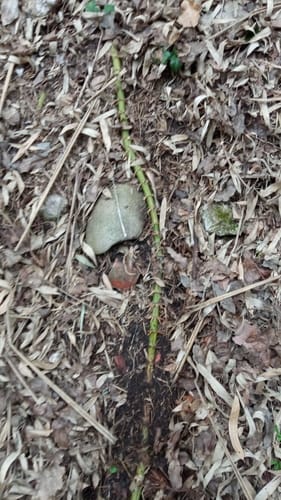
Brachiaria stigmatisata
(Mez) Stapf.
Poaceae Edible: Seeds, Cereal
gbif· cc-by
Royal Botanic Gardens, Kew
gbif· cc-by
Meise Botanic Garden
gbif· cc-by
Meise Botanic Garden
Description
A small annual tropical grass that often lies along the ground, growing from seeds each year. It is found in disturbed soils in drier regions of West Africa.
Edible Uses
The seeds are used as a cereal and serve as a famine food.
Distribution
A tropical plant. It grows in disturbed soils in drier regions of West Africa.
Where It Grows
Africa, Burkina Faso, Central Africa, Chad, Ghana, Guinea, Guinée, Guinea-Bissau, Mali, Nigeria, Senegal, Sierra Leone, Sudan, West Africa,
Other Information
It is a famine food.
Notes
There are about 100 Brachiaria species.
Synonyms
Panicum stigmatisata Mez.
Also Known As
Kamimbi, Kulumogo, Larba, Qwel
References (8)
- Abbiw, D.K., 1990, Useful Plants of Ghana. West African uses of wild and cultivated plants. Intermediate Technology Publications and the Royal Botanic Gardens, Kew. p 25
- Bircher, A. G. & Bircher, W. H., 2000, Encyclopedia of Fruit Trees and Edible Flowering Plants in Egypt and the Subtropics. AUC Press. p 63
- Burkill, H. M., 1985, The useful plants of west tropical Africa, Vol. 3. Kew.
- Busson, 1965,
- Gallagher, D. E., 2010, Farming beyond the escarpment: Society, Environment, and Mobility in Precolonial Southeastern Burkina Faso. PhD University of Michigan.
Show all 8 references Hide references
- Jardin, C., 1970, List of Foods Used In Africa, FAO Nutrition Information Document Series No 2.p 1
- Peters, C. R., O'Brien, E. M., and Drummond, R.B., 1992, Edible Wild plants of Sub-saharan Africa. Kew. p 19
- World Checklist of Useful Plant Species 2020. Royal Botanic Gardens, Kew