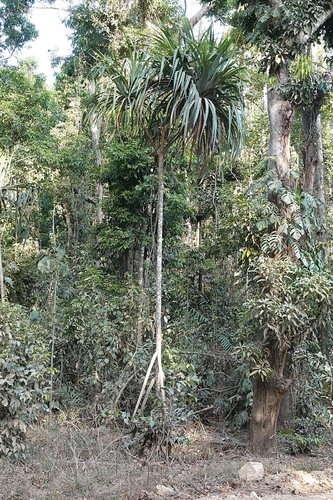
Pandanus utilis
Bory
Common screw pine
iNaturalist· cc-by-nc
(c) Otters inverts, some rights reserved (CC BY-NC)
iNaturalist· cc-by-nc
(c) colleen611, some rights reserved (CC BY-NC)
iNaturalist· cc-by-nc
(c) mackenzie klink, some rights reserved (CC BY-NC)
Summary
Source: WikipediaPandanus utilis, commonly known as common screwpine or pimento thatch, is a species of monocot in the genus Pandanus, native to the Mascarene Islands of Mauritius, Rodrigues, and Réunion, and naturalised in Madagascar (where it has often been thought native), the Seychelles, and elsewhere.
Description
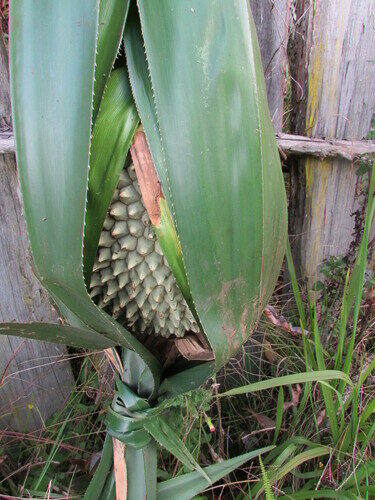
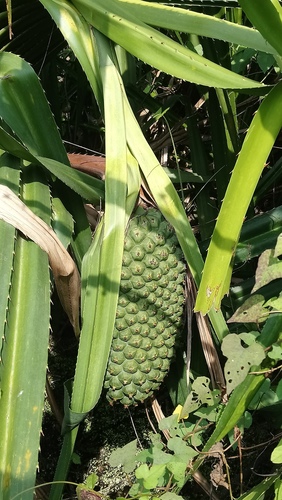
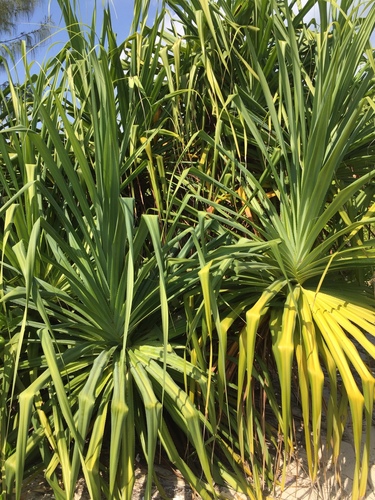
A screw pine. It is a tall tree. It grows 12-18 m high. It forms many branches. It has aerial roots. The leaves are stiff and blue-green. They have red spines at the base. The leaves are arranged in spirals. The flowering head is made up of very small creamy white flowers. The fruit is a rounded compound head. The head is 15-20 cm across. It is made up of 100 long woody fruit. They are 25 mm long. They are edible when fully ripe.
Edible Uses
The fully ripe fruits yield a starchy food that is cooked and eaten. The male spadices are also edible.
Traditional Uses
The fruit yields a starchy food which is cooked and eaten. The male spadices are edible.
This uses section is brief — help expand it
Medicinal Uses
Root decoctions are used as a remedy against venereal diseases. The cooked male inflorescences are considered to have aphrodisiac properties.
Distribution
A tropical plant. It grows from sea level up to 1,800 m above sea level in East Africa. It needs a sandy, well-drained soil. It needs full sun. It is often in coastal areas. It suits hardiness zones 10-12. In XTBG Yunnan. In Townsville Anderson BG.
Where It Grows
Africa, Asia, Australia, Benin, Bermuda, Brazil, Caribbean, Central America, China, Colombia, Cuba, East Africa, Hawaii, India, Indonesia, Madagascar*, Mauritius, Mozambique, Pacific, Puerto Rico, Reunion, SE Asia, Senegal, Seychelles, Singapore, Tanzania, USA, West Africa, West Indies,
Cultivation
Plants can be grown from seeds.
Propagation
Seed - best pre-soaked for 24 hours prior to sowing. The seed should not be covered, but should be placed face up in the growing medium at a temperature of at least 27°c. They germinate in 2 - 3 months. Stem suckers. Cuttings.
Other Uses
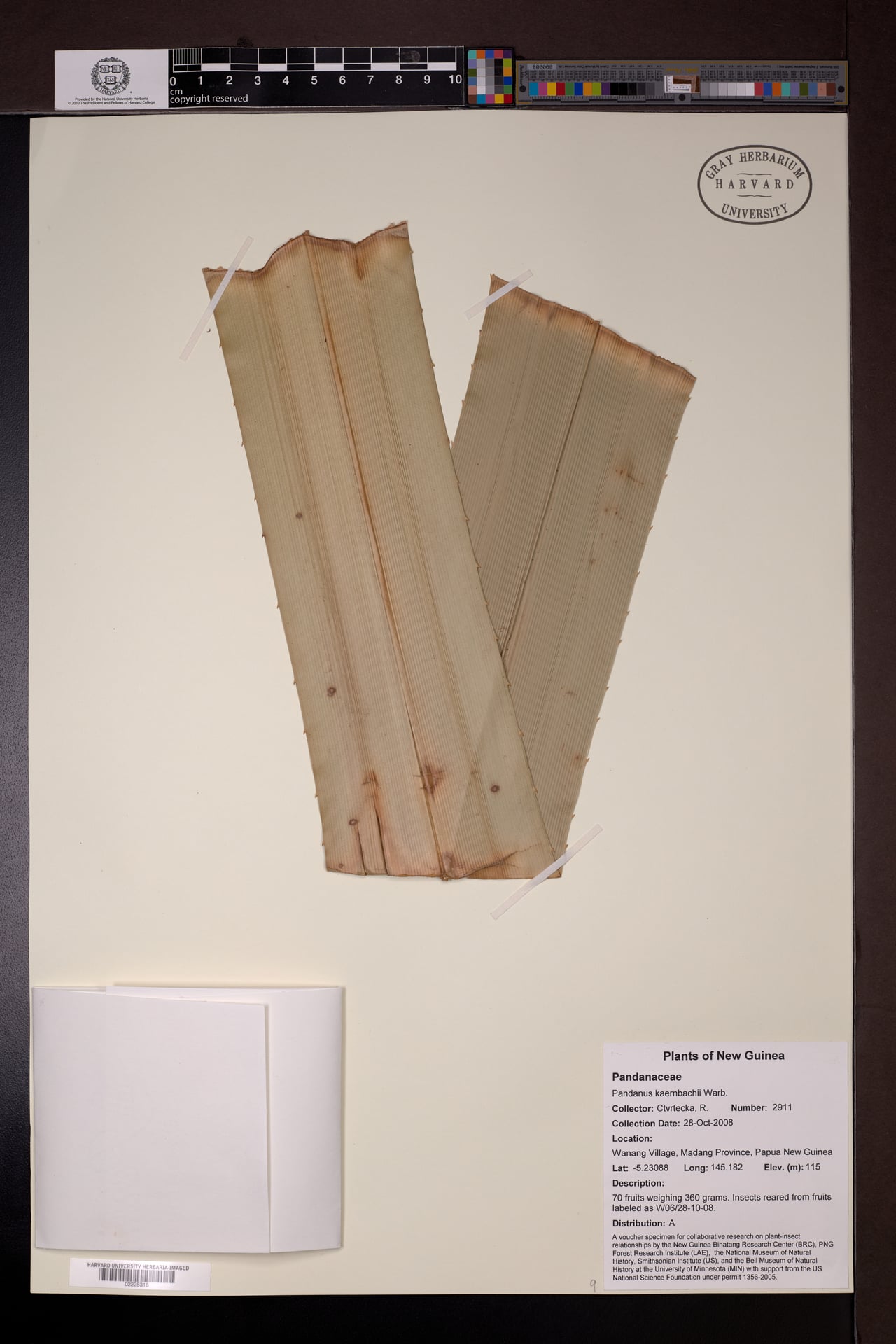
The leaves are made into sacks for coffee, sugar, and grain. The leaves are also made into matting, baskets, hats, and thatch, and are used for cordage and other purposes. The leaves from young, unbranched trees are more suitable for weaving because they are longer and more supple than the leaves obtained from older, branched trees. They are prepared as soon as they are taken from the tree - the operation consisting merely in splitting the leaves into fillets, which are 18 - 25mm broad at the base, but taper to a point. They are 90 - 120cm long. One of these fillets can support the weight of a bag of sugar, about 63 kilos, without breaking. The root fibres are much stronger than those from the leaves, and are occasionally used for making cordage, and for admixture with jute in gunny bags. The aerial roots have been used for tying and in the production of baskets, mats and hats, and their ends to make coarse brushes for whitewashing. Grown to provide support for Vanilla plants in various tropical areas. The trees serve as windbreaks, mainly along the shore.
Production
It is slow growing.
Notes
There are about 600 Pandanus species. They grow in the tropics.
Synonyms
Also Known As
Palma de Cinta, Pandano, Pandan biasa
References (14)
- Ambasta, S.P. (Ed.), 2000, The Useful Plants of India. CSIR India. p 424
- Cundall, P., (ed.), 2004, Gardening Australia: flora: the gardener's bible. ABC Books. p 979
- Dharani, N., 2002, Field Guide to common Trees & Shrubs of East Africa. Struik. p 140
- Etherington, K., & Imwold, D., (Eds), 2001, Botanica's Trees & Shrubs. The illustrated A-Z of over 8500 trees and shrubs. Random House, Australia. p 510
- Grubben, G. J. H. and Denton, O. A. (eds), 2004, Plant Resources of Tropical Africa 2. Vegetables. PROTA, Wageningen, Netherlands. p 563
Show all 14 references Hide references
- Hu, Shiu-ying, 2005, Food Plants of China. The Chinese University Press. p 281
- Little, E. L., et al, 1974, Trees of Puerto Rico and the Virgin Islands. USDA Handbook 449. Forestry Service. p 70
- Llamas, K.A., 2003, Tropical Flowering Plants. Timber Press. p 307
- Purseglove, J.W., 1972, Tropical Crops. Monocotyledons. Longmans p 512
- Roa, J. A. G. & Boada, D. S. G., 2018, Fundación para el Fortalecimiento de la Fruticultura y Plantas Alimenticias no Convencionales en Colombia.
- Staples, G.W. and Herbst, D.R., 2005, A tropical Garden Flora. Bishop Museum Press, Honolulu, Hawaii. p 740
- Sukarya, D. G., (Ed.) 2013, 3,500 Plant Species of the Botanic Gardens of Indonesia. LIPI p 744
- Voy. iles Afrique 2:3. 1804
- World Checklist of Useful Plant Species 2020. Royal Botanic Gardens, Kew