Pandanus krauelianus
K. Schumann
Corncob Screw Pine
iNaturalist· cc-by-nc
(c) Pete Woodall, some rights reserved (CC BY-NC), uploaded by Pete Woodall
iNaturalist· cc-by-nc
(c) Pete Woodall, some rights reserved (CC BY-NC)
Description
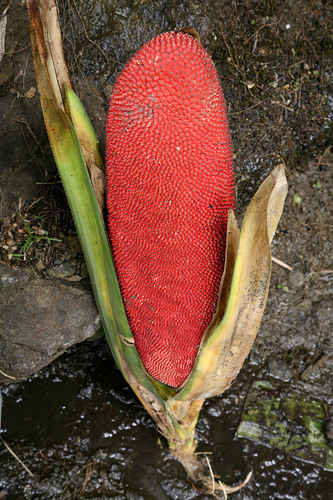
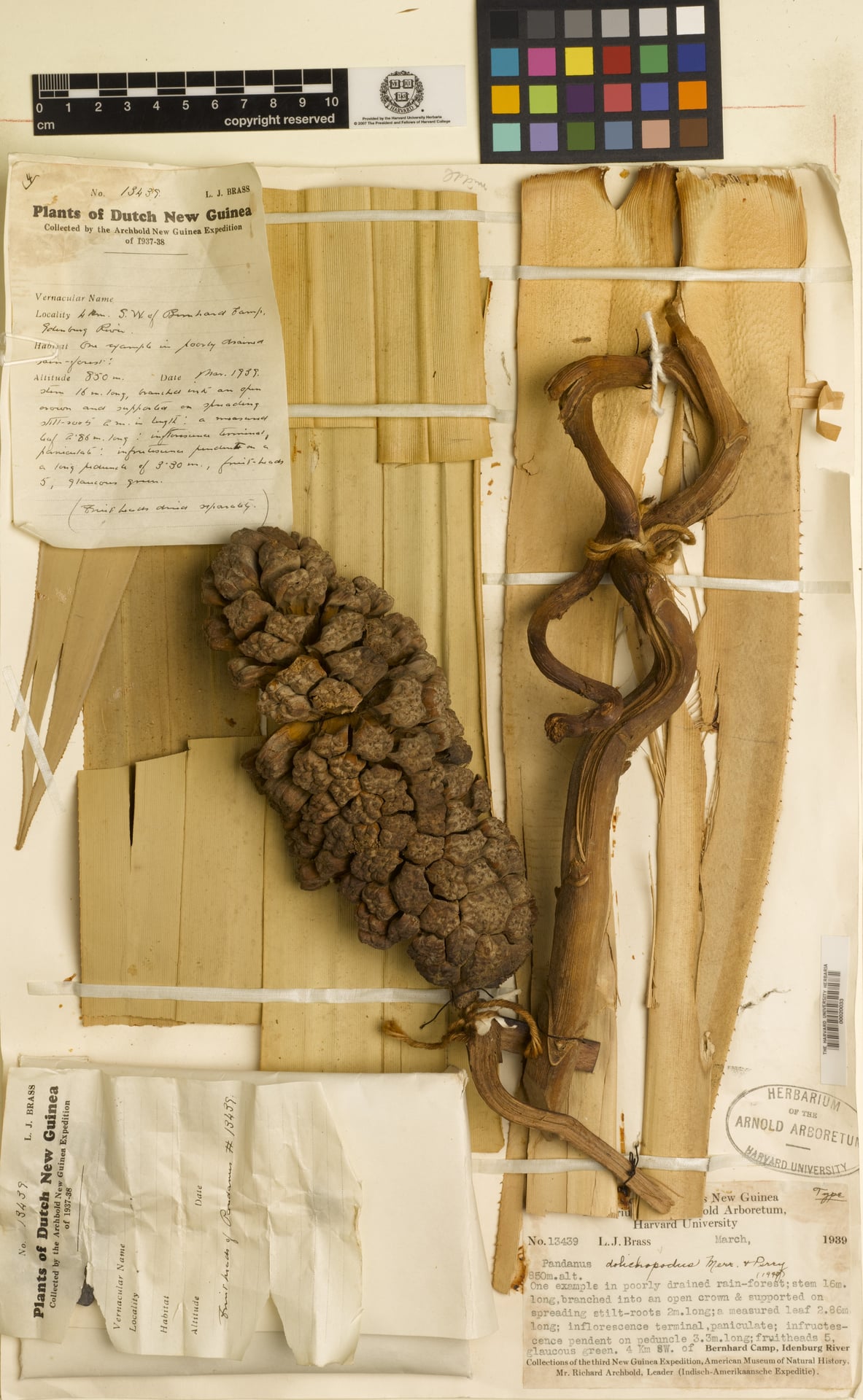
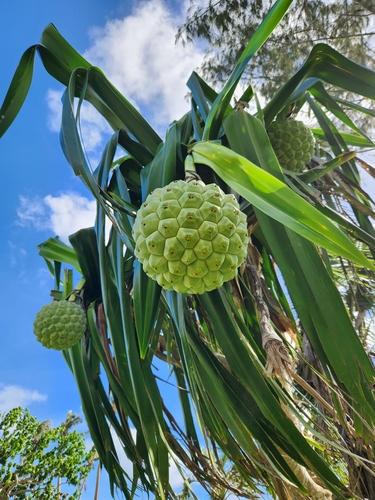
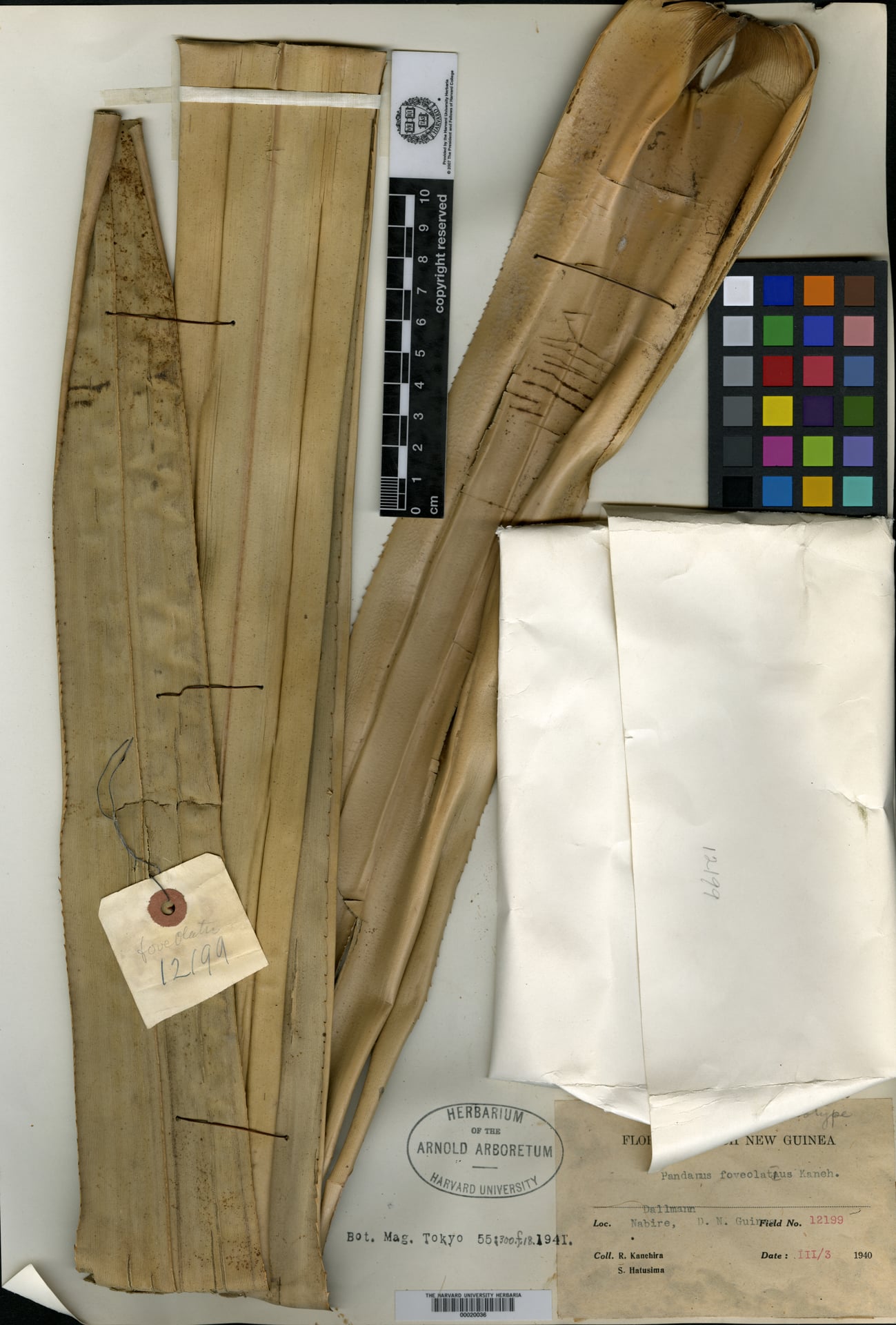
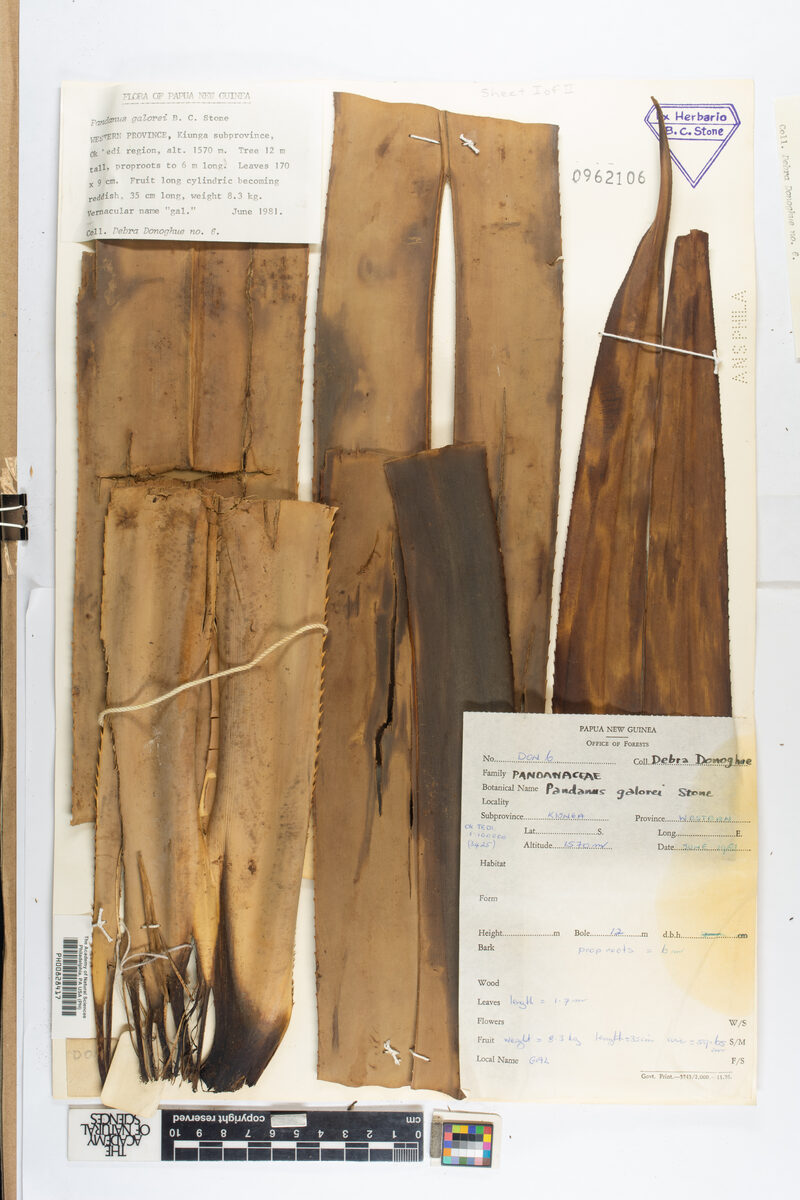
A small tree. It grows up to 5-12 m tall. It spreads to 2-3 m wide. It has prop roots. The trunk and roots are prickly. It has an open crown. The leaves are simple and 1.65 m long by 4-5 cm wide. The edges of the leaf have teeth and spines. The leaves are strap like but M shaped in cross section. They are dark green above and waxy underneath. The male flowering stalks are branched and 25-35 cm long. They have cream bracts. The male spikes are 10-15 cm long and greenish-cream. The female flowering stalks are not branched. They are enclosed in large orange-yellow bracts. The look like a cob of corn in its husk. The fruit are 22 cm long by 7.5 cm wide. They contain many seeds. The seeds are 2 cm long by 0.9 cm wide. The inner flesh is edible when it is soft and ripe. A screwpine or Pandan. The leaves are oblong and 2 m long by 3-3.5 cm wide. They have short spines along the edges. They taper at the tip. The fruit is made up or lots of fused fruit. They are cylinder shaped and 20-30 cm long by 5-8 cm wide. The fruit are yellow when mature. The small sections are 1.5-2.5 cm long by 3-5 mm wide.
Edible Uses
The inner flesh of ripe, soft fruit is edible and contains an oil used to flavor food in cooking, used similarly to marita (Pandanus conoideus).
Traditional Uses
The fruit contains and oil used to flavour food in cooking. It is used like marita (Pandanus conoideus) The inner flesh is edible when it is soft and ripe but it can irritate the mouth.
Known Hazards
The inner flesh can irritate the mouth.
Distribution
A tropical plant. It grows in mountainous regions along rivers. It occurs in Maluku. It grows naturally in the foothills of rainforest in NE Queensland in Australia. It does best in a sheltered location and with some shade. It needs well drained soil. I has been recorded in lowland swamps and grows from sea level to 1,600 m above sea level.
Where It Grows
Asia, Australia*, Indonesia, Pacific, Papua New Guinea, PNG, SE Asia,
Cultivation
Plants are grown from fresh seed.
Propagation
Seed - best pre-soaked for 24 hours prior to sowing.
Other Uses
The leaves are used for making mats. The leaves are about 2 metres long by 3 - 3.5cm wide, with short spines at the margin and the main vein.
Synonyms
Also Known As
La gili
References (10)
- Burkill, I.H., 1966, A Dictionary of the Economic Products of the Malay Peninsula. Ministry of Agriculture and Cooperatives, Kuala Lumpur, Malaysia. Vol 2 (I-Z) p 1673, (Also as Pandanus terrestris)
- Cooper W & Cooper W T, 1994, Fruits of the Rain Forest. RD Press p 214 (As Pandanus zea)
- Cooper, W. and Cooper, W., 2004, Fruits of the Australian Tropical Rainforest. Nokomis Editions, Victoria, Australia. p 390 (As Pandanus zea)
- Elliot, W.R., & Jones, D.L., 1997, Encyclopedia of Australian Plants suitable for cultivation. Vol 7. Lothian. p 157 (As Pandanus zea)
- Keim, A.P., 2009, Pandanaceae of the island of Yapen, Papua (West New Guinea). Blumea 54, 2009: 255-266
Show all 10 references Hide references
- Keim, A. P., 2011, The Pandan Flora of Foja-mamberamo Game Reserve and Baliem Valley, Papua-Indonesia. Reinwardtia Vol. 13, No. 3 pp 271-297
- Plants of Papua New Guinea LAE herbarium record (As Pandanus nakanaiensis)
- PROSEA handbook Volume 13 Spices. p 259
- World Checklist of Useful Plant Species 2020. Royal Botanic Gardens, Kew
- www.pngplants.org