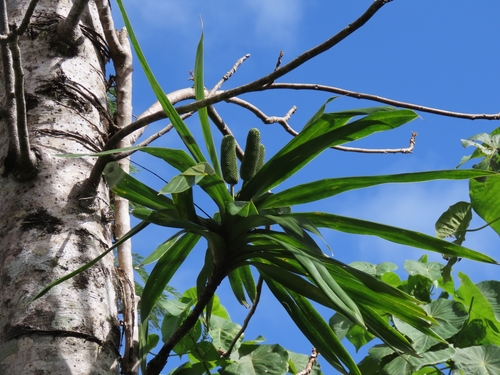
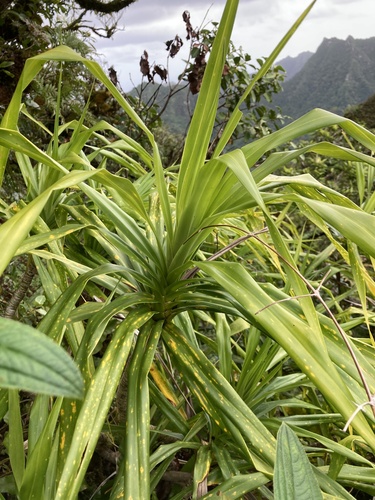
Pandanus julianettii
Martelli
Karuka
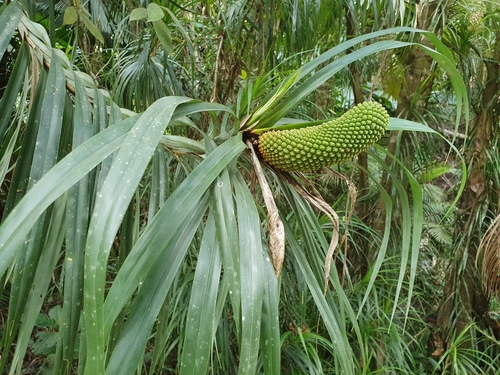
iNaturalist· cc-by-nc
(c) Deni Sahroni, some rights reserved (CC BY-NC), uploaded by Deni Sahroni
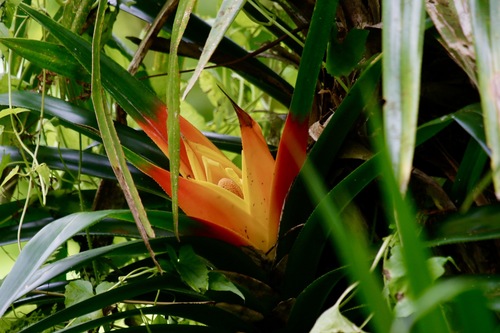
iNaturalist· cc-by-nc
(c) Věra Kafková, some rights reserved (CC BY-NC), uploaded by Věra Kafková
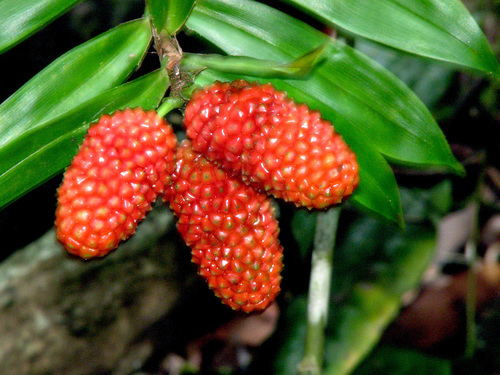
iNaturalist· cc-by-nc
(c) Barbara L. Wilson, some rights reserved (CC BY-NC), uploaded by Barbara L. Wilson
Description
Pandanus julianettii is an evergreen Shrub growing to 4 m (13ft) by 3 m (9ft) at a fast rate. See above for USDA hardiness. It is hardy to UK zone 10. Suitable for: light (sandy) and medium (loamy) soils and prefers well-drained soil. Suitable pH: mildly acid and neutral soils and can grow in very acid and saline soils. It can grow in semi-shade (light woodland) or no shade. It prefers moist soil. The plant can tolerates strong winds but not maritime exposure.
Edible Uses
Oil. Seeds. The seeds are oily and contain a fair amount of protein. Sometimes the inner leaves and the tips of the aerial roots are eaten cooked.
Distribution
Australasia - New Guinea.
Where It Grows
AUSTRALASIA: New Guinea
Cultivation
Plants grow best in areas where the mean annual temperature is within the range 13 - 24c, but can tolerate 6 - 30c. They may tolerate temperatures as low as 0c for short periods and down to 3c for prolonged periods. They prefer a mean annual rainfall in the range 3,000 - 4,000mm, tolerating 2,500 - 4,000mm. Succeeds in sunny positions and in light shade. Prefers a well-drained, humus-rich, light to medium soil. Prefers a pH in the range 4.5 - 5.5, but tolerates 3.5 - 5.6. Plants can be harvested for their fibre the first time 6 - 8 years from planting, with an economical life of 20-40 years and with a total lifespan of up to 70 years. Require 90-120 days from flowering to fruiting and have no obvious seasonality. This species has potential for commercial use. Branches do not have dormant buds and so will not resprout if cut back into the old wood. A dioecious species, both male and female forms need to be grown if fruits and seed are required.
Propagation
Seed - best pre-soaked for 24 hours prior to sowing. Commonly vegetative cuttings of the top section of a branch is used for planting. This is suitable for a tree that has several branches. Sometimes karukas develop young suckers or shoots near the ground. When these are seen, they are broken off and replanted from these vegetative suckers. Trees from cuttings produce after 5-8 years. Seedling trees are slower to produce and have a taller straighter trunk.
Other Uses
Fibre OilA fibre obtained from the plant is used for making textiles.
Synonyms
Also Known As
Pandan kelapa hutan fruits, Karunka