Pandanus kaernbachii
Warb.
gbif· cc0
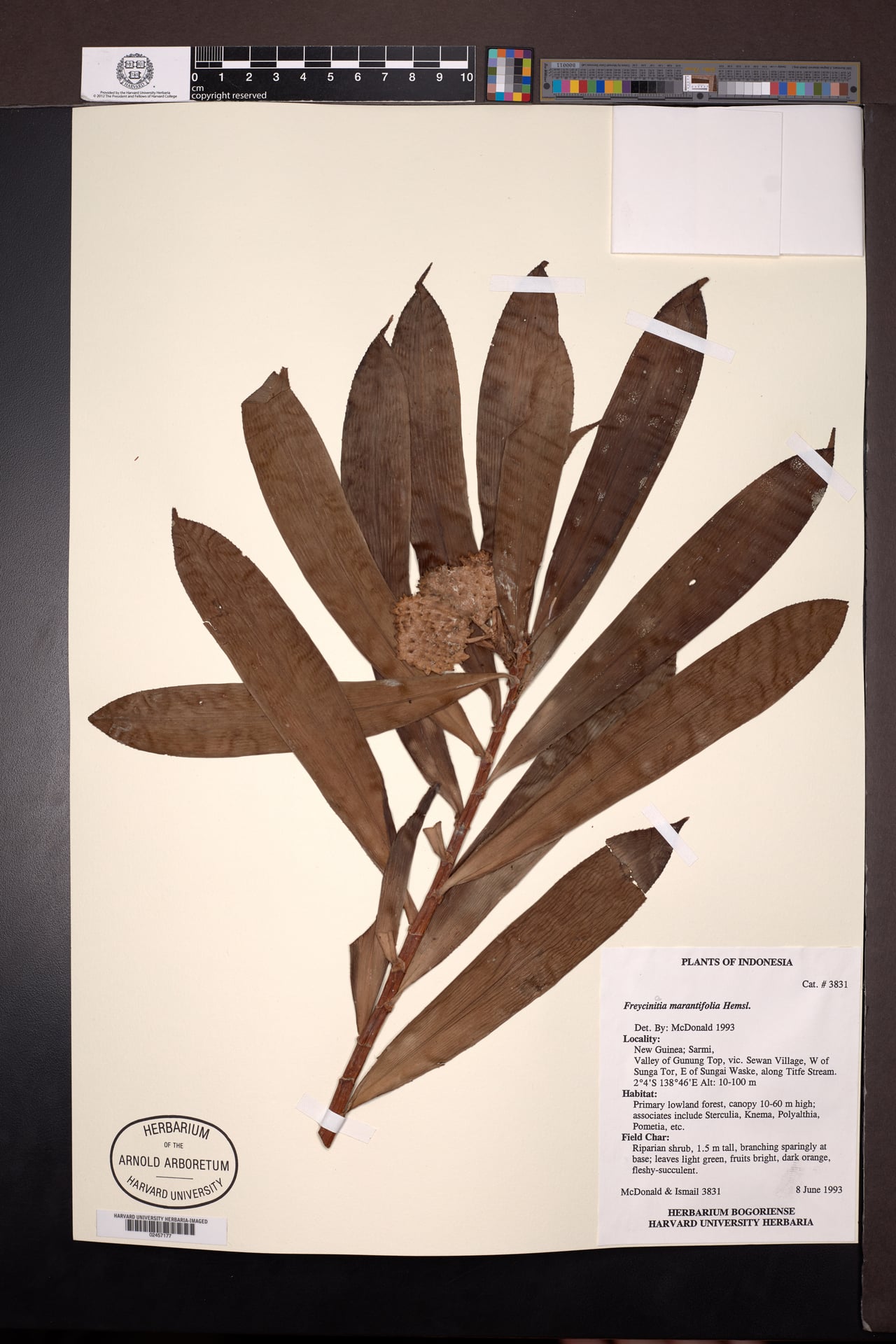
President and Fellows of Harvard College
gbif· cc0
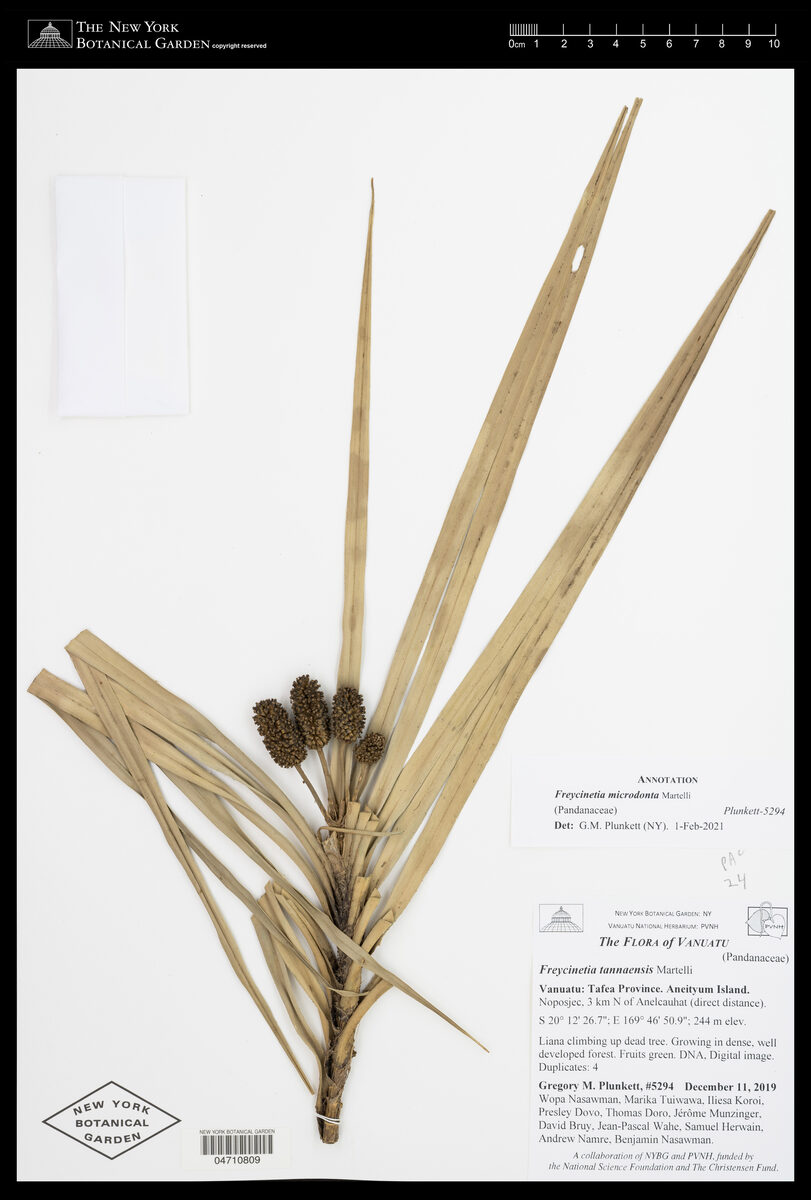
President and Fellows of Harvard College
gbif· cc0
President and Fellows of Harvard College
Description
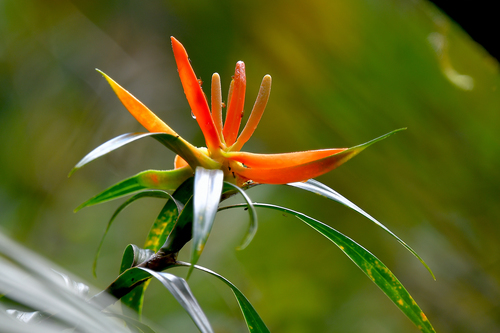
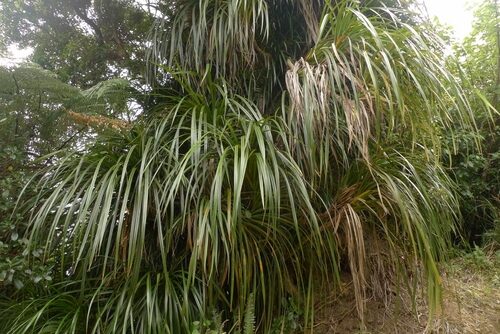
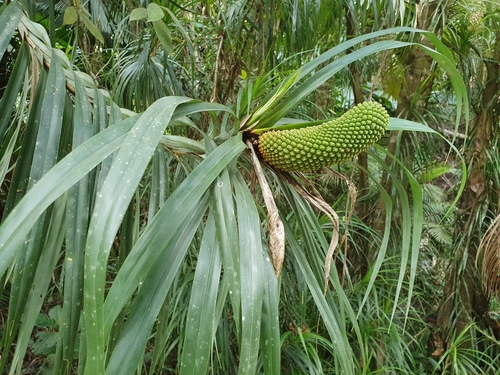
A tree. It is a screwpine that grows 9 m tall. It has prop roots 2-5 m high. It is spiny. The stems is branched and spiny. The leaves are in rings arranged in spirals. They are 240-250 cm long by 9-11 cm wide. There are spines along the edges. The leaves have pleats. They are pale green underneath. The fruiting heads are at the top with 2 heads. These are 21-22 cm long by 16 cm across. There are 8-10 nuts in a group on the head.
Distribution
It is a tropical plant. It grows in the lowlands. It grows in coastal and freshwater swamps.
Where It Grows
Asia, Indonesia, Pacific, Papua, Papua New Guinea, PNG, SE Asia,
Cultivation
Species in this genus generally grow well in most moist, well-dained soils and a sunny position. Most coastal species are very tolerant of wind and also tolerant of salinity. A dioecious species, both male and female forms need to be grown if fruit and seeds are required.
Other Uses
The leaves are used for weaving into mats. The leaves are sword-shaped, around 250 - 250cm long and 9 - 11cm wide.
Synonyms
Also Known As
Baingara
References (4)
- Keim, A.P., 2009, Pandanaceae of the island of Yapen, Papua (West New Guinea). Blumea 54, 2009: 255-266
- Lepofsky, D., 1992, Arboriculture in the Mussau Islands, Bismarck Archipelago. Economic Botany, Vol 46, No. 2, pp. 192-211
- Pflanzer. 1V, 9: 49, 1900
- www.pngplants.org