Pandanus foveolatus
Kanehira
gbif· cc0
President and Fellows of Harvard College
Description
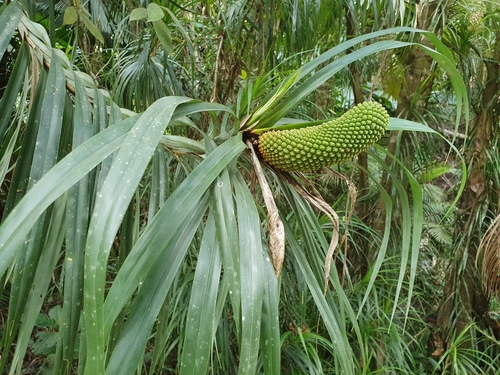
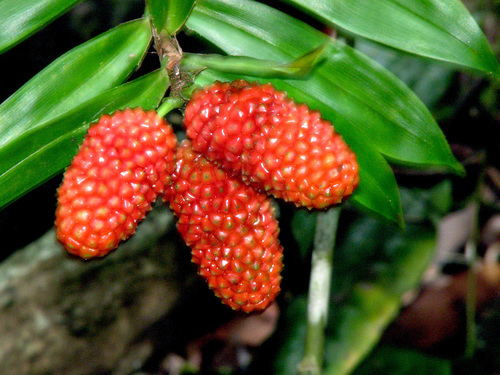
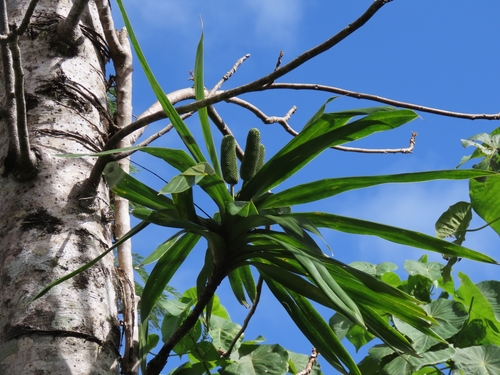
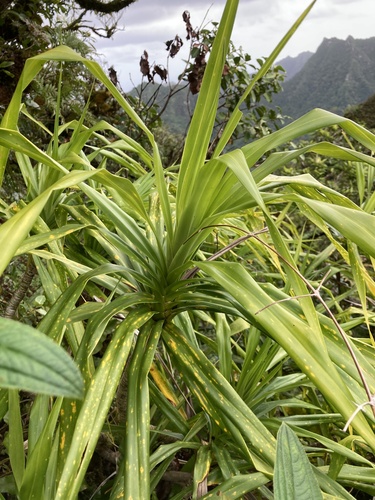
A screwpine or pandanus. It grows 18 m tall. The trunk can be 30 cm across. It has large prop roots. The leaves are 260 cm long by 10.5 cm wide. The fruit are oval. They are 32 cm across. The fruit weighs 13.9 kg
Edible Uses
The nuts are edible.
Distribution
A tropical plant. It occurs in the foothills of the rainforest near Kiunga. It also occurs in the Jimi valley.
Where It Grows
Asia, Indonesia, Pacific, Papua New Guinea, PNG, SE Asia,
Cultivation
Species in this genus generally grow well in most moist, well-dained soils and a sunny position A dioecious species, both male and female forms need to be grown if fruits and seed are required.
Other Uses
Although we have seen no specific records for this species, the leaves of most members of this genus are used locally for weaving a range of items such as mats, bags and baskets. The leaves, which are usually tough and fibrous, are long, narrow and sword-shaped and can easily be split into strips for weaving. Wood. The prop roots are split and lashed tightly together to make house walls. The trunk is split open and cored, then the trunk rind is flattened to make house floors and inner walls.
Notes
There are about 600 Pandanus species. They grow in the tropics.
Also Known As
Kulom
References (4)
- Bot. Mag. (Tokyo) 55:300, 1941
- Hyndman, D. C., 1984, Ethnobotany of Wopkaimin Pandanus: Significant Papua New Guinea Plant Resource. Economic Botany 38(3) pp. 287-303
- Powell, J.M., Ethnobotany. In Paijmans, K., 1976, New Guinea Vegetation. Australian National University Press. p 110
- www.pngplants.org