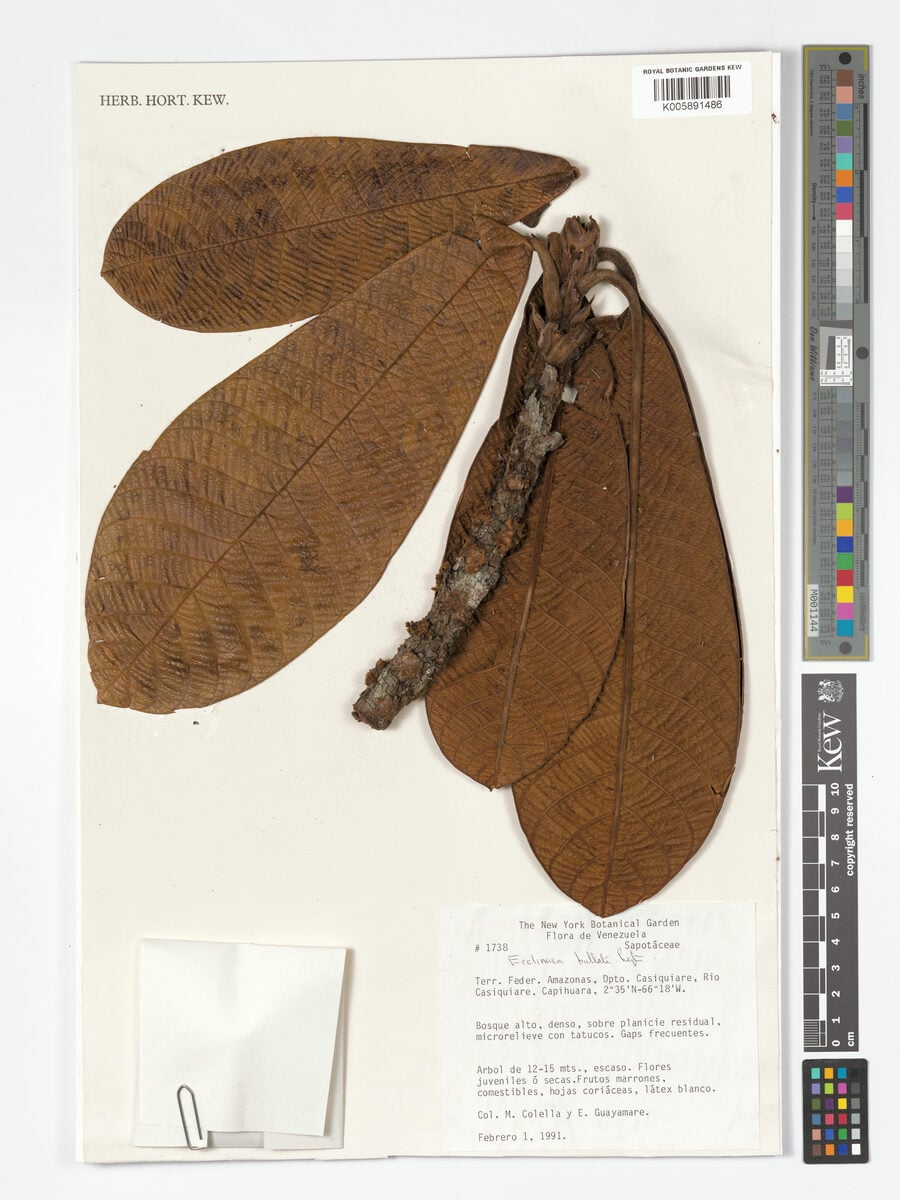
Palaquium philippense
(Perr.) C. B. Rob.
Malakmalak
iNaturalist· cc-by-nc
(c) kris_13, some rights reserved (CC BY-NC), uploaded by kris_13
iNaturalist· cc-by-nc
(c) lenisutcliffe, some rights reserved (CC BY-NC)
iNaturalist· cc-by-nc
(c) lenisutcliffe, some rights reserved (CC BY-NC)
Summary
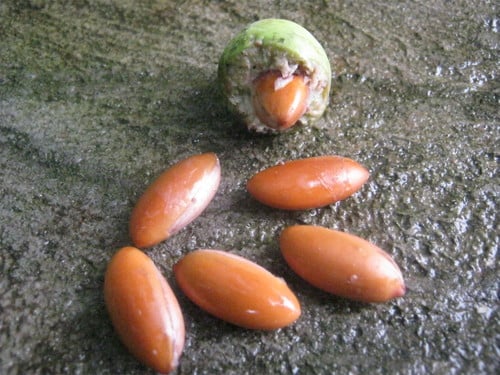
Source: WikipediaPalaquium philippense is a species of plant in the family Sapotaceae. It is endemic to the Philippines. It is threatened by habitat loss. According to Blanco's book (1845), Palaquium philippense, one of the tallest forest trees is also known as palacpalac, derived from the Kapampangan term used in reference to malakmalak. Malakmalak is a tree reaching a height of about 25 meters and a diameter of about 80 centimeters. The leaves are usually 16 centimeters or more in length. The lower surfaces are about 1.5. centimeters in length, and are borne on long stalks in small clusters. The corolla is white, the calyx brown and velvety. this species is very common and widely distributed in primary forests at low and medium altitudes from northern Luzon to southern Mindanao. It is cultivated at the Lamao Experimental Station. The fruit of this species is oval, similar to chico in appearance, about 3 to 4 centimeters or more in length, with an edible pulp of good flavor, and contains a single seed. Blanco mentioned that the seeds yield limpid, odorous oil which is employed in food as an illuminant. It is also called Palaquium oleiferum blanco.
Description
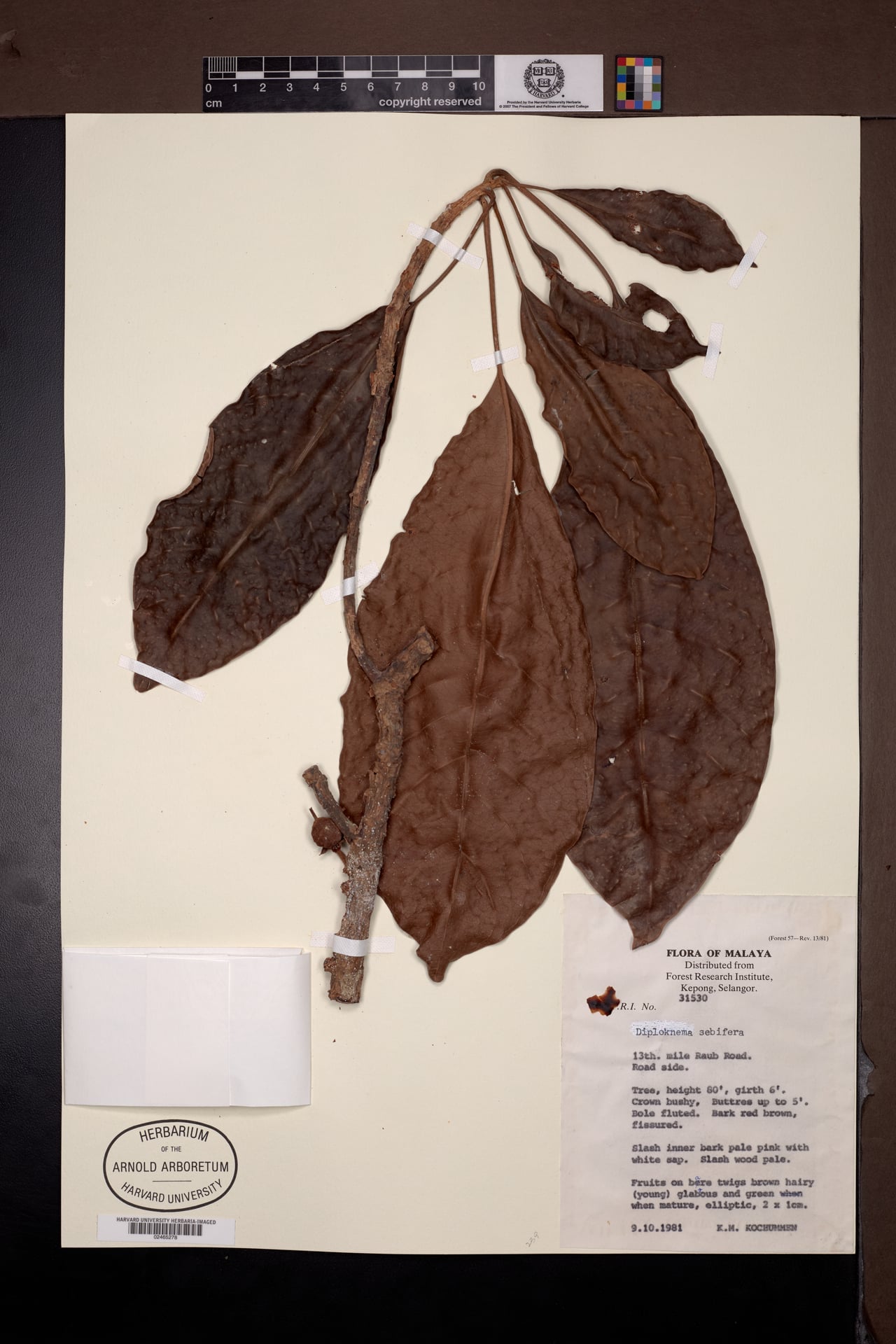
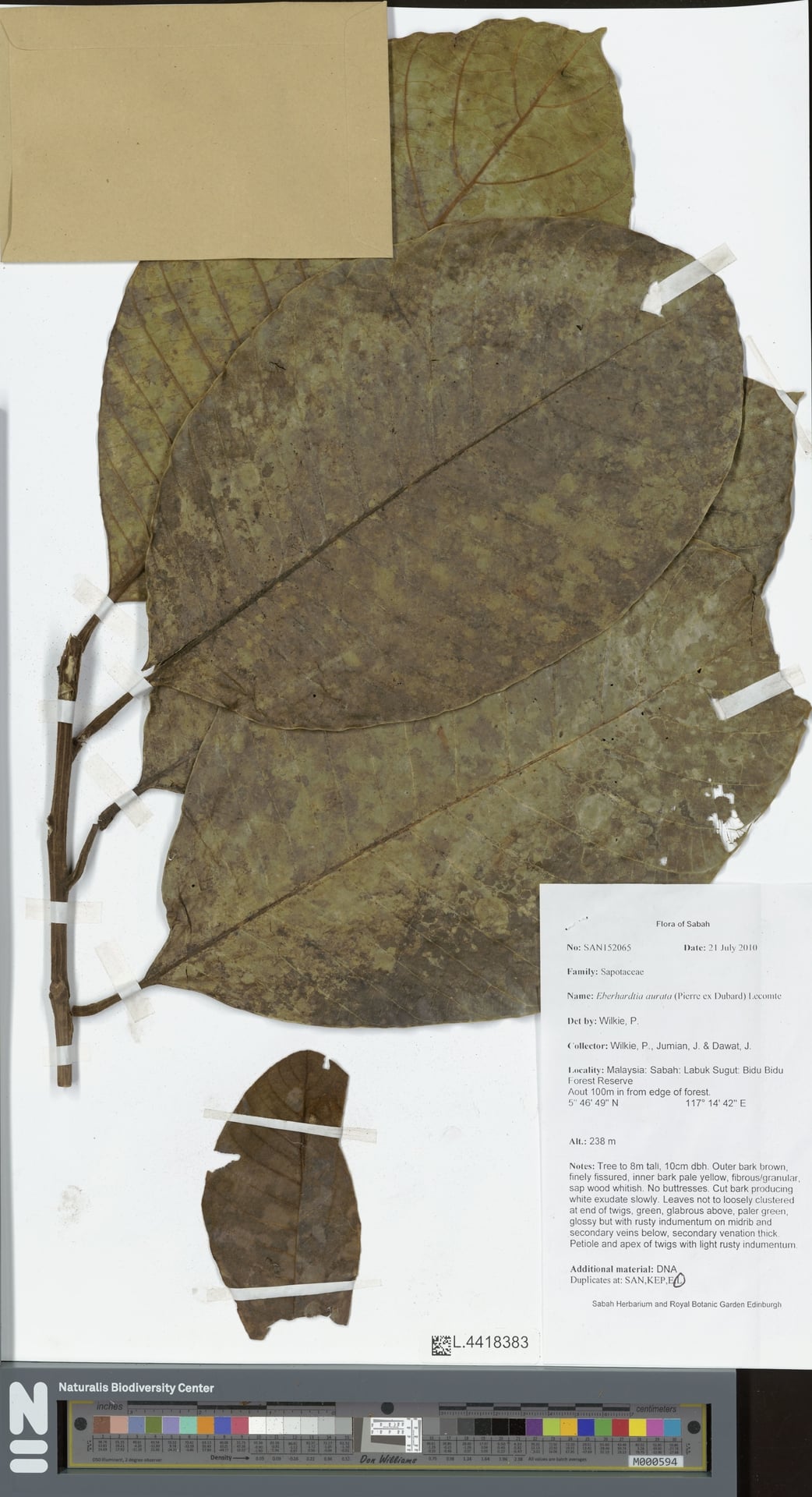
A large tree. It grows 25 m tall. The leaves are usually 16 cm long. The lower surface of the leaf is velvety and brown coloured. The flowers are borne on long stalks and in small clusters. The inner ring of petals are white and the outer case of sepals is brown and velvety. The fruit are oval 3 to 4 cm long and contain a single seed.
Edible Uses
Fruit. The oval fruit is about 3 - 4cm or more in length, containing a single seed. The seeds are the source of a vegetable fat. Used as a food, when refined it can be used as a substitute for cacao butter (Theobroma cacao). The seeds yield a limpid, odorous oil which is employed in food.
Traditional Uses
The fleshy portion of the fruit is eaten raw.
This uses section is brief — help expand it
Distribution
A tropical plant. They are very common and widely found throughout the Philippines in the forests at low and medium altitudes.
Where It Grows
Asia, Pacific, Philippines, SE Asia,
Other Uses
The seeds yield a limpid, odorous oil which is employed as an illuminant. We do not have any more specific information on the wood of this species, but it belongs to a group of timbers collectively called 'Nyatoh'. The general description of nyatoh wood is as follows:- The heartwood is a dark pink to a red-brown; it is clearly demarcated from the 4 - 9cm wide band of lighter-coloured sapwood. The texture is medium; the grain straight or interlocked, sometimes wavy. The wood is light in weight, soft to moderately hard; strong, somewhat durable, being resistant to dry wood borers, moderately resistant to fungi but susceptible to termites. It seasons somewhat slowly, with a high risk of checking and distortion; once dry it is stable in service. There is a very variable content of silica according to the species, but in general the wood has a high blunting effect so stellite-tipped and tungsten-carbide tools are recommended; nailing and screwing are good, but require pre-boring; gluing is correct. The wood has a range of applications, including for high class furniture and cabinet making, solid doors, panelling, joinery, parquet flooring, boat decking, light carpentry, turnery, moulding and veneer.
Synonyms
Also Known As
Arako, Chalaan, Dalakan, Manogtalisai
References (10)
- Brown, W.H., 1920, Wild Food Plants of the Philippines. Bureau of Forestry Bulletin No. 21 Manila. p 134
- Carig, Elizabeth T., 2020, Guidebook on Native Trees within the Quirino Forest Landscape. Plaridel, Bulacan, St. Andrew Publishing House. p 84
- Menninger, E.A., 1977, Edible Nuts of the World. Horticultural Books. Florida p 33
- Monsalud, M.R., Tongacan, A.L., Lopez, F.R., & Lagrimas, M.Q., 1966, Edible Wild Plants in Philippine Forests. Philippine Journal of Science. p 544
- Moon, H. K., et al, 2010, Tropical Tree of Indonesia. Korea Forest Research Institute. p 257
Show all 10 references Hide references
- Philipp. J. Sci., C 3:304. 1908
- Carig, Elizabeth T., 2020, Guidebook on Native Trees within the Quirino Forest Landscape. Plaridel, Bulacan, St. Andrew Publishing House. p 71
- Soerianegara, I. & Lemmens, R. H. M. L., (Eds.) 1993, Timber trees: Major commercial timbers. Plant Resources of South-East Asia. Wageningen. No. 5(1). p 304
- Wickens, G.E., 1995, Edible Nuts. FAO Non-wood forest products. FAO, Rome. p152
- World Checklist of Useful Plant Species 2020. Royal Botanic Gardens, Kew