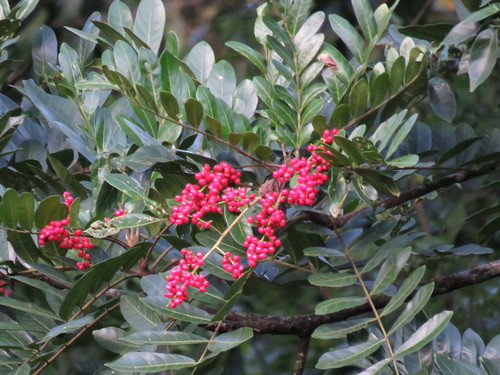
Ozoroa insignis subsp. reticulata
(Bak.f.) R. et A. Fernandez
Currant resin tree, Tarberry
gbif· cc-by-nc
Troos van der Merwe
gbif· cc-by-nc
Troos van der Merwe
gbif· cc-by-nc
Troos van der Merwe
Description
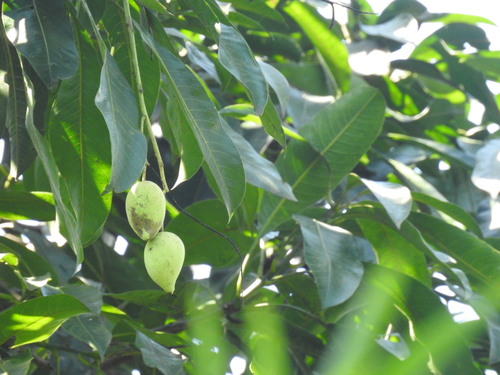
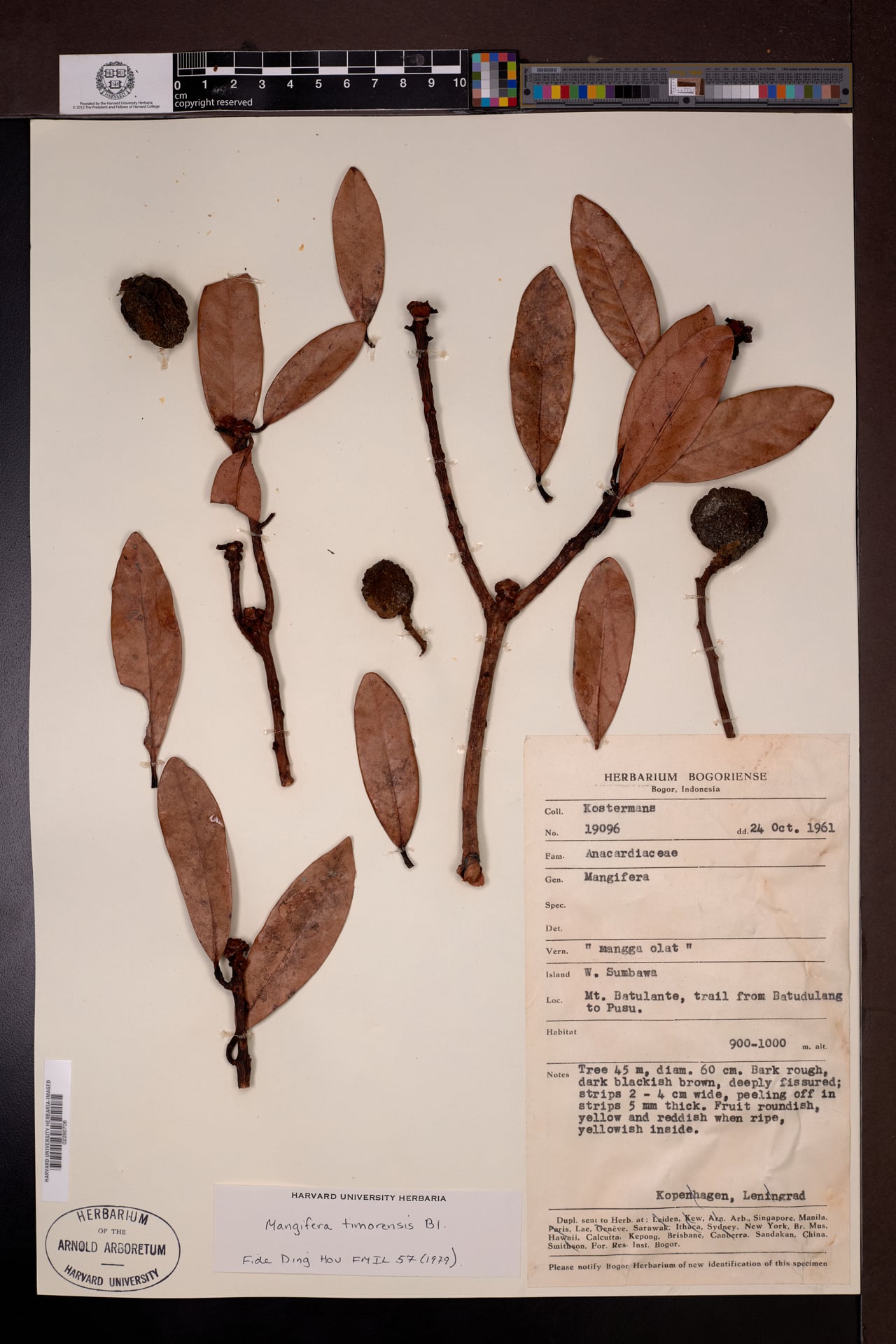
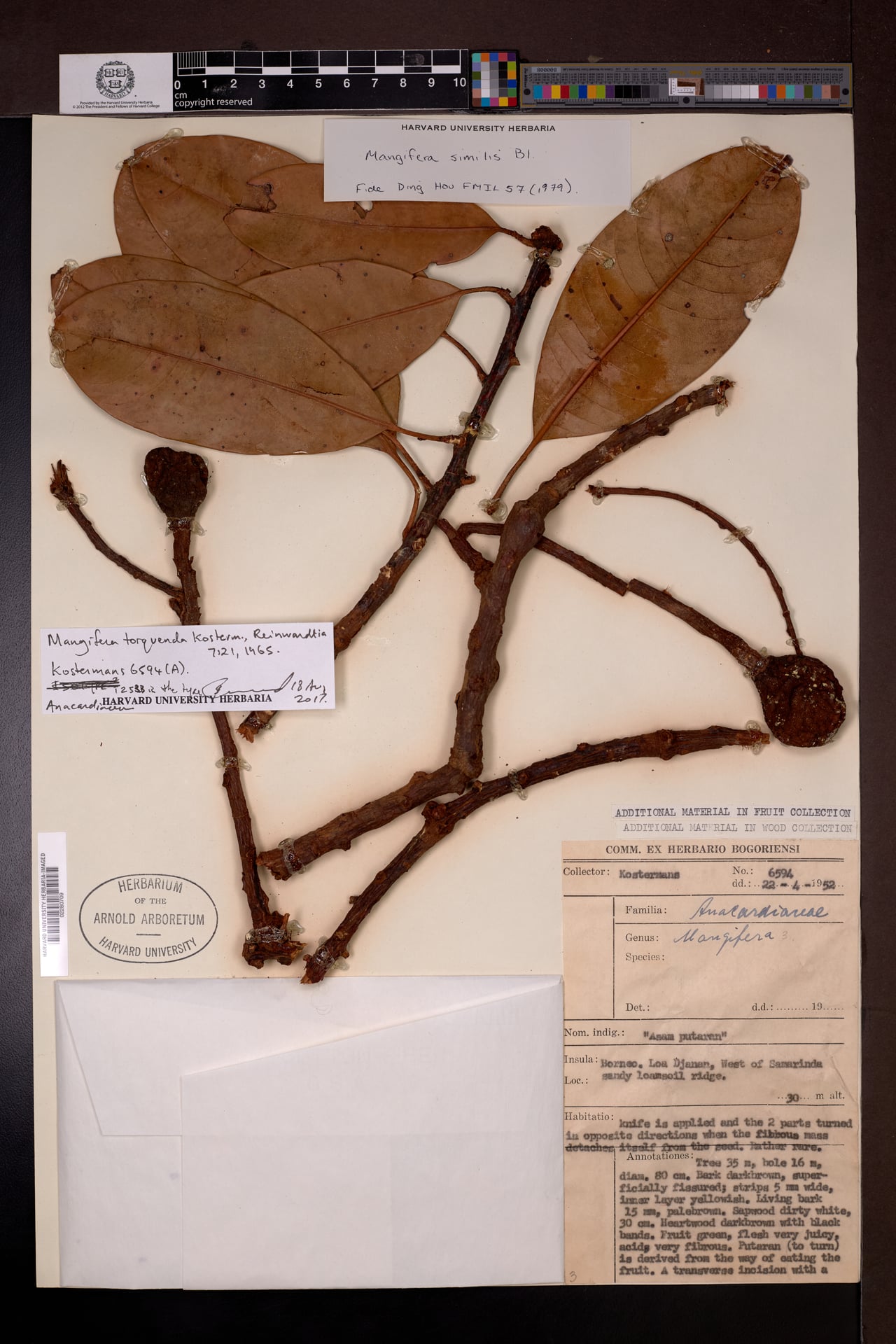
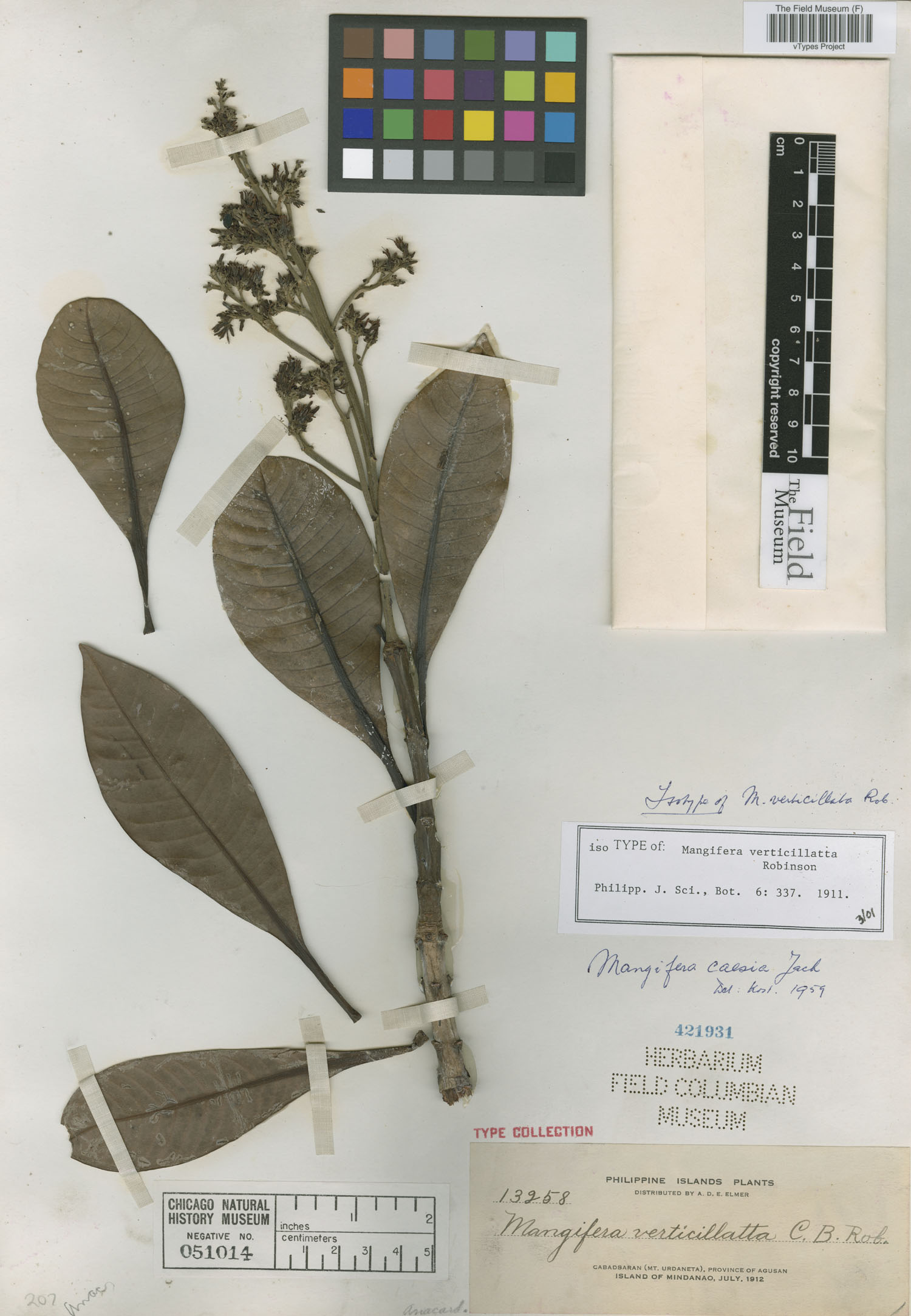
A shrub or much branched tree. It grows up to 10 m tall. The bark is rough and brown. The young branches have reddish-yellow hairs. The leaves are simple and often in rings of three. They vary in shape and size. They can be 4-15 cm long and are often oblong. They often have a small thorn like point. The lower leaf surface in densely hairy. The leaves are dark green on top and paler underneath. The edges of the leaves do not have teeth but are often thickened and wavy. Under the leaf the midrib and veins are raised. The twigs and leaf stalks are often hairy. The flowers are white or yellow. They occur in many flowered sprays at the ends of branches and in leaf axils. These groups are 5-17 cm long. Trees are separately male or female. The fruit are small and oval or oblique. The fruit are red to shiny black and 6-8 mm long by 8-12 mm wide. They are black and shiny and become wrinkled with age. They are edible.
Edible Uses
The fruit are eaten, especially by children. The twigs, bark, and gum are also used, with twigs and bark made into tea.
Traditional Uses
The fruit are eaten.
This uses section is brief — help expand it
Distribution
A tropical plant. It grows in tropical and warm places. It grows in open bushland or savannah often amongst rocks. It is often on termite mounds. In Zimbabwe it grows between 990-1,750 m above sea level. It grows from sea level to 2,000 m above sea level. It is often on rocky hill slopes. It can grow in arid places.
Where It Grows
Africa, Angola, Botswana, Burundi, Central Africa, Congo, East Africa, Eswatini, Ethiopia, Kenya, Malawi, Mozambique, Namibia, Rwanda, South Africa, Southern Africa, Sudan, Swaziland, Tanzania, Uganda, Zambia, Zimbabwe,
Other Information
The fruit are eaten especially by children.
Synonyms
Also Known As
Burthi, Chafitcha, Galahungu, Garri, Ihlanshwachipini, Isafice, Isifico, Kromwo, Lemejwet, Madsikavakadzi, Makari, Motaponzi, Msangasanga, Muacha, Mubedu, Mudyamombe, Mugadi, Mugaragunguwo, Muhacha, Muringu, Murungu, Musombo, Mutungwa, Olkumonoi, Olokunonoi, Safice, Shinungu, Sifeze, Sukava, Sukavu
References (14)
- Drummond, R. B., 1981, Common Trees of the Central Watershed Woodlands of Zimbabwe, National Herbarium Salisbury. p 116
- Fox, F. W. & Young, M. E. N., 1982, Food from the Veld. Delta Books. p 74 (As Ozoroa reticulata)
- Grivetti, L. E., 1980, Agricultural development: present and potential role of edible wild plants. Part 2: Sub-Saharan Africa, Report to the Department of State Agency for International Development. p 44 (As Heeria reticulata)
- Ichikawa, M., 1980, The Utilization of Wild Food Plants by the Suiei Dorobo in Northern Kenya. J. Anthrop. Soc. Nippon. 88(1): 25-48
- Jardin, C., 1970, List of Foods Used In Africa, FAO Nutrition Information Document Series No 2.p 151
Show all 14 references Hide references
- Long, C., 2005, Swaziland's Flora - siSwati names and Uses http://www.sntc.org.sz/flora/
- Makonda, F. B. S., & Ruffo, C. K., 2011, Species List. NAFORMA, Tanzania (As Ozoroa reticulata)
- Malaisse, F., 1997, Se nourrir en floret claire africaine. Approche ecologique et nutritionnelle. CTA., p 65 (As Ozoroa reticulata)
- Palgrave, K.C., 1996, Trees of Southern Africa. Struik Publishers. p 471
- Palmer, E and Pitman, N., 1972, Trees of Southern Africa. Vol. 2. A.A. Balkema, Cape Town p 1219
- Peters, C. R., O'Brien, E. M., and Drummond, R.B., 1992, Edible Wild plants of Sub-saharan Africa. Kew. p 50
- Royal Botanic Gardens, Kew (1999). Survey of Economic Plants for Arid and Semi-Arid Lands (SEPASAL) database. Published on the Internet; http://www.rbgkew.org.uk/ceb/sepasal/internet [Accessed 25th March 2011] (As Ozoroa reticulata)
- Swaziland's Flora Database http://www.sntc.org.sz/flora
- www.zimbabweflora.co.zw 2011