Ozoroa insignis
Delile
Raisin bush, Tropical resin tree
iNaturalist· cc-by-nc-sa
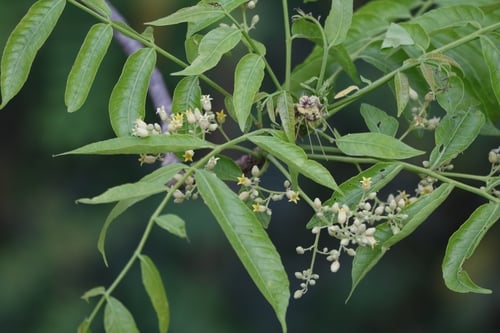
(c) Günter Baumann, some rights reserved (CC BY-NC-SA)
iNaturalist· cc-by-nc-sa
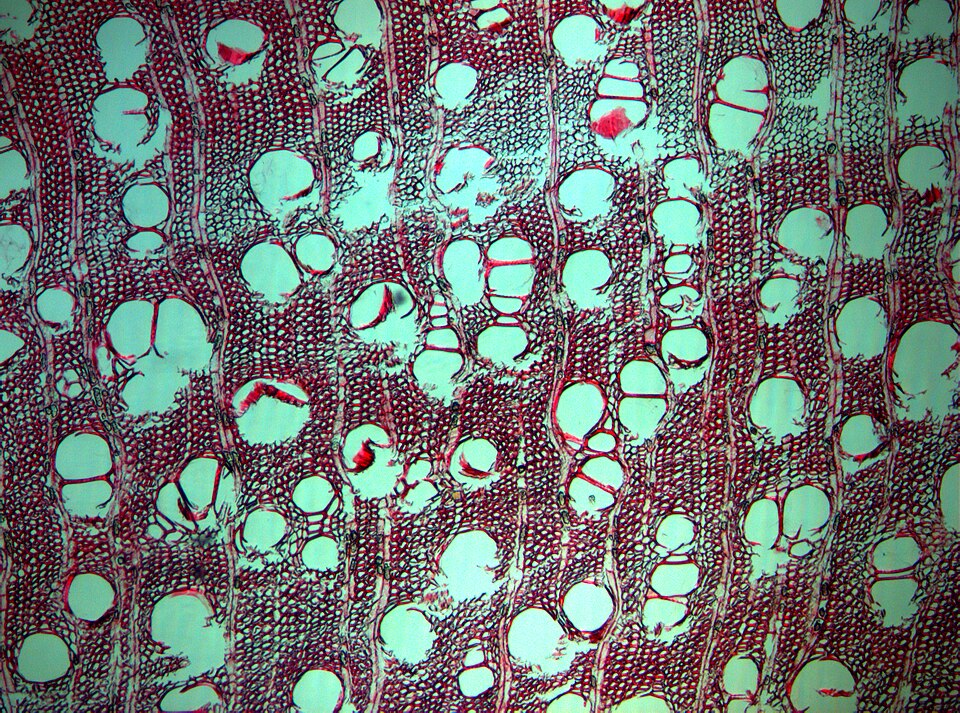
(c) Günter Baumann, some rights reserved (CC BY-NC-SA)
iNaturalist· cc-by-nc-sa
(c) Marco Schmidt, some rights reserved (CC BY-NC-SA)
Description
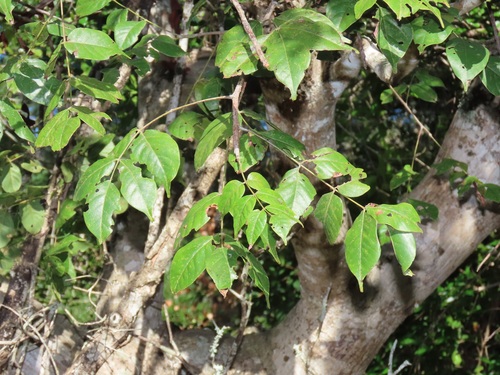
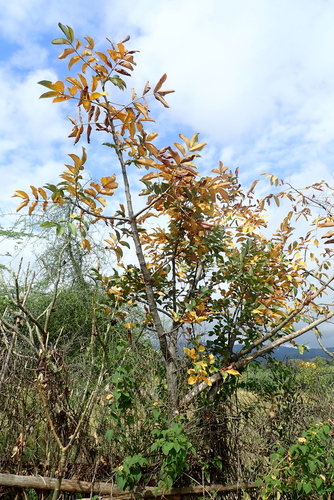
A shrub or small tree. It grows 2-4 m high. The small branches are hairy. The leaves are usually in rings of 3. They are oval or sword shaped. They are 5-13 cm long by 2-4 cm wide. The leaves have a dense covering of hairs underneath. The flowers are small and white. They occur in short branched sprays. The fruit is kidney-shaped and 4.5 mm long by 7.5 mm wide. They become black when mature. Five subspecies have been described.
Edible Uses
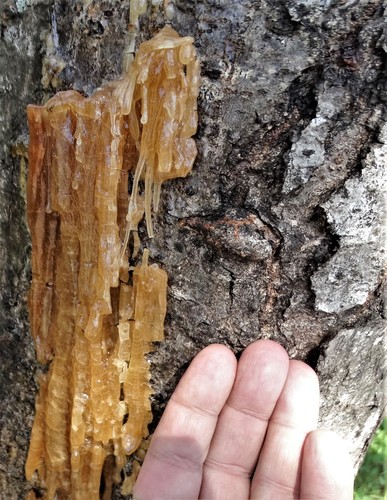
The fruit are eaten, particularly by children. The bark is used to make tea. A gum is also edible.
Traditional Uses
The fruit are eaten. The bark is used for tea.
This uses section is brief — help expand it
Medicinal Uses
The bark is used for tea.
Distribution
A tropical plant. It occurs in open woodland. It grows between 5-2,200 m above sea level. It can grow in arid places.
Where It Grows
Africa, Angola, Botswana, Burkina Faso, Burundi, Central Africa, Congo, East Africa, Eswatini, Ethiopia, Kenya, Malawi, Middle East, Mozambique, Namibia, Rwanda, Somalia, South Africa, Southern Africa, Sudan, Swaziland, Tanzania, Uganda, West Africa, Yemen, Zambia, Zimbabwe,
Cultivation
A tree of tropical areas, also succeeding in the subtropics, found in low to moderate elevations. Plants can be coppiced. The plant is sensitive to fires, and consequently it is often found only in coppice growths to 1 - 2 metres tall.
Propagation
Seed. Germination is generally good and takes 3 weeks. Seed cannot be stored as it loses viability in a few weeks. Root suckers.
Other Uses
The fruits are ground up and used by Zulu women to scent their hair. The sap is rich in a white resin. The red wood is hard, tough and durable, but easy to work. It is resistant to termites. It is used in cabinet work, carving and for poles, but is mainly used as firewood and to make charcoal. The charcoal is of very good quality and can even be used in making gunpowder.
Other Information
The fruit are eaten especially by children.
Synonyms
Also Known As
African resin-tree, Chinunci, Diatata, Harpuisbos, Heeria, Isafice, Katikati, Mkaakaa, Mkalakala, Mnyonowapembe, Muacha, Mubedu, Murungu, Rrica, Safice, Sukava, Tar berry, Tuco-tuco
References (10)
- Ann. Sci. Nat. Bot. ser. 2. 20:91, t. 1. 1843
- http://www.fao.org/forestry/25323-096344a3de335832e8f363c3ac5184a66.pdf
- Mutie, F. M., et al, 2023, Important Medicinal and Food Taxa (Orders and Families) in Kenya, Based on Three Quantitative Approaches. Plants 2023, 12, 1145
- Peters, C. R., O'Brien, E. M., and Drummond, R.B., 1992, Edible Wild plants of Sub-saharan Africa. Kew. p 50
- Palgrave, K.C., 1996, Trees of Southern Africa. Struik Publishers. p 468
Show all 10 references Hide references
- Royal Botanic Gardens, Kew (1999). Survey of Economic Plants for Arid and Semi-Arid Lands (SEPASAL) database. Published on the Internet; http://www.rbgkew.org.uk/ceb/sepasal/internet [Accessed 25th March 2011]
- Ruiters-Welcome, A. K., 2019, Food plants of southern Africa. Ph.D. thesis. Univ. of Johannesburg p 14
- Tredgold, M.H., 1986, Food Plants of Zimbabwe. Mambo Press. p 111
- Welcome, A. K. & Van Wyk, B.-E., 2019, An inventory and analysis of the food plants of southern Africa. South African Journal of Botany 122 (2019) 136–179
- World Checklist of Useful Plant Species 2020. Royal Botanic Gardens, Kew