Osmunda japonica
Thunb.
Japanese flowering fern
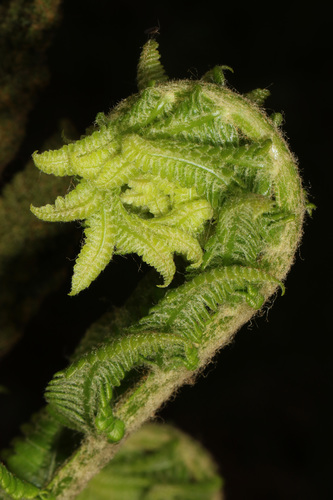
iNaturalist· cc-by-nc
(c) Kirill Korznikov, some rights reserved (CC BY-NC), uploaded by Kirill Korznikov
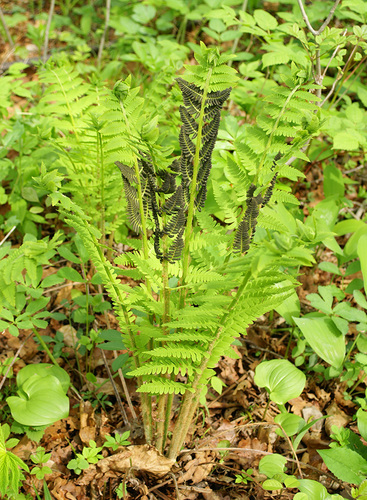
iNaturalist· cc-by-nc
(c) 傻子, some rights reserved (CC BY-NC), uploaded by 傻子
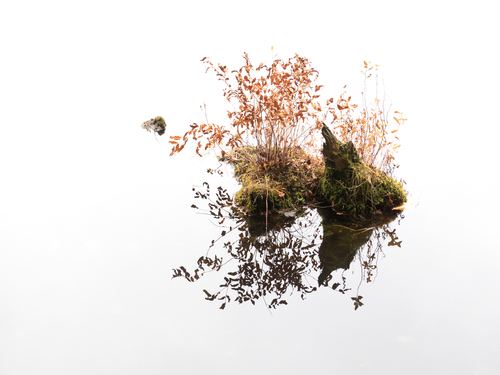
iNaturalist· cc-by-nc
(c) hilyshao, some rights reserved (CC BY-NC), uploaded by hilyshao
Summary
Source: WikipediaOsmunda japonica (syn. Osmunda nipponica Makino), also called Asian royal fern or fiddlehead, is a fern in the genus Osmunda native to east Asia, including Japan, China, Korea, Taiwan, and the far east of Russia on the island of Sakhalin. It is called gobi (고비) in Korean, zenmai (ゼンマイ; 薇) in Japanese, and zǐqí or juécài (紫萁 or 蕨菜) in Chinese. It is a deciduous herbaceous plant which produces separate fertile and sterile fronds. The sterile fronds are spreading, up to 80–100 cm tall, bipinnate, with pinnae 20–30 cm long and pinnules 4–6 cm long and 1.5–2 cm broad; the fertile fronds are erect and shorter, 20–50 cm tall. It grows in moist woodlands and can tolerate open sunlight only if in very wet soil. Like other ferns, it has no flowers, but rather elaborate sporangia, that very superficially might suggest a flower, from which the alternative name derives. Like its relative Osmundastrum cinnamomeum ("cinnamon fern"), the fertile fronds become brown-colored and contain spores. The sterile (vegetative) fronds resemble those of Osmunda regalis ("royal fern"), another relative of O. japonica. In some parts of China, Tibet, and Japan, the young fronds or fiddleheads of O. japonica are used as a vegetable. In Korea too, these young shoots are commonly used to make dishes like namul. O. japonica has also been shown to improve indoor air quality by significantly reducing of air toxins, specifically formaldehydes.
Description
A fern. It is a large fern. It has 2 kinds of fronds. The blades are twice divided. They are 4-6 cm long by 2 cm wide. The fertile fronds are narrow and covered with brown spore bodies.
Edible Uses
The young fronds are edible when cooked. An edible starch can also be obtained from the rhizome.
Traditional Uses
Young fronds are eaten. They are cooked in stir fries, soups and with other foods. They are often dried and parboiled. The starch in the rhizomes is used for making noodles and liqueur.
Medicinal Uses
None known
Known Hazards
Although we have found no reports of toxicity for this species, a number of ferns contain carcinogens so some caution is advisable. Many ferns also contain thiaminase, an enzyme that robs the body of its vitamin B complex. In small quantities this enzyme will do no harm to people eating an adequate diet that is rich in vitamin B, though large quantities can cause severe health problems. The enzyme is destroyed by heat or thorough drying, so cooking the plant will remove the thiaminase.
Distribution
It is a temperate plant. It grows in wet places and along the edges of stream and ponds. In China it grows between 100-3,000 m above sea level. In Sichuan.
Where It Grows
Asia, Bhutan, China, Himalayas, India, Indochina, Japan, Korea, Myanmar, Pakistan, SE Asia, Thailand, Tibet, Vietnam,
Cultivation
Likes a soil of swamp mud and loamy or fibrous peat, sand and loam. Succeeds in most moist soils, preferring acid conditions. Requires a constant supply of water, doing well by ponds, streams etc. Plants thrive in full sun so long as there is no shortage of moisture in the soil and also in shady situations beneath shrubs etc. Plants are hardy to at least -20°c, they are evergreen in warm winter areas but deciduous elsewhere. Members of this genus are rarely if ever troubled by browsing deer. Closely related to O. regalis.
Propagation
Spores lose viability very quickly — within 3 days — and should be sown as soon as ripe on the surface of humus-rich, sterilized soil in a lightly shaded greenhouse. Keep the compost moist, ideally by placing a plastic bag over the pot. Plants develop rapidly; pot on small clumps as soon as they are large enough to handle and keep humid until well established. Do not plant outside until ferns are at least 2 years old. Cultivars generally come true to type. The rootstock can also be divided during the dormant season, though this is strenuous work due to the dense mass of wiry roots.
Other Uses
No uses known.
Other Information
It is a commercially cultivated vegetable. It is only eaten locally. It is reasonably commonly eaten.
Notes
There are about 12 Osmunda species.
Nutrition
| Part | Moisture | kJ | kcal | Protein | Vit A | Vit C | Iron | Zinc |
|---|---|---|---|---|---|---|---|---|
| Shoots - tender | 88.3 | 159 | 38 | 3.1 | — | — | 0.8 | — |
Also Known As
Gobi, Kkaechimi, Kkochimi, Kobi, Na bu gan, Shuijuecai, Zen mai
References (21)
- Chen, B. & Qiu, Z., Consumer's Attitudes towards Edible Wild Plants, Ishikawa Prefecture, Japan. p 24 www.hindawi.com/journals/ijfr/aip/872413.pdf
- Cheng, Z., et al, 2022, Ethnobotanical study on wild edible plants used by Dulong people in northwestern Yunnan, China. Journal of Ethnobiology and Ethnomedicine (2022) 18:3
- Food Composition Tables for use in East Asia FAO http://www.fao.org/infoods/directory No. 696
- Heo, B., et al., 2009, Antiproliferative Activity of Korean Wild Vegetables on Different Human Tumor Cell Lines. Plant Foods for Human Nutrition. 64:257-263
- Hu, Shiu-ying, 2005, Food Plants of China. The Chinese University Press. p 274
Show all 21 references Hide references
- Hwang, H., et al, 2013, A Study on the Flora of 15 Islands in the Western Sea of Jeollanamdo Province, Korea. Journal of Asia-Pacific Biodiversity Vol. 6, No. 2 281-310
- Ju, Y., et al, 2013, Eating from the wild: diversity of wild edible plants used by Tibetans in Shangri-la region, Yunnan, China, Journal of Ethnobiology and Ethno medicine 9:28
- Kays, S. J., and Dias, J. C. S., 1995, Common Names of Commercially Cultivated Vegetables of the World in 15 languages. Economic Botany, Vol. 49, No. 2, pp. 115-152
- Kim, H. & Song, M., 2013, Ethnobotanical analysis for traditional knowledge of wild edible plants in North Jeolla Province (Korea). Genetic. Resour. Crop Evol. (2013) 60:1571-1585
- Lim, T. K., 2015, Edible Medicinal and Non Medicinal Plants. Volume 9, Modified Stems, Roots, Bulbs. Springer p 61
- Liu, Y., et al, 2012, Food uses of ferns in China: a review. Acta Societatis Botanicorum Poloniae 84(4): 263-270
- Nova Acta Regiae Soc. Sci. Upsal. 2:209. 1780
- Ong, H. G., et al, 2015, Ethnobotany of the wild edible plants gathered in Ulleung Island, South Korea. Genet Resourc Crop Evol. Springer
- Pemberton, R. W. & Lee, N. S., 1996, Wild Food Plants in South Korea: Market Presence, New Crops, and Exports to the United States. Economic Botany, Vol. 50, No. 1, pp. 57-70
- Plants for a Future database, The Field, Penpol, Lostwithiel, Cornwall, PL22 0NG, UK. http://www.scs.leeds.ac.uk/pfaf/
- Romanowski, N., 2007, Edible Water Gardens. Hyland House. p 112
- USDA, ARS, National Genetic Resources Program. Germplasm Resources Information Network - (GRIN). [Online Database] National Germplasm Resources Laboratory, Beltsville, Maryland. Available: www.ars-grin.gov/cgi-bin/npgs/html/econ.pl (10 April 2000)
- Wang, J. et al, 2013, A Study on the Utilization of Wild Plants for Food in Liangshan Yi Autonomous Prefecture. Plant Diversity and Resources. 35(4): 416-471
- Wang, J., et al, 2020, An ethnobotanical survey of wild edible plants used by the Yi people of Liangshan Prefecture, Sichuan Province, China. Journal of Ethnobiology and Ethnomedicine 16:10 p 8
- Wiersema, J. H. & Leon, B., 2013, World Economic Plants. A Standard Reference CRC Press. 2nd Ed. p 484
- World Checklist of Useful Plant Species 2020. Royal Botanic Gardens, Kew