Osmunda cinnamomea
L.
Cinnamon fern
iNaturalist· cc-by-sa
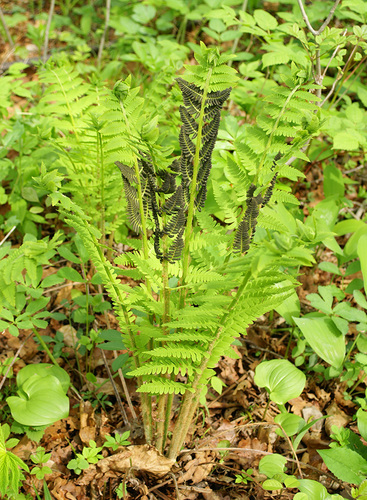
(c) Judy Gallagher, some rights reserved (CC BY-SA)
iNaturalist· cc-by-nc
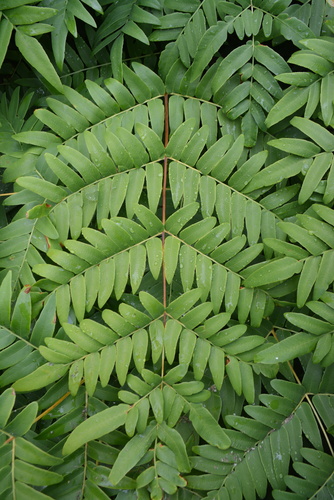
(c) abelkinser, some rights reserved (CC BY-NC)
iNaturalist· cc-by-nc
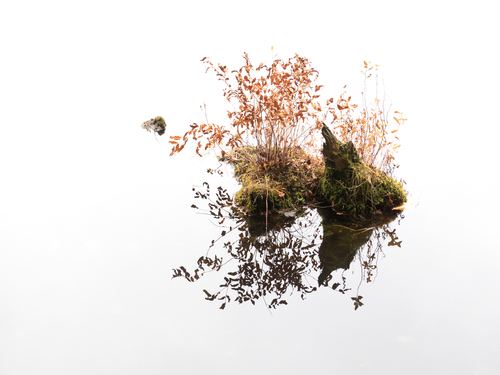
(c) abelkinser, some rights reserved (CC BY-NC)
Summary
Source: WikipediaA fern reaching 0.6 m tall and 0.4 m wide, growing at a moderate rate. Hardy to UK zone 3. Adapts to light sandy, medium loamy, and heavy clay soils across mildly acid to basic pH ranges, including very acidic soils. Grows in semi-shade or full sun and prefers consistently moist or wet soil.
Description
A fern. The fronds grow 40-100 cm high and are 15-25 cm wide. The fronds are twice divided. The fertile and the sterile fronds are separate. The fertile fronds are erect and stout and have light brown spore bearing bodies.
Edible Uses
The young, unexpanded fronds can be eaten as a nibble or cooked in soups, with a flavor said to resemble asparagus. Young shoots are regarded as a spring tonic, offering fresh green food after a winter of stored provisions. The latent buds, harvested in early spring, are also edible and are said to rival chestnuts in both size and flavor.
Traditional Uses
The young unexpanded fronds are eaten in soups. They are also simmered with deep-fried tofu in soup stock and soy sauce. The base of the fronds is chewed.
Medicinal Uses
A decoction of the root has been rubbed into affected joints to treat rheumatism. The root has been chewed, with a small portion swallowed and the remainder applied to snakebites. The plant is analgesic, antirheumatic, and galactogogue. A decoction taken internally treats headaches, joint pain, rheumatism, and colds, and has also been used to promote milk flow in nursing mothers.
Known Hazards
Although we have found no reports of toxicity for this species, a number of ferns contain carcinogens so some caution is advisable. Many ferns also contain thiaminase, an enzyme that robs the body of its vitamin B complex. In small quantities this enzyme will do no harm to people eating an adequate diet that is rich in vitamin B, though large quantities can cause severe health problems. The enzyme is destroyed by heat or thorough drying, so cooking the plant will remove the thiaminase.
Distribution
It is a temperate plant. It grows in wet places and along the edges of stream and ponds. It grows in moist, shaded positions.
Where It Grows
Asia, Canada, Central America, China, Indochina, Japan, Korea, Mexico, North America, Pakistan, SE Asia, USA, Vietnam, West Indies,
Cultivation
Easily grown in a damp woodland or by the margins of pools and streams. Likes a soil of swamp mud and loamy or fibrous peat, sand and loam. Succeeds in most moist soils, preferring acid conditions. Requires a constant supply of water, doing well by ponds, streams etc. Plants thrive in full sun so long as there is no shortage of moisture in the soil and also in shady situations beneath shrubs etc. Requires a shady position. Plants are hardy to at least -20°c, they are evergreen in warm winter areas but deciduous elsewhere. This species is sometimes cultivated for its edible fronds. Members of this genus are rarely if ever troubled by browsing deer. A very ornamental plant. The rhizome is large and slowly creeping.
Propagation
Spores lose viability very quickly — within 3 days — and should be sown as soon as ripe on the surface of humus-rich, sterilized soil in a lightly shaded greenhouse. Keep the compost moist, ideally by placing a plastic bag over the pot. Plants develop rapidly; pot on small clumps as soon as they are large enough to handle and keep humid until well established. Do not plant outside until ferns are at least 2 years old. Cultivars generally come true to type. The rootstock can also be divided during the dormant season, though this is strenuous work due to the dense mass of wiry roots.
Other Uses
No uses known.
Other Information
It is a commercially cultivated vegetable.
Notes
There are about 12 Osmunda species.
Synonyms
Also Known As
Rang atminh que, Zenmai
References (18)
- Beckstrom-Sternberg, Stephen M., and James A. Duke. "The Foodplant Database." http://probe.nalusda.gov:8300/cgi-bin/browse/foodplantdb.(ACEDB version 4.0 - data version July 1994)
- Brickell, C. (Ed.), 1999, The Royal Horticultural Society A-Z Encyclopedia of Garden Plants. Convent Garden Books. p 733
- Elias, T.S. & Dykeman P.A., 1990, Edible Wild Plants. A North American Field guide. Sterling, New York p 58
- Facciola, S., 1998, Cornucopia 2: a Source Book of Edible Plants. Kampong Publications, p 164
- Gul, A., et al, 2016, Traditional, medicinal and food uses of Pteridophytes of district Mansehra (Pakistan) and their some adjacent areas. International Journal of Biosciences Vol. 9, No. 5 p. 116-133
Show all 18 references Hide references
- Kays, S. J., and Dias, J. C. S., 1995, Common Names of Commercially Cultivated Vegetables of the World in 15 languages. Economic Botany, Vol. 49, No. 2, pp. 115-152
- Kuhnlein, H. V. and Turner, N. J., 1991, Traditional Plant Foods of Canadian Indigenous Peoples. Food and Nutrition in History and Anthropology Volume 8. Gordon and Breach. p 31
- Large, M.F., & Braggins, J.E., 2004, Tree Ferns. CSIRO Publishing, Melbourne, Australia. p 300
- Liu, Y., et al, 2012, Food uses of ferns in China: a review. Acta Societatis Botanicorum Poloniae 84(4): 263-270 (As Osmundastrum cinnamomea)
- MacKinnon, A., et al, 2009, Edible & Medicinal Plants of Canada. Lone Pine. p 386
- Moerman, D. F., 2010, Native American Ethnobotany. Timber Press. p 371
- Pham-Hoang Ho, 1999, An Illustrated Flora of Vietnam. Nha Xuat Ban Tre. p 43
- Plants for a Future database, The Field, Penpol, Lostwithiel, Cornwall, PL22 0NG, UK. http://www.scs.leeds.ac.uk/pfaf/
- Romanowski, N., 2007, Edible Water Gardens. Hyland House. p 112
- Schneider, E., 2001, Vegetables from Amaranth to Zucchini: The essential reference. HarperCollins. p 288
- Slocum, P.D. & Robinson, P., 1999, Water Gardening. Water Lilies and Lotuses. Timber Press. p 128
- Sp. pl. 2:1066. 1753
- Williams, D., 2017, Ainu Ethnobiology. Contributions in Ethnobiology. Society of Ethnobiology. p 109