Osmunda claytoniana
L.
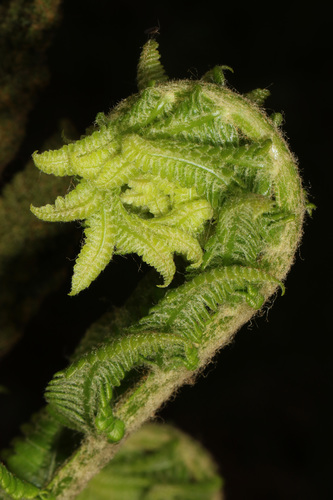
Interrupted fern, Kuthurke
iNaturalist· cc-by-nc
(c) V.S. Volkotrub, some rights reserved (CC BY-NC), uploaded by V.S. Volkotrub
iNaturalist· cc-by-nc
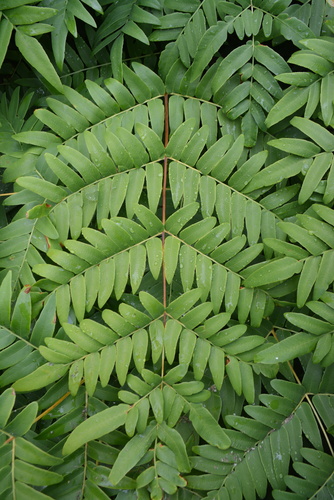
(c) valdebis, some rights reserved (CC BY-NC), uploaded by valdebis
iNaturalist· cc-by
(c) Homer Edward Price, some rights reserved (CC BY)
Summary
Source: WikipediaA fern growing to 0.5 m tall and 0.3 m wide, hardy to UK zone 3. Tolerates light sandy, medium loamy, and heavy clay soils across mildly acid to basic pH ranges, including very acidic soils. Grows in semi-shade or full sun and prefers moist or wet soil conditions.
Description
A fern. It grows in soil. The fronds are 20-35 cm long and 10-15 cm wide. They are divided into leaflets along the stalk. These segments do not have leaflet stalks. They are almost opposite. The erect sterile fronds have brown spores in the centre but no leaflets above or below this section.
Edible Uses
The young fronds are eaten cooked as a vegetable. The centre of the clump, below ground level, yields a small edible pith known as 'fern butter'.
Traditional Uses
The tender portions of the fronds are cooked as a vegetable. The centre of the clump below the ground has a small edible pith. Caution: They may contain chemicals that cause cancer. The young fiddleheads are boiled, then soaked for a day to get rid of the bitter taste then used in stir fries or pickles.
Medicinal Uses
The roots are used as an adulterant for Dryopteris felix-mas in the treatment of internal worms.
Known Hazards
Although we have found no reports of toxicity for this species, a number of ferns contain carcinogens so some caution is advisable. Many ferns also contain thiaminase, an enzyme that robs the body of its vitamin B complex. In small quantities this enzyme will do no harm to people eating an adequate diet that is rich in vitamin B, though large quantities can cause severe health problems. The enzyme is destroyed by heat or thorough drying, so cooking the plant will remove the thiaminase.
Distribution
It is a temperate plant. It grows in wet places and along the edges of stream and ponds. In Nepal it grows between 1400-3300 m altitude. It grows in hillsides in China between 1,600-3,400 m above sea level. It suits hardiness zones 3-9.
Where It Grows
Asia, Bhutan, China, Himalayas, India, Japan, Korea, Nepal, North America, Russia, Taiwan, USA,
Cultivation
Likes a soil of swamp mud and loamy or fibrous peat, sand and loam. Succeeds in most moist soils, preferring acid conditions. Requires a constant supply of water, doing well by ponds, streams etc. Plants thrive in full sun so long as there is no shortage of moisture in the soil and also in shady situations beneath shrubs etc. Requires a shady position. Plants are hardy to at least -20°c, they are evergreen in warm winter areas but deciduous elsewhere. Members of this genus are rarely if ever troubled by browsing deer. A very ornamental plant.
Propagation
Spores lose viability very quickly — within 3 days — and should be sown as soon as ripe on the surface of humus-rich, sterilized soil in a lightly shaded greenhouse. Keep the compost moist, ideally by placing a plastic bag over the pot. Plants develop rapidly; pot on small clumps as soon as they are large enough to handle and keep humid until well established. Do not plant outside until ferns are at least 2 years old. Cultivars generally come true to type. The rootstock can also be divided during the dormant season, though this is strenuous work due to the dense mass of wiry roots.
Other Uses
No uses known.
Notes
There are about 12 Osmunda species.
Synonyms
References (12)
- Ambasta, S.P. (Ed.), 2000, The Useful Plants of India. CSIR India. p 416
- Dangol, D. R. et al, 2017, Wild Edible Plants in Nepal. Proceedings of 2nd National Workshop on CUAOGR, 2017.
- Facciola, S., 1998, Cornucopia 2: a Source Book of Edible Plants. Kampong Publications, p 164
- Joshi, N., et al, 2007, Traditional neglected vegetables of Nepal: Their sustainable utilization for meeting human needs. Tropentag 2007. Conference on International Agricultural Research for Development.
- Large, M.F., & Braggins, J.E., 2004, Tree Ferns. CSIRO Publishing, Melbourne, Australia. p 300
Show all 12 references Hide references
- Manandhar, N.P., 2002, Plants and People of Nepal. Timber Press. Portland, Oregon. p 342
- Ojha, R. & Devkota, H. P., 2021, Edible and Medicinal Pteridophytes of Nepal: A Review. Ethnobotany Research & Applications 22:16
- Plants for a Future database, The Field, Penpol, Lostwithiel, Cornwall, PL22 0NG, UK. http://www.scs.leeds.ac.uk/pfaf/
- Romanowski, N., 2007, Edible Water Gardens. Hyland House. p 112
- Slocum, P.D. & Robinson, P., 1999, Water Gardening. Water Lilies and Lotuses. Timber Press. p 128
- Sp. pl. 2:1066. 1753
- Tanaka,