Osmunda regalis
L.
Buckthorn brake, Royal fern
iNaturalist· cc-by-nc
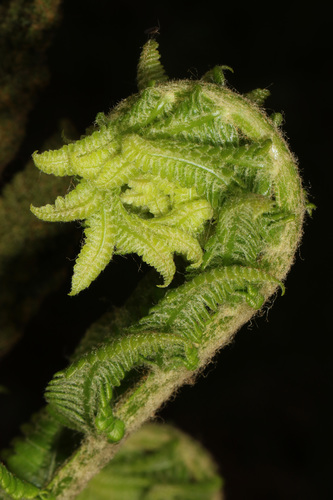
(c) Susan Elliott, some rights reserved (CC BY-NC)
iNaturalist· cc-by-nc
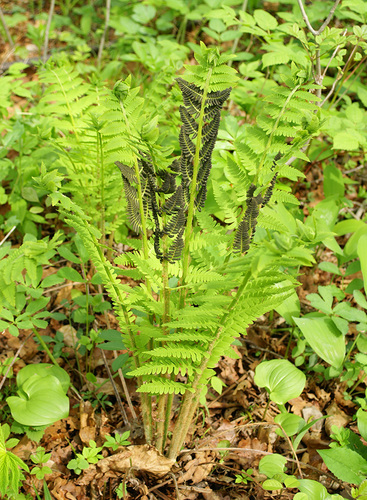
(c) Jan Doležal, some rights reserved (CC BY-NC)
iNaturalist· cc-by-nc
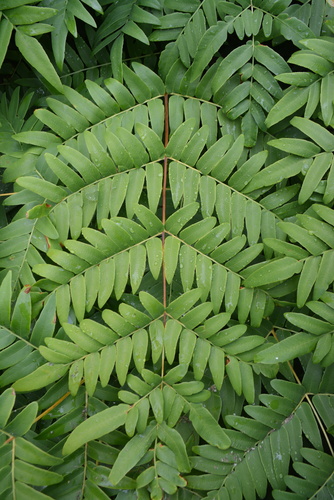
(c) Jan Doležal, some rights reserved (CC BY-NC)
Summary
Source: WikipediaOsmunda regalis, or royal fern, is a species of deciduous fern, native to Europe, North Africa and West Asia, growing in woodland bogs and on the banks of streams. The species is sometimes known as flowering fern due to the appearance of its fertile fronds.
Description
A stout fern. It forms tufts. The fronds are erect and 2 m high. The frond stalk is 30 cm long and the blade 1 m long. It is oval in outline and twice divided.
Edible Uses
None known
Traditional Uses
CAUTION: It probably causes cancer of the stomach and oesophagus.
This uses section is brief — help expand it
Medicinal Uses
The root is astringent, diuretic, tonic, and vulnerary, and is used in the treatment of jaundice and to remove obstructions of the viscera. Fronds are made into compresses for external application to wounds and rheumatic joints, for which they are considered fairly effective. An infusion of the fronds combined with wild ginger roots (Asarum species) has been used to treat children experiencing convulsions caused by intestinal worms.
Known Hazards
Although we have found no reports of toxicity for this species, a number of ferns contain carcinogens so some caution is advisable. Many ferns also contain thiaminase, an enzyme that robs the body of its vitamin B complex. In small quantities this enzyme will do no harm to people eating an adequate diet that is rich in vitamin B, though large quantities can cause severe health problems. The enzyme is destroyed by heat or thorough drying, so cooking the plant will remove the thiaminase.
Distribution
It is a tropical plant and also grows in temperate countries. It grows in damp sites. It grows along streams between 700-2,000 m above sea level. In Nigeria it has been recorded at 2,270 m above sea level.
Where It Grows
Africa, Asia, Burkina Faso, Cameroon, Central Africa, East Africa, Equatorial Guinea, Eswatini, Europe, Lesotho, Luxembourg, Madagascar, Malawi, Mali, Mozambique, Nigeria, North America, Sierra Leone, South Africa, Southern Africa, Swaziland, USA, West Africa, Zambia, Zimbabwe,
Cultivation
An easily grown plant, it prefers a soil of swamp mud and loamy or fibrous peat, sand and loam. Succeeds in most moist soils, preferring acid conditions. Requires a constant supply of water, doing well by ponds, streams etc. Plants thrive in full sun so long as there is no shortage of moisture in the soil and also in shady situations beneath shrubs etc. Plants are hardy to at least -20°c, they are evergreen in warm winter areas but deciduous elsewhere. Members of this genus are rarely if ever troubled by browsing deer. Transplants well, even when quite large. Some named forms have been selected for their ornamental value.
Propagation
Spores lose viability very quickly — within 3 days — and should be sown as soon as ripe on the surface of humus-rich, sterilized soil in a lightly shaded greenhouse. Keep the compost moist, ideally by placing a plastic bag over the pot. Plants develop rapidly; pot on small clumps as soon as they are large enough to handle and keep humid until well established. Do not plant outside until ferns are at least 2 years old. Cultivars generally come true to type. The rootstock can also be divided during the dormant season, though this is strenuous work due to the dense mass of wiry roots.
Other Uses
The plant's hairs are mixed with wool and used in making cloth. The roots yield 'Osmunda fibre,' once widely used for potting orchids and other epiphytes. Plants can be used as ground cover when spaced about 1 metre apart in each direction.
Synonyms
Also Known As
Helecho real
References (8)
- Burkill, H. M., 1985, The useful plants of west tropical Africa, Vol. 5. Kew.
- Grubben, G. J. H. and Denton, O. A. (eds), 2004, Plant Resources of Tropical Africa 2. Vegetables. PROTA, Wageningen, Netherlands. p 563
- Kermath, B. M., et al, 2014, Food Plants in the Americas: A survey of the domesticated, cultivated and wild plants used for Human food in North, Central and South America and the Caribbean. On line draft. p 595
- Moerman, D. F., 2010, Native American Ethnobotany. Timber Press. p 371
- Sp. pl. 2:1063. 1753 (type species)
Show all 8 references Hide references
- Schneider, E., 2001, Vegetables from Amaranth to Zucchini: The essential reference. HarperCollins. p 288
- Swaziland's Flora Database http://www.sntc.org.sz/flora
- World Checklist of Useful Plant Species 2020. Royal Botanic Gardens, Kew