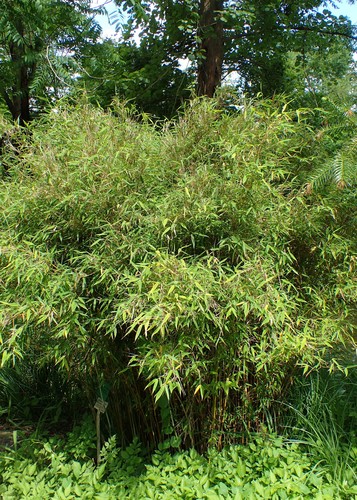
Oryzopsis hymenoides
(Roem. & Schult.) Ricker ex Piper
Indian ricegrass, Indian millet
iNaturalist· cc-by-nc
(c) Eric Hough, some rights reserved (CC BY-NC)
iNaturalist· cc-by-nc
(c) Eric Hough, some rights reserved (CC BY-NC)
iNaturalist· cc-by-nc
(c) Eric Hough, some rights reserved (CC BY-NC)
Description
A bunch millet grass in the Poaceae family found in temperate regions suited to sandy, arid areas.
This description is brief — help expand it
Edible Uses
In the past, the grass was a staple food of Native Americans, especially when the maize crop failed, and for non-agricultural tribes. Seed of the ricegrass was gathered and ground into meal or flour and made into bread. Since 2000, the ricegrass has been cultivated in Montana and marketed under the trade name Montina as a gluten-free grain. The Zuni people used the ground seeds as a staple before the availability of corn.
Traditional Uses
The seeds are ground into a meal for bread and porridge. They can also be used for cakes or to thicken soups. They can be mixed with cornmeal and used for dumplings.
Distribution
It is a temperate plant. It suits sandy arid regions.
Where It Grows
North America, USA,
Cultivation
Seeds can be scratched just prior to planting to speed up germination.
Other Information
Indian ricegrass (Oryzopsis hymenoides) Indian ricegrass was probably the most valuable wild cereal harvested in the Rio Grande corridor during prehistoric times. One ounce of Indian ricegrass seeds yields about 120 calories in food value.
Notes
One ounce of Indian ricegrass seeds yields about 120 calories in food value.
Synonyms
Also Known As
Perennial salt grass, Sand grass
References (17)
- Beckstrom-Sternberg, Stephen M., and James A. Duke. "The Foodplant Database." http://probe.nalusda.gov:8300/cgi-bin/browse/foodplantdb.(ACEDB version 4.0 - data version July 1994)
- CASTETTER,
- Contr. U.S. Natl. Herb. 11:109. 1906
- Coutre, M. D., et al, 1986, Foraging Behaviour of a Contemporary Northern Great Basin Population. Journal of California and Great Bason Anthropology Vol. 8(2) pp 150-160
- Davies, C. L., Waugh, D. L. & Lefroy, E. C., 2005, Perenial Grain Crops for High Water Use. The case of Microlaena stipoides. RIRDC Publication No. 05/024
Show all 17 references Hide references
- Etkin, N.L. (Ed.), 1994, Eating on the Wild Side, Univ. of Arizona. p 70, 71
- Facciola, S., 1998, Cornucopia 2: a Source Book of Edible Plants. Kampong Publications, p 178
- Gen. N. Amer. pl. 1:40. 1818 (As Eriocoma cuspidata)
- Hedrick, U.P., 1919, (Ed.), Sturtevant's edible plants of the world. p 455 (As Oryzopsis cuspidata)
- http://www.stoller-eser.com/Flora/ethnobotany_table.htm
- Kermath, B. M., et al, 2014, Food Plants in the Americas: A survey of the domesticated, cultivated and wild plants used for Human food in North, Central and South America and the Caribbean. On line draft. p 593
- Lambert,S., 2005, Guide to the Seeds of Native and Non-Native Grasses, Forbs and Shrubs of the Great Basin, Idaho BLM Technical Bulletin 2005-04
- Moerman, D. F., 2010, Native American Ethnobotany. Timber Press. p 370
- Kiple, K.F. & Ornelas, K.C., (eds), 2000, The Cambridge World History of Food. CUP p 1844
- MINNIS,
- Saunders, C.F., 1948, Edible and Useful Wild Plants. Dover. New York. p 56 (As Eriocoma cuspidata)
- World Checklist of Useful Plant Species 2020. Royal Botanic Gardens, Kew