Oryza glaberrima
Steud.
Floating rice, African rice
wikimedia· cc-by
Jun-Ichi Sakagami (via Wikimedia Commons)
wikimedia· cc0
Ji-Elle (via Wikimedia Commons)
wikimedia· cc-by
Brian Stansberry (via Wikimedia Commons)
iNaturalist· cc-by-nc
(c) Cole Tiemann, some rights reserved (CC BY-NC), uploaded by Cole Tiemann
iNaturalist· cc-by-nc
(c) Russ Hedley, some rights reserved (CC BY-NC)
Summary
Source: WikipediaOryza glaberrima, commonly known as African rice, is one of the two domesticated rice species. The species was first domesticated and grown in West Africa around 3,000 years ago. In agriculture, it makes up an estimated 20% of rice grown commercially in West Africa, having largely been replaced by higher-yielding O. sativa (Asian rice). The number of O. glaberrima varieties grown is declining. Crossbreeding between African and Asian rice is difficult, but there exist some crosses. In comparison to O. sativa (Asian rice), African rice is hardy, pest-resistant, low-labour, and suited to a larger variety of African conditions. It is described as filling, with a distinct nutty flavour. It is also grown for cultural reasons.
Description
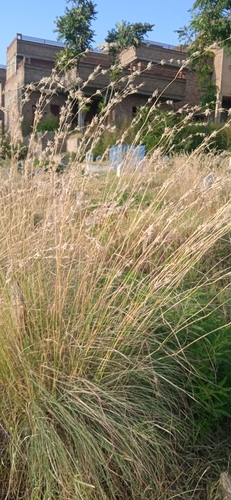
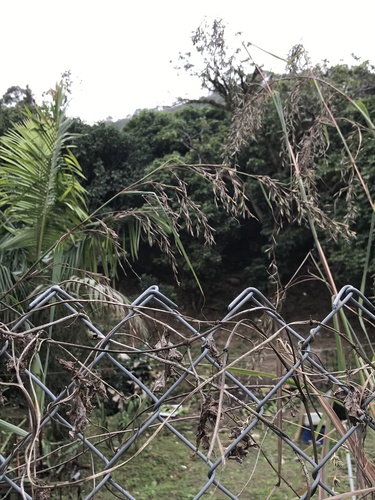
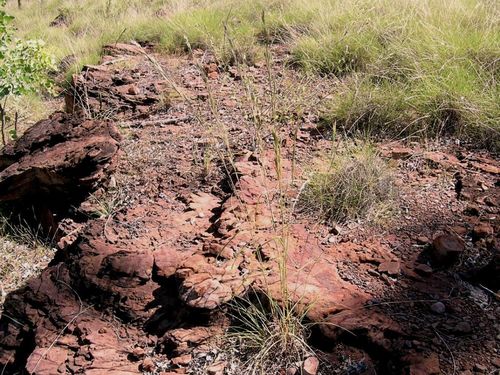
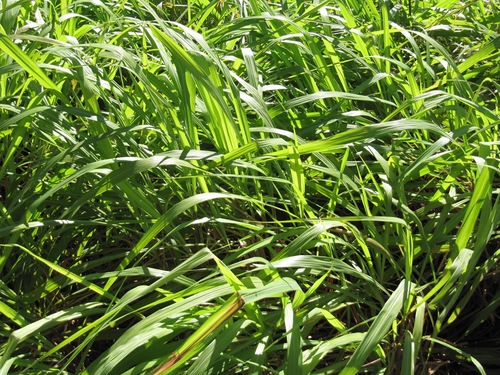
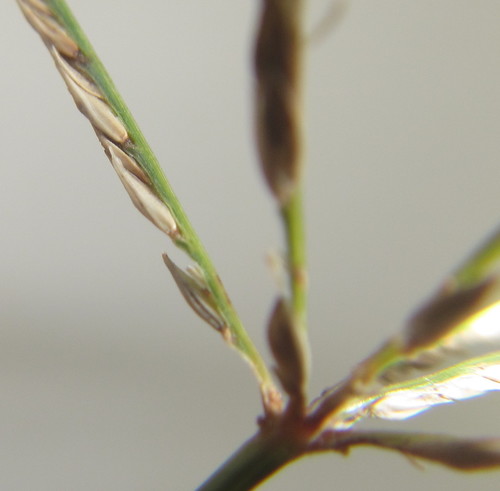
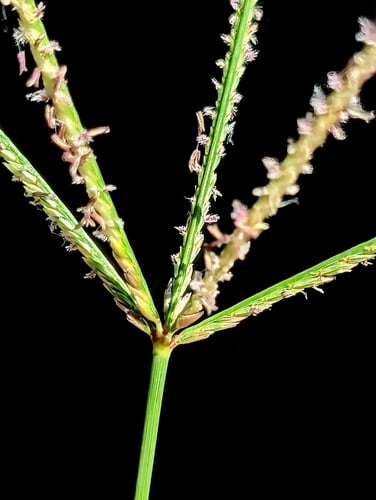
An annual grass. Most varieties have a reddish colour. It grows 1.5 m but can be 5 m in some floating kinds. Dryland types often form tufts and floating rice often branches. The leaves are alternate and simple. The leaf sheath is 25 cm long. The leaf blade is 20-25 cm long and 6-9 mm wide. The flowers are in a compact group 25 cm long at the top of the plant. The fruit is a grain 9 mm long by 3 mm wide.
Edible Uses
The grain can be cooked and eaten or ground into flour, which is sweetened with rice flour and honey for bread. It is also fermented into beer.
Traditional Uses
The grain can be cooked and eaten. It is also ground into flour. This is sweetened with rice flour and honey for bread. It is fermented into beer.
This uses section is brief — help expand it
Medicinal Uses
Multiple varieties of African rice are often grown so that the harvest is staggered. In this way, the harvest can be eaten fresh. Freshly harvested rice is moist, and can be puffed in fire, and eaten. Fried rice has a brownish color when fried; this is because of the husk which is green in color and turns brown when heated. African rice can be prepared in much the same way as Asian rice, but has a distinct nutty flavor, for which it is favored in West Africa. African rice grains are often reddish in colour; some varieties are strongly aromatic, other, like Carolina Gold, are not at all aromatic. African rice is also used in local traditional medicine.
Distribution
It is a tropical plant. It is grown in swamps. It grows on flood plains of savanna regions. It does best with temperatures of 30-35°C. It grows from sea level to 1,700 m altitude. It can tolerate low soil fertility. In Yunnan.
Where It Grows
Africa, Asia, Benin, Brazil, Burkina Faso, Burundi, Cameroon, Central Africa, Central African Republic, CAR, Central America, Chad, China, Congo, Congo DR, Côte d'Ivoire, East Africa, El Salvador, Equatorial-Guinea, Ethiopia, French Equatorial Africa, Gabon, Gambia, Ghana, Guianas, Guinea, Guinée, Guinea-Bissau, Guyana, Ivory Coast, Liberia, Mali, Mauritania, Niger*, Nigeria, Panama, Rwanda, Sao Tome and Principe, Senegal, Sierra Leone, South America, Sudan, Togo, West Africa, Zambia, Zimbabwe,
Cultivation
Plants are grown from seed. Usually seeds remain dormant for a few months after harvesting. Seed usually emerge after 4-5 days. Seed are usually broadcast without using a nursery. The juvenile stage lasts for 3 weeks then tillering occurs for 3-4 weeks.
Propagation
Seed - germinates within 4 - 5 days from sowing. Seed. The seed of wild rice less than 12 months old often exhibits strong dormancy, which implies (though this has not been established) that the seed retains its viability for a considerable period. Heat treatment is generally effective in breaking dormancy - alternating temperatures between 34°c for 16 hours then 11°c for 8 hours is usually effective, though the time taken varies between species. Surface sow the seed in light shade and do not allow to dry out. Seed should germinate within 7 days at 30°c. Prick out 2 - 3 seedlings into individual pots when large enough to handle and, after a few days, move to a sunny position. Grow on until large enough to plant out.
Other Information
It is a cultivated food plant.
Notes
There are about 20 Oryza species. This is a diploid species with AgAg genome.
Nutrition
| Part | Moisture | kJ | kcal | Protein | Vit A | Vit C | Iron | Zinc |
|---|---|---|---|---|---|---|---|---|
| Seeds brown | 11.3 | 1538 | 368 | 7.4 | — | — | 3.4 | — |
Synonyms
Also Known As
Baga-male, Erisi, Issa-mo, Kamor, Kebelei, Kono, Mala, maPunga, Mba, Mbei, Mou-ber, Osikapa, Pa, Red rice, Riz des Baga, West African rice
References (31)
- Baa-Poku, F. & Asante, I. K., 2020, Use of Neglected and Underutilized Crop Species (NUCS) in some farming communities in the Upper Afram and Upper Dayi River Basins in Ghana. International Journal of Technology and Management Research 5 (2): 48-63
- Bezançon, G. & Diallo, S., 2006. Oryza glaberrima Steud. [Internet] Record from Protabase. Brink, M. & Belay, G. (Editors). PROTA (Plant Resources of Tropical Africa), Wageningen, Netherlands. < http://database.prota.org/search.htm>. Accessed 20 October 200919 October 2009.
- Burkill, H. M., 1985, The useful plants of west tropical Africa, Vol. 2. Kew.
- Chang, T.T., 1979, Rice, in Simmonds N.W.,(ed), Crop Plant Evolution. Longmans. London. p 98
- Cobley, L.S. (rev. Steele, W.M.) 2nd Ed., 1976, An Introduction to the Botany of Tropical Crops. Longmans. p 27
Show all 31 references Hide references
- Dalziel, J. M., 1937, The Useful plants of west tropical Africa. Crown Agents for the Colonies London.
- Facciola, S., 1998, Cornucopia 2: a Source Book of Edible Plants. Kampong Publications, p 177
- Fowler, D. G., 2007, Zambian Plants: Their Vernacular Names and Uses. Kew. p 71
- Grivetti, L. E., 1980, Agricultural development: present and potential role of edible wild plants. Part 2: Sub-Saharan Africa, Report to the Department of State Agency for International Development. p 30, 32
- Heywood, V.H., Brummitt, R.K., Culham, A., and Seberg, O., 2007, Flowering Plant Families of the World. Royal Botanical Gardens, Kew. p 394
- Jardin, C., 1970, List of Foods Used In Africa, FAO Nutrition Information Document Series No 2.p 4
- Kermath, B. M., et al, 2014, Food Plants in the Americas: A survey of the domesticated, cultivated and wild plants used for Human food in North, Central and South America and the Caribbean. On line draft. p 592
- Kiple, K.F. & Ornelas, K.C., (eds), 2000, The Cambridge World History of Food. CUP p 1714
- Kuhnlein, H. V., et al, 2009, Indigenous Peoples' food systems. FAO Rome p 260
- Molla, A., Ethiopian Plant Names. http://www.ethiopic.com/aplants.htm
- National Research Council, 1996, Lost Crops of Africa. Volume 1: Grains/ National Academy Press, Washington, D.C. p 17
- Nyadanu, D., et al, 2015, Agro-biodiversity and challenges of on-farm conservation: the case of plant genetic resources of neglected and underutilized crop species in Ghana. Genet. Resourc. Crop Evol. 62(7):
- Pedersen J. and Benjaminsen, T. A., 2008, One Leg or Two? Food Security and Pastoralism in the Northern Sahel. Human Ecology 36:43-57
- Peters, C. R., O'Brien, E. M., and Drummond, R.B., 1992, Edible Wild plants of Sub-saharan Africa. Kew. p 24
- Purseglove, J.W., 1972, Tropical Crops. Monocotyledons. Longmans p 161
- Romanowski, N., 2007, Edible Water Gardens. Hyland House. p 102
- Shava, S., et al, 2009, Traditional food crops as a source of community resilience in Zimbabwe. International Journal of the African Renaissance 4(1)
- Small, E., 2009, Top 100 Food Plants. The world's most important culinary crops. NRC Research Press. p 464
- Syn. pl. glumac. 1:3. 1853
- Uphof,
- USDA, ARS, National Genetic Resources Program. Germplasm Resources Information Network - (GRIN). [Online Database] National Germplasm Resources Laboratory, Beltsville, Maryland. Available: www.ars-grin.gov/cgi-bin/npgs/html/econ.pl (10 April 2000)
- van Wyk, B., 2005, Food Plants of the World. An illustrated guide. Timber press. p 270
- Vaughan, J. C. & Geissler, C. A., 2009, The new Oxford Book of Food Plants. Oxford University Press. p 8
- Vickery, M.L. and Vickery, B., 1979, Plant Products of Tropical Africa, Macmillan. p 12
- Wiersema, J. H. & Leon, B., 2013, World Economic Plants. A Standard Reference CRC Press. 2nd Ed. p 483
- World Checklist of Useful Plant Species 2020. Royal Botanic Gardens, Kew