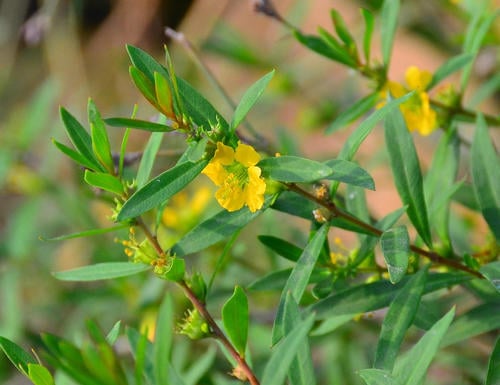
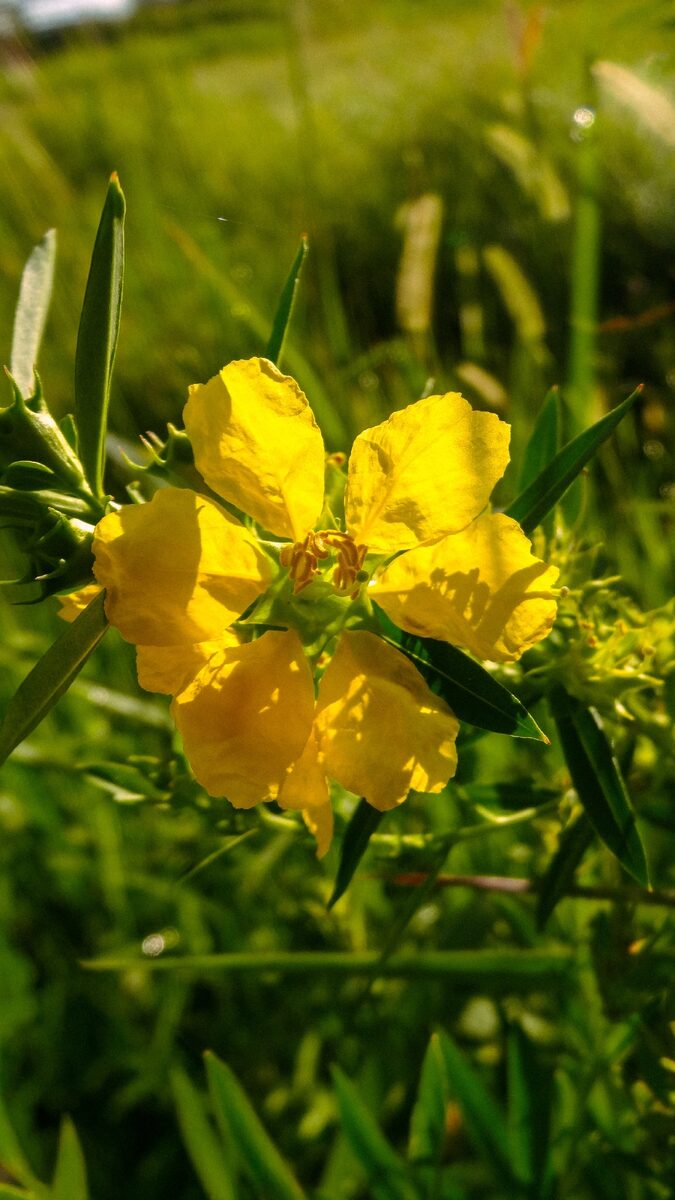
Ammannia multiflora
Roxb.
Jerry-jerry
iNaturalist· cc0
no rights reserved, uploaded by 葉子
iNaturalist· cc-by-nc
(c) Martin Bennett, some rights reserved (CC BY-NC), uploaded by Martin Bennett
iNaturalist· cc-by-sa
(c) Dinesh Valke, some rights reserved (CC BY-SA)
Summary
Source: WikipediaAmmannia multiflora, commonly known as many-flower ammannia and jerry-jerry in Victoria, is a species in the family Lythraceae. It is widespread in Asia, tropical and sub-tropical Africa and Australia. It can be found in shallow water and damp heavy soils.
Description
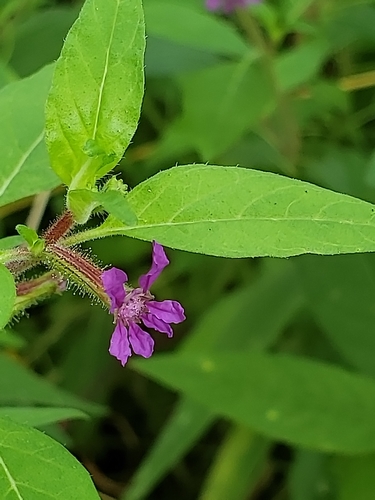
A herb. It is erect and grows each year from seed. It grows 10-60 cm high. The leaves are narrowly sword shaped. They are 3-40 mm long by 1-6 mm wide. The flowers are in groups of 3 or more. The flowers are red, pink and white.
Edible Uses
Seed - cooked. It is usually ground into a powder and used in making a cake. The tiny seeds are around 0.2mm long, contained in a red-brown or red-wine coloured capsule that is around 1.5mm in diameter.
Traditional Uses
The seeds are crushed to make flour.
This uses section is brief — help expand it
Medicinal Uses
None known.
Distribution
It is a tropical plant. It grows in warmer places. It grows in sandy and alluvial soil. It is often along watercourses and near lakes. In Pakistan it grows up to 1,800 m altitude.
Where It Grows
Africa, Asia, Australia, China, Himalayas, India, Korea, Madagascar, Nepal, Pakistan, Taiwan,
Cultivation
Ammannia multiflora is native of tropical and subtropical regions in Africa, Asia and Australia, where it is often found as a weed of cultivated land, especially ricefields. It has spread as a weed of rice into warm temperate regions of Asia. The plant is a weed of cultivated land, especially rice fields.
Other Uses
None known.
Notes
There are 30 Ammania species. They grow in the tropics and subtropics.
Synonyms
Also Known As
Bongonimbary, Rongombary, Taboronjazalahy
References (12)
- Bailey, F. M., 1913, Comprehensive Catalogue of Queensland Plants. Queensland Government. p 214
- Calvert, G. & Liessman, L., 2014, Wetland Plants of the Townsville - Burdekin Flood Plain. LBLCA Ayr, Queensland, p 69
- Cherikoff V. & Isaacs, J., The Bush Food Handbook. How to gather, grow, process and cook Australian Wild Foods. Ti Tree Press, Australia p 188
- Cribb, A.B. & J.W., 1976, Wild Food in Australia, Fontana. p 96
- Dunlop, C.R., Leach, G.J. & Cowie, I.D., 1995, Flora of the Darwin Region. Vol 2. Northern Territory Botanical Bulletin No 20. p 133
Show all 12 references Hide references
- Jackes, B.R., 2001, Plants of the Tropics. Rainforest to Heath. An Identification Guide. James Cook University. p 62
- Kenneally, K.E., Edinger, D. C., and Willing T., 1996, Broome and Beyond, Plants and People of the Dampier Peninsula, Kimberley, Western Australia. Department of Conservation and Land Management. p 119
- Lazarides, M. & Hince, B., 1993, Handbook of Economic Plants of Australia, CSIRO. p 18
- Morley, B.D., & Toelken, H.R., (Eds), 1983, Flowering Plants in Australia. Rigby. p 170
- Paczkowska, G. & Chapman, A.R., 2000, The Western Australian Flora. A Descriptive Catalogue. Western Australian Herbarium. p 286
- Roth, W.E., 1901,
- Wheeler, J.R.(ed.), 1992, Flora of the Kimberley Region. CALM, Western Australian Herbarium, p 490