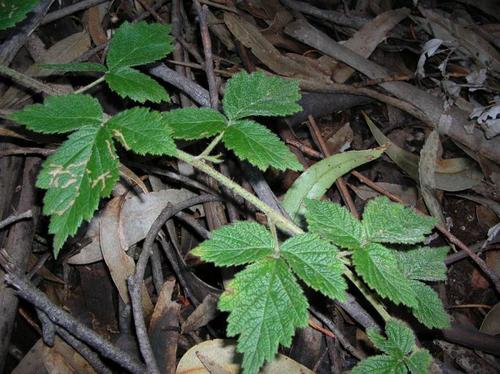
Potentilla egedei
Wormsk.
Pacific Silverweed
gbif· cc-by-nc
SFSU - Vascular Plants of the Harry D. Thiers Herbarium at San Francisco State University (SFSU-)
gbif· cc-by
GBIF
gbif· cc-by
GBIF
Description
Potentilla egedei is a PERENNIAL growing to 0.5 m (1ft 8in). See above for USDA hardiness. It is hardy to UK zone 4. The species is hermaphrodite (has both male and female organs) and is pollinated by Insects. The plant is self-fertile. Suitable for: light (sandy), medium (loamy) and heavy (clay) soils and prefers well-drained soil. Suitable pH: mildly acid, neutral and basic (mildly alkaline) soils. It can grow in semi-shade (light woodland) or no shade. It prefers moist soil. The plant can tolerate maritime exposure.
Edible Uses
Root - raw or cooked. The raw root has a bitter flavour but most of the bitterness is lost once the root is cooked and the flavour then becomes somewhat like a sweet potato. The roots are rather thin but were a staple food of some North American Indian tribes.
Medicinal Uses
Astringent Ophthalmic Poultice. The whole plant is astringent. A poultice of the boiled roots and oil can be applied to sores and swellings. The juice from the roots has been used as a wash for sore eyes.
Distribution
E. Asia. Western N. America - Alaska to California..
Where It Grows
TEMPERATE ASIA: Russian Federation (Yakutia-Sakha), Russian Federation (Magadanskaja oblast), Korea (coasts), Japan (coasts) NORTHERN AMERICA: Canada (Northwest Territories, Yukon, British Columbia (coast)), Greenland (coasts), United States (Alaska (coasts)) EUROPE: Finland, Iceland, Norway, Sweden, Russian Federation (Neneckij avtonomnyj okrug, Murmansk)
Cultivation
Easily grown in a well-drained loam, preferring a position in full sun but tolerating shade. Prefers an alkaline soil but tolerates a slightly acid soil. Members of this genus are rarely if ever troubled by browsing deer. This species is closely related to P. anserina.
Propagation
Seed - sow early spring or autumn in a cold frame. When they are large enough to handle, prick the seedlings out into individual pots and grow them on in the greenhouse for their first winter. Plant them out into their permanent positions in late spring or early summer, after the last expected frosts. Division in spring. Larger divisions can be planted out direct into their permanent positions. We have found that it is better to pot up the smaller divisions and grow them on in light shade in a cold frame until they are well established before planting them out in late spring or early summer.