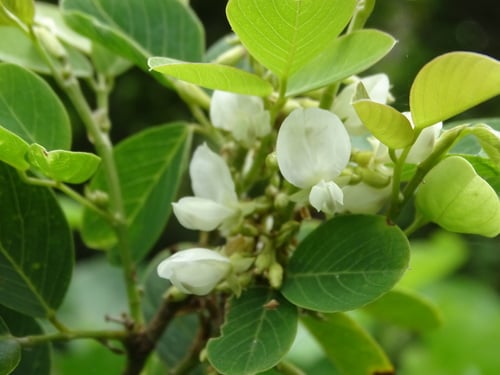
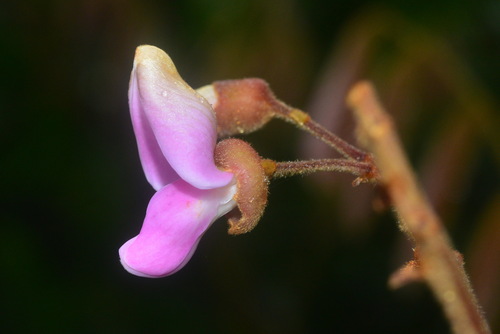
Amblygonocarpus andongensis
(Welw. ex Oliv.) Exell. et Torre
Scotsman's rattle
iNaturalist· cc-by-nc
(c) Mark Hyde, Bart Wursten and Petra Ballings, some rights reserved (CC BY-NC)
iNaturalist· cc-by-sa
(c) Ton Rulkens, some rights reserved (CC BY-SA)
iNaturalist· cc-by-nc
(c) graemewolfaard, some rights reserved (CC BY-NC)
Description
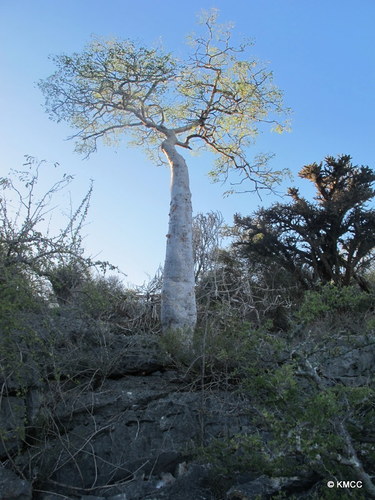
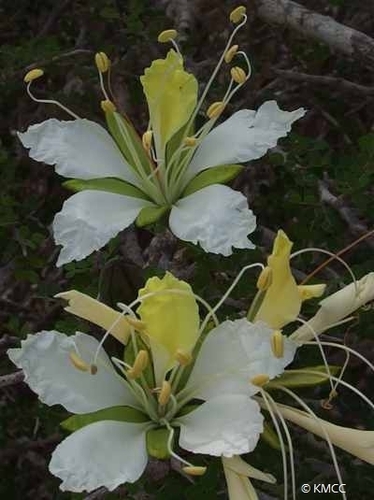
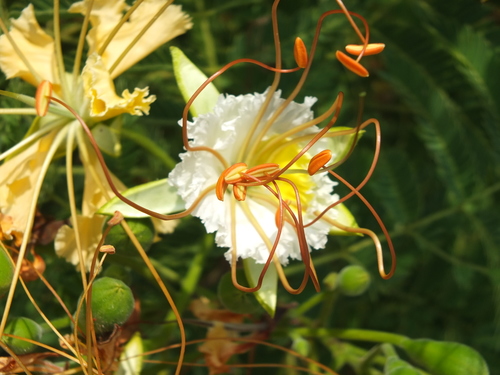
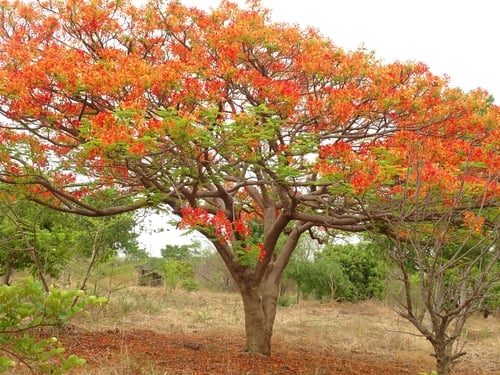
A large spreading tree. It can be 15-20 m high. The bark is dark and scales into squares. The leaves are compound. They have 2-5 pairs of stalks each with 4-7 pairs of leaflets. The leaflets are rather large. They are oblong and 3 cm long by 2 cm wide. The flowers are of both sexes. They are cream and in spikes in the axils of leaves. They can be in pairs and hang down. The fruit is a very distinct pod. It is 17 cm long by 3.5 cm wide. They are glossy brown with 4 marked ridges. This makes the pods almost square in cross section.
Edible Uses
The seeds are roasted and eaten whole or pounded into a dry powder that is typically seasoned with salt and used as a spice.
Traditional Uses
The pods gathered as they fall in the wind. The seeds are roasted and eaten whole, or pounded into a dry powder and usually seasoned with salt.
This uses section is brief — help expand it
Medicinal Uses
The seeds are roasted and processed into powder for culinary seasoning.
Known Hazards
The inner bark, roots and seeds have been recorded to be poisonous, but are used in various medicinal or food preparations. The pulverized pods are used as a fish poison.
Distribution
It is a tropical plant. It grows in low altitude deciduous forest. It is often on Kalahari sands. In Zimbabwe it grows up to 1,370 m above sea level. In Brisbane Botanical Gardens.
Where It Grows
Africa, Angola, Australia, Botswana, Burkina Faso, Cameroon, Central Africa, Chad, Congo, East Africa, Ghana, Malawi, Mozambique, Namibia, Nigeria, South Africa, Southern Africa, Sudan, Tanzania, Uganda, West Africa, Zambia, Zimbabwe,
Cultivation
Although many species within the family Fabaceae have a symbiotic relationship with soil bacteria, this species is said to be devoid of such a relationship and therefore does not fix atmospheric nitrogen.
Propagation
Seed - it has a hard seedcoat and may benefit from scarification before sowing to speed up germination. This can usually be done by pouring a small amount of nearly boiling water on the seeds (being careful not to cook them!) and then soaking them for 12 - 24 hours in warm water. By this time they should have imbibed moisture and swollen - if they have not, then carefully make a nick in the seedcoat (being careful not to damage the embryo) and soak for a further 12 hours before sowing.
Other Uses
The heartwood is dark brown or red-brown, darkening on exposure, and distinctly demarcated from the narrow band of grey-white sapwood. The grain is wavy or straight, sometimes slightly interlocked; texture fine and even. The wood is difficult to saw and work; blunting of cutting edges is common. It can be finished to an excellent surface, is resistant to abrasion, and has good gluing properties. Pre-boring is necessary for screws and nails. The wood is durable and termite-resistant; it is resistant to impregnation with preservatives. Known in southern Africa as 'bangawanga', it is used for joinery and furniture. It is considered excellent for heavy duty flooring and for railway sleepers, and is also suitable for construction, mine props, vehicle bodies, sporting goods, agricultural implements, poles and piles, and vats. The wood is used for fuel and to make charcoal. Charcoal made from the wood is considered excellent for iron-forge work.
Notes
Chemical composition (seed acids [Rhodesian sample]): Oil = 12%. Component esters (wt. %): 16:0 = 4%. 18:0 = 4%. 18:1 = 22%. 18:2 = 576%. 18:3 = 2%. 20:0 = 3%. 20:1 = 1%. 22:0 = 5%. 24:0 = 2%. Also as Mimosaceae.
Nutrition
| Part | Moisture | kJ | kcal | Protein | Vit A | Vit C | Iron | Zinc |
|---|---|---|---|---|---|---|---|---|
| Seeds | 0 | 1708 | 409 | 12.1 | — | — | 15 | — |
| Pods | — | — | — | — | — | — | — | — |
Synonyms
Also Known As
Dagbni nanzidow, Fula-fulfulde, Matindire, Munyenye, Mutindiri, Muwaka, Njekere, Umnonjwana, Yake
References (14)
- Bol Soc. Brot. ser. 2, 29:42. 1955
- Bruschi, P., et al, 2014, Traditional use of plants in a rural community of Mozambique and possible links with Miombo degradation and harvesting sustainability. Journal of Ethnobiology and Ethnomedicine. 2014, 10:59
- Burkill, H. M., 1985, The useful plants of west tropical Africa, Vol. 3. Kew.
- CROSS-UPCOTT
- Fowler, D. G., 2007, Zambian Plants: Their Vernacular Names and Uses. Kew. p 34
Show all 14 references Hide references
- Jardin, C., 1970, List of Foods Used In Africa, FAO Nutrition Information Document Series No 2.p 24
- Malaisse, F., 1997, Se nourrir en floret claire africaine. Approche ecologique et nutritionnelle. CTA., p 57
- Malaisse, F., 2010, How to live and survive in Zambezian open forest (Miombo Ecoregion). Les Presses Agronomiques de Gembloux.
- Menninger, E.A., 1977, Edible Nuts of the World. Horticultural Books. Florida p 89
- Palgrave, K.C., 1996, Trees of Southern Africa. Struik Publishers. p 255
- Seidemann J., 2005, World Spice Plants. Economic Usage, Botany, Taxonomy. Springer. p 33 (As Amblygonocarpus schweinfurthii)
- Vivien, J., & Faure, J.J., 1996, Fruitiers Sauvages d'Afrique. Especes du Cameroun. CTA p 203
- World Checklist of Useful Plant Species 2020. Royal Botanic Gardens, Kew
- www.zimbabweflora.co.zw 2011