Trifolium arvense
(L.) Walt.
Hare’s-foot Clover, Rabbit foot clover, Stone clover
iNaturalist· cc-by-nd
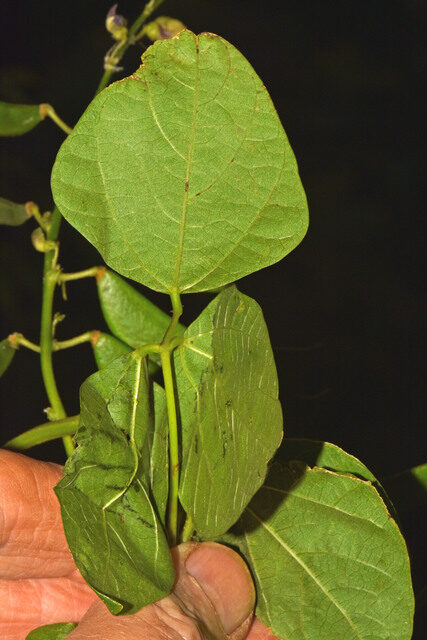
(c) harrylurling, some rights reserved (CC BY-ND), uploaded by harrylurling
iNaturalist· cc-by-sa
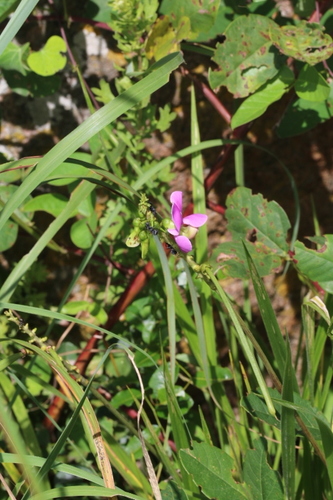
(c) Douglas Goldman, some rights reserved (CC BY-SA)
iNaturalist· cc-by-sa
(c) Douglas Goldman, some rights reserved (CC BY-SA)
Summary
Source: WikipediaTrifolium arvense, commonly known as the hare's-foot clover, rabbitfoot clover, stone clover or oldfield clover, is a flowering plant in the bean family Fabaceae. This species of clover is native to most of Europe, excluding the Arctic zone, and western Asia, in plain or mid-mountain habitats up to 1,600 metres (5,200 ft) altitude. It grows in dry sandy soils, both acidic and alkaline, soil with dry-mesic conditions and is typically found at the edge of fields, in wastelands, at the side of roads, on sand dunes, and opportunistically in vineyards and orchards when they are not irrigated. The Latin specific epithet arvense means "of the fields", or "agricultural".
Description
An annual or biennial herb. It is hairy. It is slender and erect. It grows 25 cm high. The leaves are made up of 3 leaflets. These are about 15 mm long and 4 mm wide. They have fine teeth around the edge. They have fine silky hairs. The flower arrangements are hairy and on long stalks. They are very small and pink. They are pea like. They are in spikes 2 cm long.
Edible Uses
The seeds can be made into flour and mixed with other flour. The leaves can also be eaten.
Traditional Uses
The seeds can be made into flour and mixed with other flour.
This uses section is brief — help expand it
Distribution
It is a temperate plant. Tasmania Herbarium. In Argentina it grows from sea level to 1,000 m above sea level.
Where It Grows
Africa, Argentina, Asia, Australia, Chile, Europe, Falklands, France, Haiti, Indochina, Luxembourg, New Zealand, North Africa, North America, Peru, SE Asia, South America, Tasmania, Uruguay, Vietnam, West Indies,
Cultivation
Plants can be grown from seed.
Notes
There are about 240 Trifolium species. They are mostly temperate.
Also Known As
Che-ba dong
References (14)
- Curtis, W.M., 1956, The Students Flora of Tasmania Vol 1 p 156
- Dashorst, G.R.M., and Jessop, J.P., 1998, Plants of the Adelaide Plains & Hills. Botanic Gardens of Adelaide and State Herbarium. p 90
- Harris, S., Buchanan, A., Connolly, A., 2001, One Hundred Islands: The Flora of the Outer Furneaux. Tas Govt. p 239
- Hussey, B.M.J., Keighery, G.J., Cousens, R.D., Dodd, J., Lloyd, S.G., 1997, Western Weeds. A guide to the weeds of Western Australia. Plant Protection Society of Western Australia. p 158
- Lamp, C & Collet F., 1989, Field Guide to Weeds in Australia. Inkata Press. p 305
Show all 14 references Hide references
- Lazarides, M. & Hince, B., 1993, Handbook of Economic Plants of Australia, CSIRO. p 239
- Morley, B. & Everard, B., 1970, Wild Flowers of the World. Ebury press. Plate 10
- Paczkowska, G . & Chapman, A.R., 2000, The Western Australian Flora. A Descriptive Calatogue. Western Australian Herbarium. p 447
- PARMENTIER,
- Pham-Hoang Ho, 1999, An Illustrated Flora of Vietnam. Nha Xuat Ban Tre. p 980
- Plants of Haiti Smithsonian Institute http://botany.si.edu/antilles/West Indies
- Sp. pl. 2:769. 1753
- Tasmanian Herbarium Vascular Plants list p 32
- Upson, R., & Lewis R., 2014, Updated Vascular Plant Checklist and Atlas for the Falkland Islands. Falklands Conservation and Kew.