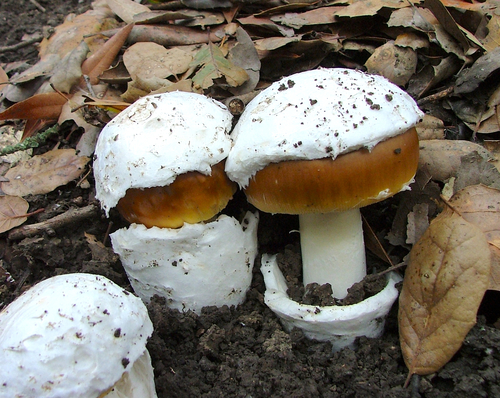
Amanita vaginata
(Bull. ex Fr.) Vittadini
Grisette, Sheathed amanitopsis
Wikipedia· cc-by-sa
Wikimedia Commons - AmanitaVaginata2.jpg
iNaturalist· cc-by-nc
(c) grinnin, some rights reserved (CC BY-NC)
Summary
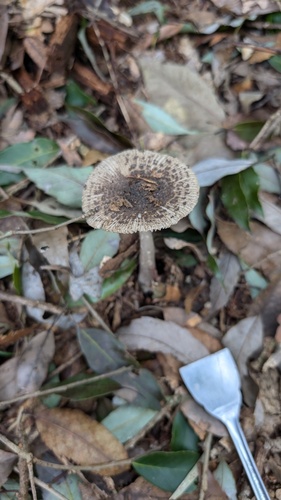
Source: WikipediaAmanita vaginata, commonly known as the grisette or the grisette amanita, is an edible mushroom in the fungus family Amanitaceae, but must be thoroughly cooked to destroy its toxins. The cap is gray or brownish, 5 to 10 centimetres (2 to 4 inches) in diameter, and has furrows around the edge that duplicate the gill pattern underneath. Unlike many other Amanita mushrooms, A. vaginata lacks a ring on the stem. A. vaginata is widely distributed in Europe and North America. It is not recommended for consumption due to the possibility of confusing it with related poisonous species.
Description
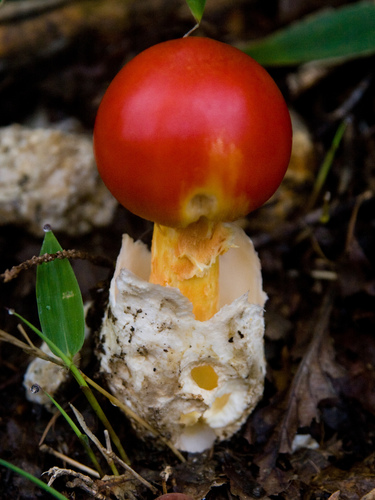
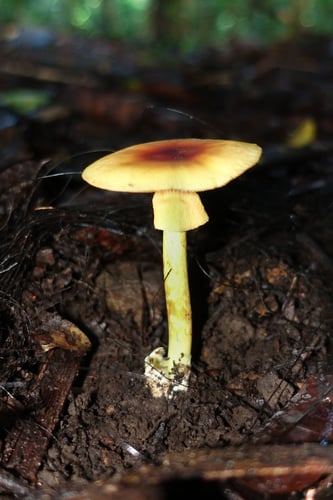
A mushroom. The cap is round when young and flat when ripe. It is 6-8 cm wide. The cap can be white or pale yellow. The stalk is 10-15 cm long and 1-2 cm across.
Edible Uses
It is eaten steamed or grilled.
Traditional Uses
It is eaten steamed or grilled. Caution: It is poisonous when eaten raw.
This uses section is brief — help expand it
Known Hazards
The mushroom is poisonous when eaten raw.
Distribution
It grows world wide. It grows on rotten leaves in forests.
Where It Grows
Asia, Central Africa, Central America, China, Congo, East Africa, Europe, Himalayas, Hong Kong, India, Indochina, Italy, Kosovo, Laos, Madagascar, Malawi, Mediterranean, Mexico, Nepal, North America, Russia, SE Asia, Thailand, Turkey, Türkiye, USA,
Other Information
It is sold in local markets.
Synonyms
Also Known As
Head kai hand, Huiegao
References (17)
- Boa, E. R., 2004, Wild edible fungi and their importance to people. FAO Non Wood Forest Products Booklet 17
- Christensen, M., et al, 2008, Collection and Use of Wild Edible Fungi in Nepal. Economic Botany, 62(1), 2008, pp. 12–23
- Cocchi, L. et al, 2006, Heavy metals in edible mushrooms in Italy. Food Chemistry 98: 277-284
- Farfan B., et al, 2007, Mazahua Ethnobotany and Subsistence in the Monarch Butterfly Biosphere Reserve, Mexico. Economic Botany 61(2) pp 173-191
- Hall, I. R., et al, 2003, Edible and Poisonous Mushrooms of the World. Timber Press. p 309
Show all 17 references Hide references
- http://www.mykoweb.com/CAF/edible.html
- Jacquat, C., 1990, Plants from the Markets of Thailand. D.K. Book House p 27
- Kaufmann, B. et al, 1999, The Great Encyclopedia of Mushrooms. Konemann. p 186
- Kaye, G.C., 1986, Wild and Exotic Mushroom Cultivation in North America
- Lentini, F. and Venza, F., 2007, Wild food plants of popular use in Sicily. J Ethnobiol Ethnomedicine. 3: 15
- Li, H., et al, 2020, Reviewing the world’s edible mushroom species: A new evidence-based classification system. Compr Rev Food Sci Food Saf. 2021;20:1982–2014.
- Pace, G., 1998, Mushrooms of the world. Firefly books. p 30
- Pandey, N., et al, 2006, Use of Wild Mushrooms Among the Tamangs of Nepal. Nepal Journal of Science and Technology 7 (2006) 97-104
- Perez-Moreno, J. et al, 2008, Wild Mushroom Markets in Central Mexico and a Case Study at Ozumba. Economic Botany, 62(3), 2008, pp. 425–436
- Semwal, K. C., et al, 2014, Edible mushrooms of the Northwestern Himalaya, India: a study of indigenous knowledge, distribution and diversity. Mycosphere 5(3): 440–461
- Yildiz, A et al, 2005, Organic elements and protein in some macrofungi of south east Anatolia in Turkey. Food Chemistry 89: 605-609
- Zamora-Martinez, M. et al, 1995, Natural production of wild edible mushrooms in the southwestern rural territory of Mexico City, Mexico. Forest Ecology and Management 72:13-20