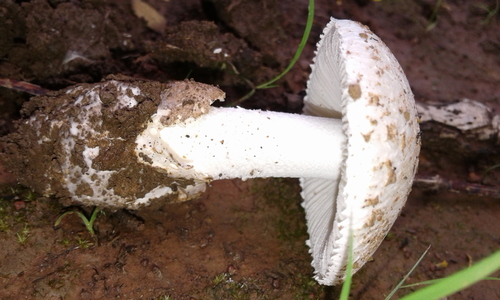
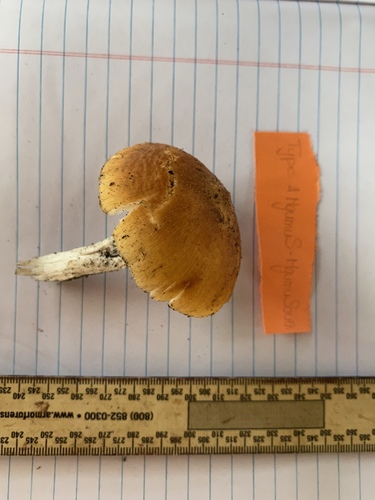
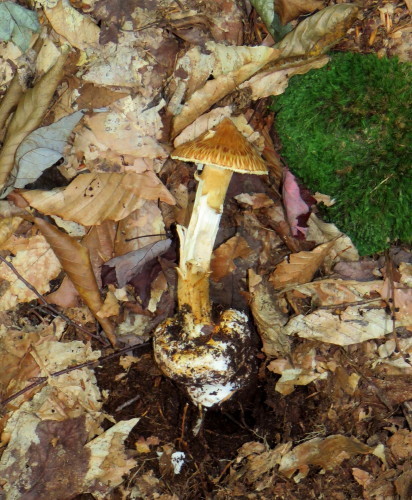
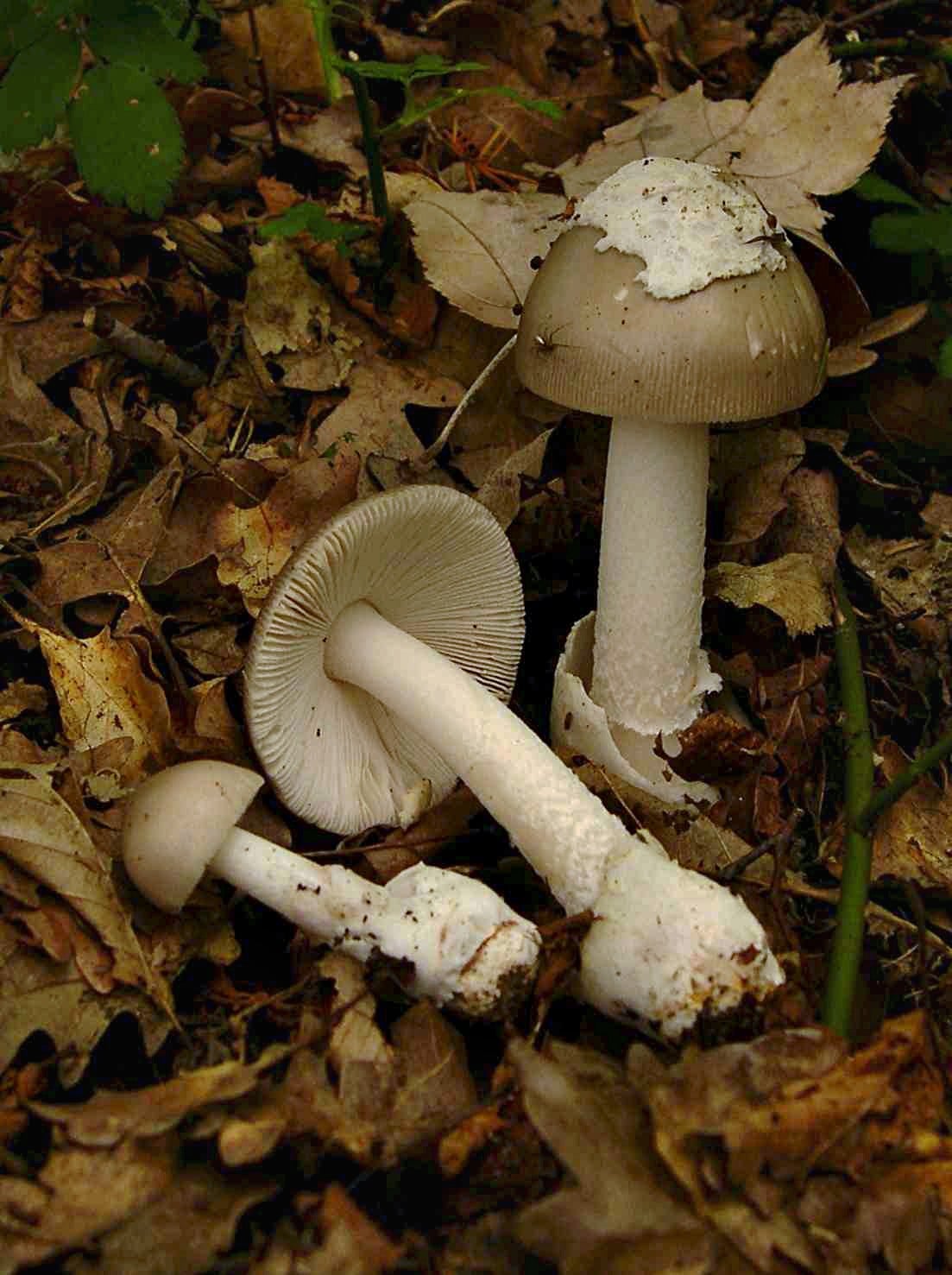
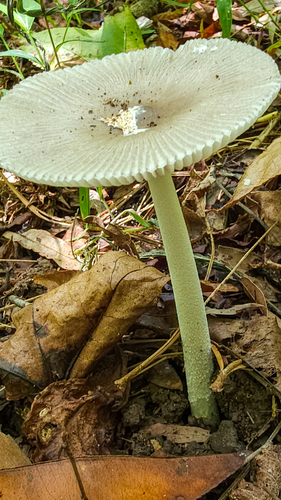
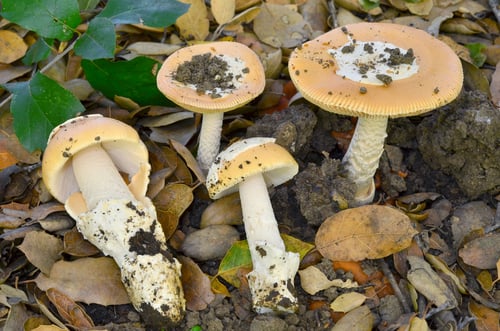
Amanita calida
Rammeloo & Walleyn
wikimedia· cc-by-sa
Wikimedia Commons - Termininja MarkusHagenlocher (File:Flaschenstäubling.jpg) Stu's Images (File:Amanita muscaria UK.JPG) James Lindsey (File:Elaphocordyceps ophioglossoides - Lindsey 2.jpg) Paul Derbyshire (Twizzler) (File:Bisporella citrina 59079.jpg) JJ Harrison (File:Cortinarius archeri.jpg) Walter J. Pilsak (File:Schoenfussroehrling.jpg) Dan Molter (File:Rhodotus palmatus2.jpg) Ecornerdropshop (File:Stumpfungus.jpg) JJ Harrison (File:Clavulinopsis corallinorosacea.jpg) Amadej Trnkoczy (Amadej) (File:Hydnellum ferrugineum 59267.jpg) Szabi237 (File:Suillus grevillei2.JPG) JJ Harrison (File:Mycena interrupta.jpg) Andreas Kunze (File:2011-04-30 Morchella esculenta.jpg) Arz (File:Aleuria aurantia.JPG) Strobilomyces (File:Chanterelle Cantharellus cibarius.jpg) John Carl Jacobs (JCJacobs) (File:Leotia viscosa 57215.jpg) James Lindsey (File:Pterula.subulata.-.lindsey.jpg) Zonda Grattus (File:Lacc.lacc.jpg)
Description
A fungal mushroom in the Amanitaceae family, found in tropical regions.
This description is brief — help expand it
Edible Uses
The mushroom fruiting body is listed as edible.
Known Hazards
Rubroboletus satanas has long been considered to be poisonous, though it is not known to have been responsible for any fatalities and the symptoms are predominantly gastrointestinal in nature. A glycoprotein, bolesatine, is thought to be responsible for the poisonings. When given to mice, Bolesatine causes massive thrombosis, while at lower concentrations it is a mitogen, inducing cell division to human T lymphocytes. A similar compound, bolevenine, has been isolated from the poisonous Neoboletus venenatus in Japan. More recent studies have associated the poisoning caused by R. satanas with hyperprocalcitonemia, and classified it as a distinct syndrome among fungal poisonings. Several other boletes are known to cause varying degrees of gastrointestinal symptoms, especially if eaten raw or insufficiently cooked. One incident of death associated with Rubroboletus pulcherrimus was reported in 1994; a couple developed gastrointestinal symptoms after eating this fungus, with the husband finally succumbing. An autopsy revealed infarction of the midgut.
Distribution
It is a tropical plant.
Where It Grows
Africa, East Africa, Malawi,
References (1)
- Boa, E. R., 2004, Wild edible fungi and their importance to people. FAO Non Wood Forest Products Booklet 17