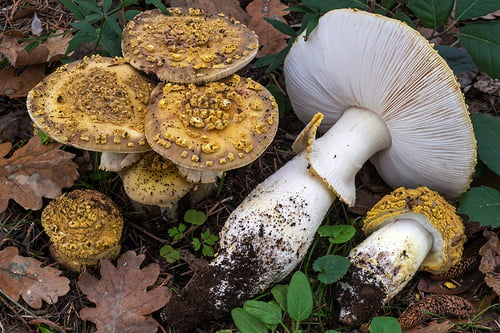
Amanita caesarea
(Scop. ex Fr.) Pers. ex Schw.
Orange mushroom, Caesar's mushroom
iNaturalist· cc-by
(c) Davide Puddu, some rights reserved (CC BY), uploaded by Davide Puddu
iNaturalist· cc-by
(c) Biodiversity Heritage Library, some rights reserved (CC BY)
iNaturalist· cc-by-nc-sa
(c) Anne SORBES, some rights reserved (CC BY-NC-SA)
Summary
Source: WikipediaAmanita caesarea, commonly known as Caesar's mushroom, is a species of fungus in the genus Amanita. While it was first described by Giovanni Antonio Scopoli in 1772, it was a favorite of early rulers of the Roman Empire. The mushroom has a distinctive orange cap, yellow gills and stipe, and contains organic acids. The species resembles poisonous species including fly agaric. A. caesarea is found in North Africa, Eurasia, and North America. It is edible, given correct identification.
Description
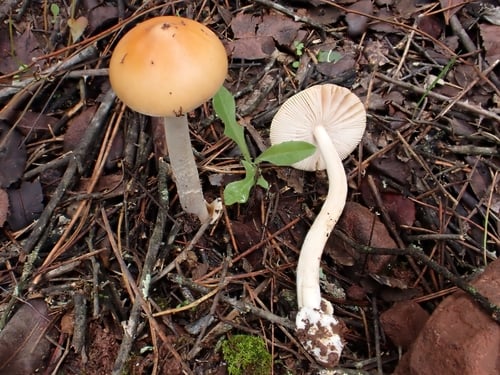
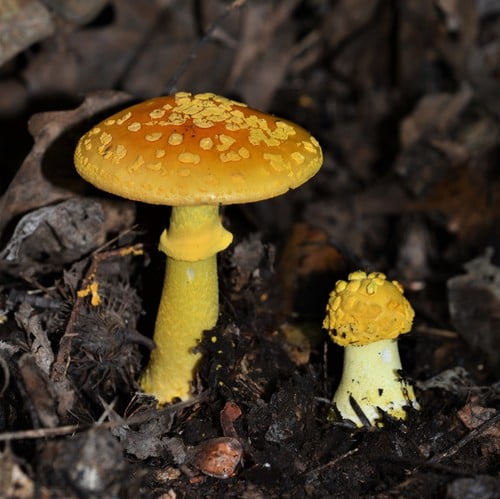
A mushroom. The cap is bright orange. It does not have warts on the cap. The gills are sulphur yellow.
This description is brief — help expand it
Edible Uses
A. caesarea is a highly appreciated edible mushroom in Europe. It is traditionally gathered and consumed in Italy, where it is known as ovolo or ovolo buono or "fungo reale". It has been traditionally taken as food in Mexico. There it is consumed roasted with a bit of the herb epazote, Dysphania ambrosioides. The international export market developed in the 1990s. It is widely eaten in the Himalayas and the Tibetan areas.
Traditional Uses
The fruiting bodies can be eaten cooked or raw, in salads. They can be grilled, fried or stewed. It can be preserved in oil.
This uses section is brief — help expand it
Distribution
It grows in wood clearings especially chestnut and oak woods or warm temperate regions. The fungal threads form an association with the roots of the trees.
Where It Grows
Africa, Asia, Balkans, Bulgaria, Caucasus, Central America, China, Costa Rica, Europe, Georgia, Greece, Guatemala, Himalayas, Italy, Japan, Kosovo, Mediterranean, Mexico, Nepal, North America, Portugal, Sicily, Slovenia, Spain, Turkey, Türkiye,
Other Information
It is sold in local markets.
Dangerous Lookalikes
This plant can be confused with the following toxic species. Always verify identification carefully before consuming any wild plant.
Death Cap
Amanita phalloides
Archenzo
Orange mushroom
Amanita caesarea
(c) Davide Puddu, some rights reserved (CC BY), uploaded by Davide Puddu
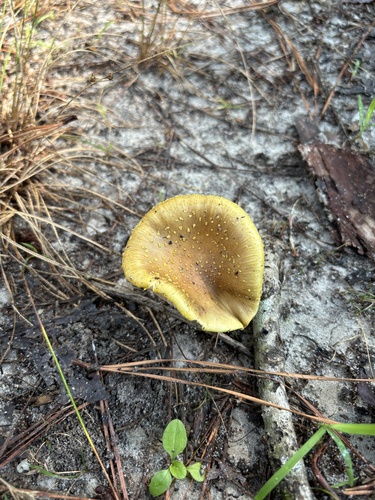
Death Cap: Greenish-yellow/olive cap, white gills and stem, white volva, faint ring on upper stem.
Orange mushroom: Orange cap, yellow gills and stem, white volva, no ring patterns on stem.
Also Known As
Chenggai egao, Cocco, Coccora, Dhar shyamo, Niq'vi, Ovolo buono, Royal agaric, Salla chyau, Saley
References (24)
- Adhikari, M. K., 2014, Addition and correction to the knowledge on edibility of wild mushrooms in Nepal: a discussion. Bul. Dept. Pl. Res. N. 36, Nepal p 1
- Bianchini, F., Corbetta, F., and Pistoia, M., 1975, Fruits of the Earth. Cassell. p 120
- Boa, E. R., 2004, Wild edible fungi and their importance to people. FAO Non Wood Forest Products Booklet 17
- Brouk, B., 1975, Plants Consumed by Man. Academic Press, London. p 56
- Bussman, R. W., et al, 2021, Unity in diversity—food plants and fungi of Sakartvelo (Republic of Georgia), Caucasus. Journal of Ethnobiology and Ethnomedicine (2021) 17:72 p 16
Show all 24 references Hide references
- Caballero, J. N., & Mapes, C. S., 1985, Gathering and Subsistence Patterns among the P'urhepecha Indians of Mexico. J. Ethnol. 5(1): 31-47
- Cocchi, L. et al, 2006, Heavy metals in edible mushrooms in Italy. Food Chemistry 98: 277-284
- Denchev, C. M., et al, The wild edible mushrooms in Bulgaria. Bulgarian Academy of Science.
- Dongol, et al, 1995, Edible Mushrooms in Nepal
- Facciola, S., 1998, Cornucopia 2: a Source Book of Edible Plants. Kampong Publications, p 250
- Fan, L., et al, The Use of Edible Wild Plants and Fungi in Korean-Chinese Villages. Journal of Environmental Information Science 44-5 p 71-79
- Hall, I. R., et al, 2003, Edible and Poisonous Mushrooms of the World. Timber Press. p 124
- Joshi, K. and Joshi, A. R., 2008, Ethnobotanical Studies on Some Lower Plants of the Central Development Region, Nepal. Ethnobotanical Leaflets 12:832-40
- Kaufmann, B. et al, 1999, The Great Encyclopedia of Mushrooms. Konemann. p 185
- Kaye, G.C., 1986, Wild and Exotic Mushroom Cultivation in North America
- Lentini, F. and Venza, F., 2007, Wild food plants of popular use in Sicily. J Ethnobiol Ethnomedicine. 3: 15
- Ouzouni, P. K., et al, 2009, Nutritional value and metal content of wild edible mushrooms collected from West Macedonia and Epirus, Greece. Food Chemistry 115: 1575-1580
- Pace, G., 1998, Mushrooms of the world. Firefly books. p 17
- Pandey, N., et al, 2006, Use of Wild Mushrooms Among the Tamangs of Nepal. Nepal Journal of Science and Technology 7 (2006) 97-104
- Perez-Moreno, J., et al, 2009, Social and Biotechnological Studies of Wild Edible Mushrooms in Mexico. Acta Botanica Yunnanica Suppl. XV1: 55-61
- Pieroni, A., 1999, Gathered wild food plants in the Upper Valley of the Serchio River (Garfagnana), Central Italy. Economic Botany 53(3) pp 327-341
- Quinonez-Martinez, M., et al, 2014, Knowledge and use of edible mushrooms in two municipalities of the Sierra Tarahumara, Chihuahua, Mexico. Journal of Ethniobiology and Ethnomedicine 10:67
- Uphof,
- Zamora-Martinez, M. et al, 1995, Natural production of wild edible mushrooms in the southwestern rural territory of Mexico City, Mexico. Forest Ecology and Management 72:13-20