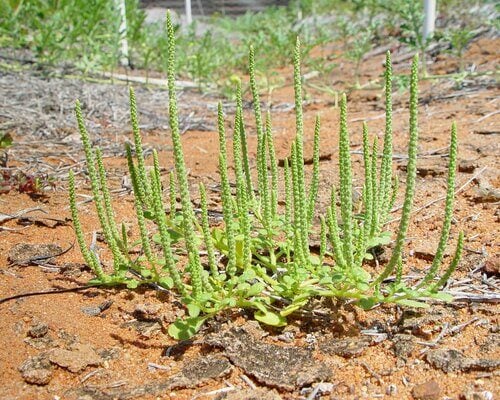
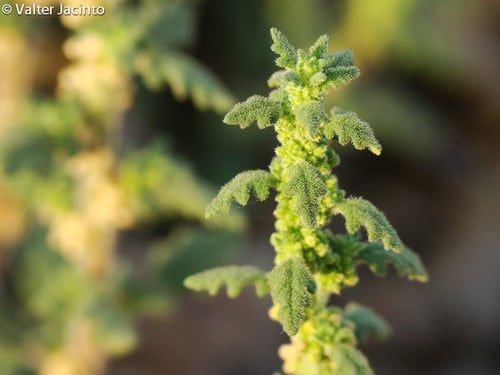
Alternanthera philoxeroides
(Martius) Griseb.
Alligator weed
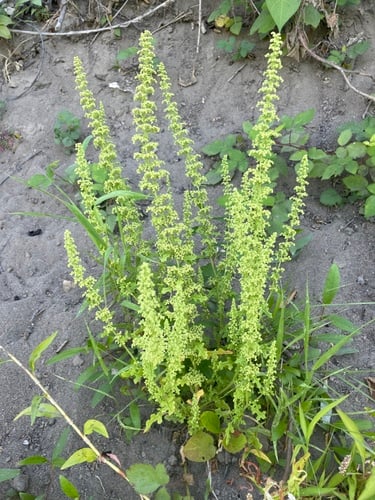
iNaturalist· cc-by-nc
(c) Bryan, some rights reserved (CC BY-NC), uploaded by Bryan
iNaturalist· cc-by
(c) Michael J. Papay, some rights reserved (CC BY), uploaded by Michael J. Papay
iNaturalist· cc-by-sa
(c) Zhangzhugang, some rights reserved (CC BY-SA)
Summary
Source: WikipediaAlternanthera philoxeroides, commonly referred to as alligator weed, is a native species to the temperate regions of South America, which includes Argentina, Brazil, Paraguay and Uruguay. Argentina alone hosts around 27 species that fall within the range of the genus Alternanthera. Its geographic range once covered only the Parana River region of South America, but it has since expanded, having been introduced to over 30 countries, such as the United States, Japan, China, Australia, New Zealand and many more. This invasive species is believed to have been accidentally introduced to these non-native regions through sediments trapped by, or attached to, tanks and cargo of ships travelling from South America to these various areas.
Description
A marsh herb. It has runners or stolons. These can be 10 m long. It roots at the nodes. The stems are hollow and triangular. It can form floating masses on water. The leaves are opposite and narrow. They do not have stalks. They are 2-7 cm long by 1-2 cm wide. The flowers are white in heads on long stalks. The heads are 1 cm across and made up of several flowers. They are in the axils of leaves.
Edible Uses
The young leaves and tender shoots are cooked and eaten as a vegetable, though they are bitter and often mixed with other vegetables. All parts except the roots can be eaten raw or cooked. Harvested leaves can only be stored for 3-4 days.
Traditional Uses
The young leaves and tender shoots are cooked and eaten as a vegetable. They are bitter. They are often used in a mixture of vegetables. The harvested leaves can only be stored for 3-4 days. All parts except the roots are eaten raw or cooked.
Medicinal Uses
An extract of the plant is used medicinally in India to treat 'female diseases'.
Known Hazards
Leaves are killed by frost. It is a serious weed in waterways in warm places.
Distribution
A tropical plant. It needs a warm location. It can grow in salty water. It can grow in still or running water. It can be attached to the bank or free flowing. It can also grow away from water in high rainfall areas. Leaves are killed by frost. It grows in Sichuan.
Where It Grows
Andamans, Argentina, Asia, Australia, Bangladesh, Brazil*, Chile, China, Guiana, Guianas, Guyana, India, Indochina, Indonesia, Malaysia, Myanmar, Nepal, North America, Northeastern India, Paraguay, SE Asia, South America*, Suriname, Taiwan, Thailand, Uruguay, USA,
Cultivation
Plants grow from pieces of the stem which have roots at the nodes.
Other Uses
The plant can be used as a tertiary filtration system for domestic sewage. The plant is sometimes cultivated as a source of biomass for compost-making.
Other Information
It is a commercially cultivated vegetable. It is sold in local markets.
Notes
There are 200 Alternanthera species. It is a serious weed in waterways in warm places. It is being investigated as medicine. It has sulphated polysaccharide compounds possibly useful against HIV.
Nutrition
| Part | Moisture | kJ | kcal | Protein | Vit A | Vit C | Iron | Zinc |
|---|---|---|---|---|---|---|---|---|
| Leaves | 84.7 | 240 | 57 | 4.9 | 475 | — | 0.5 | — |
Synonyms
Also Known As
Barmasag, Bredo-d'agua, Burmashak, Doigaldeb, Dwi-galdeb, Gara ara, Jal jambu, Kabo-napi, Ka-na-phot, Komprek, Kozhuppa, Krokot, Madrashi bhaji, Malancha shak, Menmeni, Nadi saag, Nolduba, Panimatikaduri, Perna-de-saracura, Phak-pet-nam, Salincha, Sanchi, Tolod, Watra-klaroen, Xi han lian zi cao
References (46)
- Abh. Konigl. Ges. Wiss. Gottingen 24:36. 1879 (Symb. fl. argent.)
- Ambasta S.P. (Ed.), 2000, The Useful Plants of India. CSIR India. p 32
- Arora, R. K., 2014, Diversity in Underutilized Plant Species - An Asia-Pacific Perspective. Bioversity International. p 35
- Bandyopadhyay, S. et al, 2009, Wild edible plants of Koch Bihar district, West Bengal. Natural Products Radiance 8(1) 64-72
- Bandyopadhyay, S., et al, 2012, A Census of Wild Edible Plants from Howrah District, West Bengal, India. Proceedings of UGC sponsored National Seminar 2012
Show all 46 references Hide references
- Bao Bojian; Steve Clemants, Thomas Borsch, Amaranthaceae [Draft], Flora of China
- BARC, 2016, State of Biodiversity for Food and Agriculture in Bangladesh. Bangladesh Agricultural Research Council.
- Baro, D., Baruah, S. and Borthukar, S. K. 2015, Documentation on wild vegetables of Baksa district, BTAD (Assam). Scholars Research Library. Archives of Applied Science Research, 2015, 7 (9):19-27
- Barua, U., et al, 2007, Wild edible plants of Majuli island and Darrang districts of Assam. Indian Journal of Traditional Knowledge 6(1) pp 191-194
- Bircher, A. G. & Bircher, W. H., 2000, Encyclopedia of Fruit Trees and Edible Flowering Plants in Egypt and the Subtropics. AUC Press. p 21
- Biswas, K. & Das, A. P., 2011, Documentation of wild leafy vegetables from the tribal dominated parts of Malda District of Paschimbanga, India. Recent Studies in Biodiversity and Traditional Knowledge in India 301 - 306. 2011.
- Chowdery, T., et al, 2014, Wild edible plants of Uttar Dinajpur District, West Bengal. Life Science Leaflets. 47:pp 20-36 http://lifesciencesleaflets.ning.com
- Chowdhury, A. & Das, A. P., 2014, Conservation through sustainable utilization of wetland leafy vegetables of Terai and Duars, West Bengal, India. International Journal of Advanced Life Sciences (IJALS), 7(4)
- Deka, N. & Devi, N., 2015, Wild edible aquatic and marshland angiosperms of Baka district, BTC area, Assam, India. Asian J. Plant Sci. Res. 5(1):32-48
- Dutta, U., 2012, Wild Vegetables collected by the local communities from the Churang reserve of BTD, Assam. International Journal of Science and Advanced Technology. Vol. 2(4) p 119
- Flora of the Guianas.
- Hossain, U. & Rahman, A., 2018, Study and quantitative analysis of wild vegetable floral diversity available in Barisal district, Bangladesh. Asian J. Med. Biol. Res. 2018, 4 (4), 362-371
- Hussey, B.M.J., Keighery, G.J., Cousens, R.D., Dodd, J., Lloyd, S.G., 1997, Western Weeds. A guide to the weeds of Western Australia. Plant Protection Society of Western Australia. p 78
- INFOODSUpdatedFGU-list.xls
- Jain et al, 2011, Dietary Use and Conservation Concern of Edible Wetland Plants at Indo-Burma Hotspot: A Case Study from Northeast India. Journal of Ethnobiology and Ethnomedicine 7:29 p 6
- Kays, S. J., and Dias, J. C. S., 1995, Common Names of Commercially Cultivated Vegetables of the World in 15 languages. Economic Botany, Vol. 49, No. 2, pp. 115-152
- Kinupp, V. F., 2007, Plantas alimenticias nao-convencionais da regiao metropolitana de Porto Alegre, RS, Brazil p 56
- Kinupp, V. F. & Bergman, I., 2008, Protein and minerals of native species, potential vegetables and fruits. Cienc.Tecnol. Aliment. Vol. 28 No. 4 Campinas Oct/Dec.
- Kumar, S. A., Manus, D. & Mallika, M., 2018, Impact of non-timber forest products on Forest and in Livelihood Economy of the People of Adjoining Areas of Jalpaiguri Forest Division, West Bengal, India. Int. J. of Life Sciences, 2018; 6 (2):365-385
- Lamberton, K (Ed.), 2004, The Australian gardening encyclodepia. Murdoch Books, NSW Australia. p 162
- Lamp, C & Collet F., 1989, Field Guide to Weeds in Australia. Inkata Press. p 13
- Lazarides, M. & Hince, B., 1993, Handbook of Economic Plants of Australia, CSIRO. p 16
- McMakin, P.D., 2000, Flowering Plants of Thailand. A Field Guide. White Lotus. p 82
- Meitei, L. R., et al, 2022, An ethnobotanical study on the wild edible plants used by forest dwellers in Yangoupokpi Lokchao Wildlife Sanctuary, Manipur, India. Ethnobotany Research and Application 23:15
- Ochse, J.J. et al, 1931, Vegetables of the Dutch East Indies. Asher reprint. p 15
- Patiri, B. & Borah, A., 2007, Wild Edible Plants of Assam. Geethaki Publishers. p 108
- Phangchopi, U., et al, 2015, Diversity of wild edible plants in Marat Longri Wildlife Sanctuary, Assam. Indian Journal of Natural Products and Resources Vol. 6(4), December 2015 pp. 305-313
- Romanowski, N., 2007, Edible Water Gardens. Hyland House. p 49
- Sainty, G.R. & Jacobs, S.W.L., 1981, Waterplants of New South Wales. Water Resources Commission. NSW p 54
- Sainty, G., and Jacobs, S., 2003, Waterplants in Australia. A Field Guide. Sainty Books. p 18
- Sakar, A. & Das, A. P., 2018, The traditional knowledge on edible wild leafy vegetables of Rabha Tribe in Duars of North Bengal: a potential reinforcement to food security. Pleione 12(2): 275 - 281. 2018.
- Sarma, H., et al, 2010, Updated Estimates of Wild Edible and Threatened Plants of Assam: A Meta-analysis. International Journal of Botany 6(4): 414-423
- Shaheen, N., et al, 2013, Food Composition Table for Bangladesh. University of Daka. p 33
- Shin, T., et al, 2018, Traditional knowledge of wild edible plants with special emphasis on medicinal uses in Southern Shan State, Myanmar. Journal of Ethnobiology and Ethnomedicine (2018) 14:48
- Singh, G. & Kumar, J., 2014, Studies on Indigenous Traditional Knowledge of some Aquatic and Marshy Wild Edible Plants used by the Munda Tribe of District Khunti, Jharkhand, India. International Journal of Bioassays. 3(2), 1738-1743
- Singh, S.R. and Singh, N.I., 1985, A Preliminary Ethnobotanical studies on wild edible plants in the markets of Manipur - 1. J. Econ. Tax. Bot. Vol. 6 No. 3 pp 699-703 (As Telanthera phyllazeroides)
- Slocum, P.D. & Robinson, P., 1999, Water Gardening. Water Lilies and Lotuses. Timber Press. p 71
- Terra, G.J.A., 1973, Tropical Vegetables. Communication 54e Royal Tropical Institute, Amsterdam, p 20
- Swapna, M. M. et al, 2011, A review on the medicinal and edible aspects of aquatic and wetland plants of India. J. Med. Plants Res. 5 (33) pp. 7163-7176
- www.eFloras.org Flora of China
- Wang, J. et al, 2013, A Study on the Utilization of Wild Plants for Food in Liangshan Yi Autonomous Prefecture. Plant Diversity and Resources. 35(4): 416-471