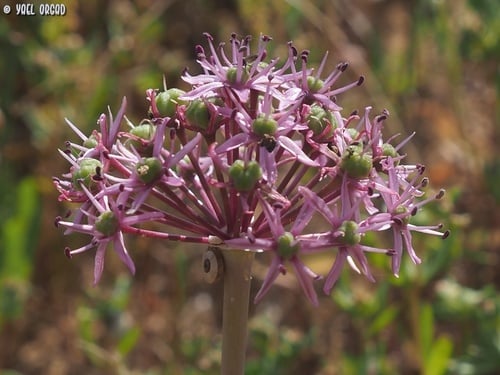
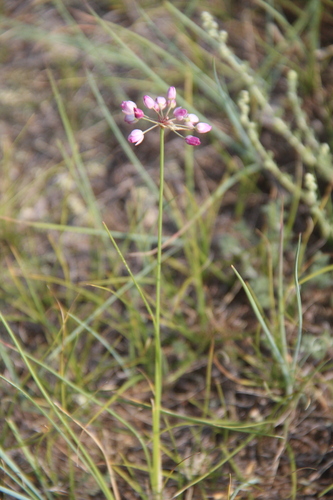
Allium unifolium
Kellogg
One-leaved onion
iNaturalist· cc-by
(c) Trevor Van Loon, some rights reserved (CC BY), uploaded by Trevor Van Loon
iNaturalist· cc-by-nc
(c) Rebecca Johnson, some rights reserved (CC BY-NC), uploaded by Rebecca Johnson
iNaturalist· cc-by-nc
(c) Sandy Bernhard, some rights reserved (CC BY-NC), uploaded by Sandy Bernhard
Summary
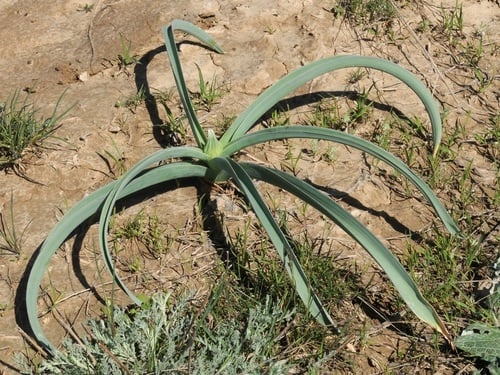
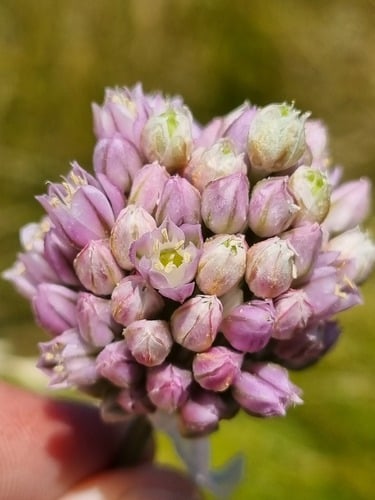
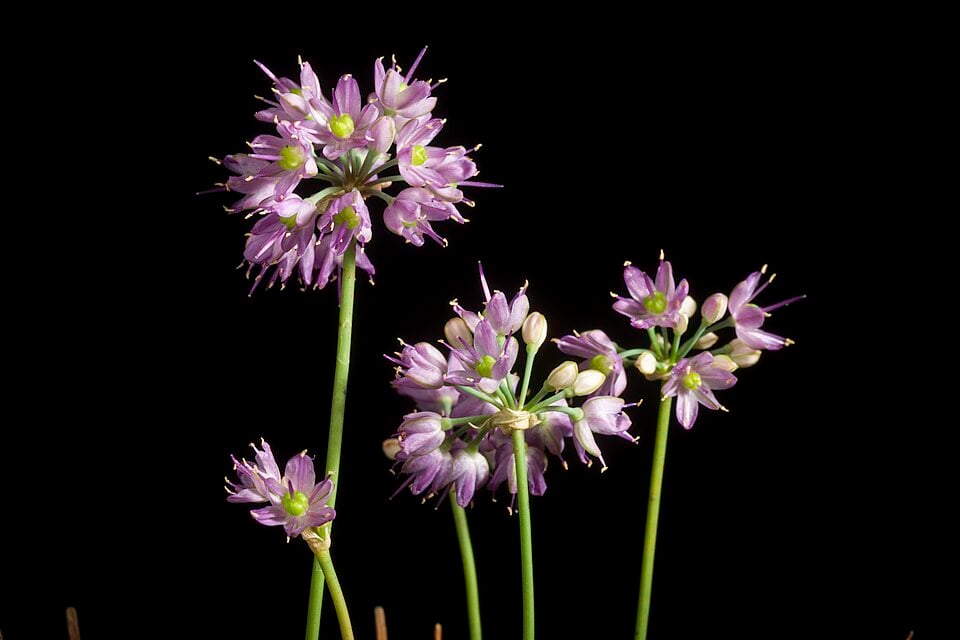
Source: WikipediaAllium unifolium, the one-leaf onion or American garlic, is a North American species of wild onion. It is native to the coastal mountain ranges of California, Oregon, and Baja California. It grows on clay soils including serpentine, at elevations up to 1100 m. Allium unifolium, despite its name, usually has 2–3 flat leaves up to 50 cm long. Bulbs, though, are usually solitary, egg-shaped, up to 2 cm long, often formed at the end of rhizomes spreading out from the parent plant. Scapes are round in cross-section, up to 80 cm tall. Flowers are up to 15 mm across; tepals usually pink but occasionally white; anthers yellow or purple. This plant has gained the Royal Horticultural Society's Award of Garden Merit.
Description
An onion family plant. It is a bulb plant. It grows 40-60 cm high and spreads 20-30 cm wide. The leaves are blue-green and flat. They have an easy to see central midrib. The leaves are 30 cm long and there is one leaf per bulb. The flowers are bell shaped and pink. They are in rounded heads.
Edible Uses
The bulbs are 10–15mm in diameter and can be eaten raw or cooked; together with the young shoots, they are commonly fried. Leaves are edible raw or cooked. The flowers can be eaten raw and are used as a garnish on salads.
Traditional Uses
The bulbs and young leaves are fried and eaten. The flowers can be eaten raw or used as a garnish in salads.
This uses section is brief — help expand it
Medicinal Uses
No specific medicinal uses have been recorded for this species, but as a member of the Allium genus it makes a generally healthy addition to the diet. Like its relatives, it contains sulphur compounds that give it an onion-like flavour. Regular consumption helps reduce blood cholesterol, supports digestive health, and tones the circulatory system.
Known Hazards
Although no individual reports regarding this species have been seen, there have been cases of poisoning caused by the consumption, in very large quantities and by some mammals, of certain members of this genus. Dogs seem to be particularly susceptible.
Distribution
It suits hardiness zones 8-10.
Where It Grows
Australia, North America, USA,
Cultivation
Prefers a hot dry sunny position in a light, rich well-drained soil. This species is difficult to maintain under cultivation in Britain, our weather is probably too wet and cool for it to really thrive. The plant has a summer resting period when it should be kept dry and so it is best grown in a cold greenhouse or bulb frame. Placing a cloche over outdoor-grown plants in the summer, especially after flowering, will help to ripen the bulbs. Most members of this genus are intolerant of competition from other growing plants. This species is not fully hardy in Britain and is unlikely to survive in the colder parts of the country. It is only marginally hardy in N.W. England. A new bulb is formed annually, the old one withering away. Grows well with most plants, especially roses, carrots, beet and chamomile, but it inhibits the growth of legumes. This plant is a bad companion for alfalfa, each species negatively affecting the other. Members of this genus are rarely if ever troubled by browsing deer.
Propagation
Sow seed in spring in a cold frame. Prick out seedlings into individual pots when large enough to handle — three plants per pot will produce clumps more quickly. Grow on under glass for at least the first winter, then plant out into permanent positions in spring once growing vigorously and of sufficient size. Division in spring is straightforward; plants can be divided successfully at any point during the growing season. Pot up divisions in a cold frame or greenhouse until well established before planting out.
Other Uses
The juice of the plant can be used as a moth repellent, and the whole plant is said to repel insects and moles.
Notes
There are about 300-700 Allium species. Most species of Allium are edible (Flora of China). All alliums are edible but they may not all be worth eating! They have also been put in the family Alliaceae.
Synonyms
References (7)
- Beckstrom-Sternberg, Stephen M., and James A. Duke. "The Foodplant Database." http://probe.nalusda.gov:8300/cgi-bin/browse/foodplantdb.(ACEDB version 4.0 - data version July 1994)
- Brickell, C. (Ed.), 1999, The Royal Horticultural Society A-Z Encyclopedia of Garden Plants. Convent Garden Books. p 98
- Castetter, E. F., 1935, "Uncultivated native plants used as sources of food." University of New Mexico biological series, v. 4, no. 1, University of New Mexico bulletin, whole no. 266, Ethnobiological studies in the American Southwest, 1 4, 1
- Cundall, P., (ed.), 2004, Gardening Australia: flora: the gardener's bible. ABC Books. p 128
- Facciola, S., 1998, Cornucopia 2: a Source Book of Edible Plants. Kampong Publications, p 7
Show all 7 references Hide references
- Plants for a Future database, The Field, Penpol, Lostwithiel, Cornwall, PL22 0NG, UK. http://www.scs.leeds.ac.uk/pfaf/
- Proc. Calif. Acad. Sci. 2:112, fig. 35. 1863