Allium schoenoprasum subsp. schoenoprasum
L., (L.) Hartm.
Siberian chive
gbif· cc-by-nc-nd
Georg Pflugbeil
gbif· cc-by-nc-nd
Georg Pflugbeil
gbif· cc-by-sa
GBIF
Description
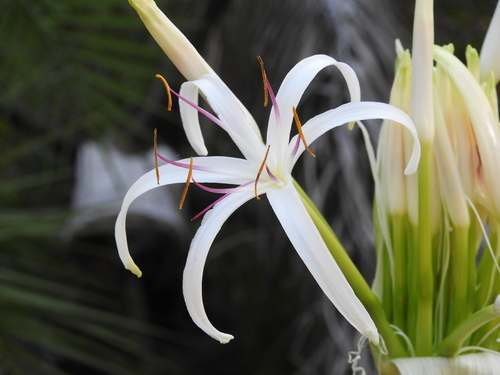
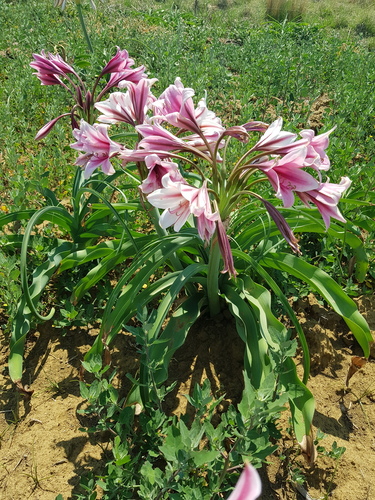
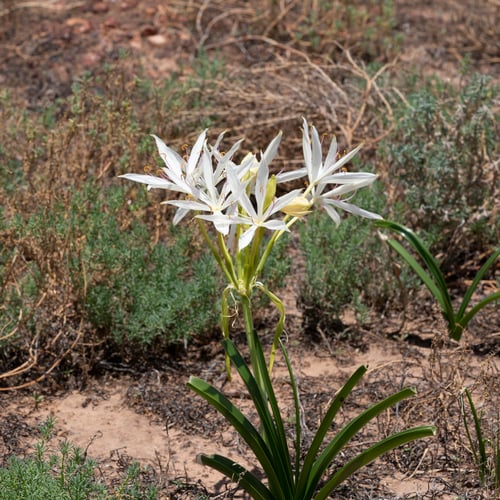
An onion family plant. It is a herb. It grows 20-50 cm high. The leaves sheath the base. The bulb is oblong. The leaves are nearly round and hollow. The flowers are purple or pink and small. They are lily shaped and occur as several together is a tight erect cluster at the top of the stem. The fruit is a dry, few-seeded capsule.
Edible Uses
Chives are grown for their scapes and leaves, which are used for culinary purposes as a flavoring herb, and provide a somewhat milder onion-like flavor than those of other Allium species. The edible flowers are used in salads, or used to make blossom vinegars. Both the scapes and the unopened, immature flower buds are diced and used as an ingredient for omelettes, fish, potatoes, soups, and many other dishes. The scapes are often paired with cream cheese. Chives have a wide variety of culinary uses, such as in traditional dishes in France, Sweden, and elsewhere. In his 1806 book Attempt at a Flora (Försök til en flora), Anders Jahan Retzius describes how chives are used with pancakes, soups, fish, and sandwiches. They are also an ingredient of the gräddfil sauce with the traditional herring dish served at Swedish midsummer celebrations. The flowers and scapes may also be used to garnish dishes. In Poland and Germany, chives are served with quark. Chives are one of the fines herbes of French cuisine, the others being tarragon, chervil and parsley. Chives can be found fresh at most markets year-round, making them readily available; they can also be dry-frozen without much impairment to the taste, giving home growers the opportunity to store large quantities harvested from their own gardens.
Traditional Uses
The leaves and bulbs are pickled and also used for flavouring.
This uses section is brief — help expand it
Distribution
It grows naturally in low ground and depressions in grassland. It is a temperate plant.
Where It Grows
Alaska, Asia, Australia, Britain, Central America, Europe, Finland, Haiti, Iraq, Japan, Middle East, North America, Scandinavia, Siberia, Slovenia, Turkey, Türkiye, USA, West Indies,
Notes
There are about 300-700 Allium species. Most species of Allium are edible (Flora of China). All alliums are edible but they may not all be worth eating! They have also been put in the family Alliaceae. Now just Allium schoenoprasum
Also Known As
Drobnjak, Giant chives, Purple wild onion
References (6)
- Cormack, R. G. H., 1967, Wild Flowers of Alberta. Commercial Printers Edmonton, Canada. p 30 (As Allium schoenoprasum var. sibiricum)
- Facciola, S., 1998, Cornucopia 2: a Source Book of Edible Plants. Kampong Publications, p 6 (As Allium schoenoprasum var. sibiricum)
- Holloway, P. S. & Alexander, G., 1990, Ethnobotany of the Fort Yukon Region, Alaska. Economic Botany, Vol. 44, No. 2 pp. 214-225 (As Allium schoenoprasum var. sibiricum)
- Jones, A., 2010, Plants that we eat. University of Alaska Press. p 29 (As Allium schoenoprasum var. sibiricum)
- Plants for a Future database, The Field, Penpol, Lostwithiel, Cornwall, PL22 0NG, UK. http://www.scs.leeds.ac.uk/pfaf/ (As Allium schoenoprasum var. sibiricum)
Show all 6 references Hide references
- Seidemann J., 2005, World Spice Plants. Economic Usage, Botany, Taxonomy. Springer. p 24 (As Allium schoenoprasum var. sibiricum)