Allium anceps
Kellogg
Twinleaf onion
iNaturalist· cc-by
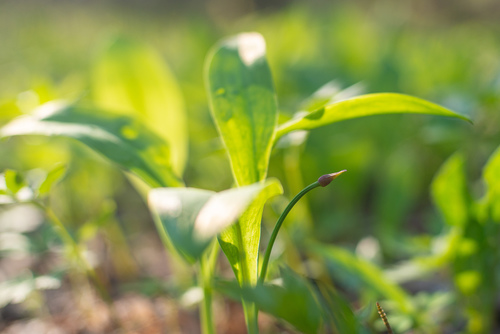
(c) Jim Morefield, some rights reserved (CC BY), uploaded by Jim Morefield
iNaturalist· cc-by
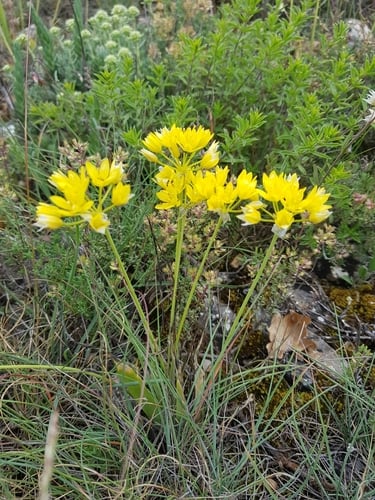
(c) Jim Morefield, some rights reserved (CC BY)
iNaturalist· cc-by
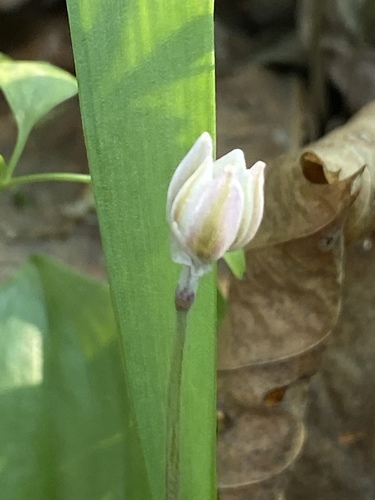
(c) Jim Morefield, some rights reserved (CC BY)
Summary
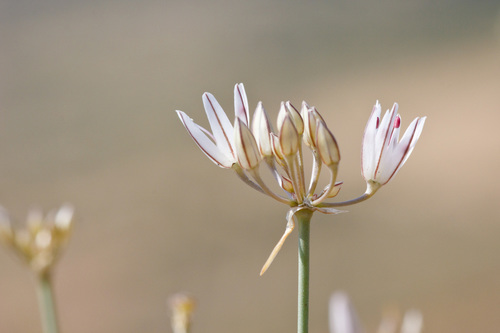
Source: WikipediaAllium anceps, known as twinleaf onion and Kellogg's onion, is a species of wild onion native to the western United States. It is widespread in Nevada, extending into adjacent parts of California, Idaho, and Oregon. It grows in barren clay and rocky soils. This perennial herb produces a flowering scape from a bulb up to 2 cm (3⁄4 in) long and wide. There are up to 5 bulbs, sometimes wrapped together in the brown or yellow-brown outer coat. There are two flat, smooth-edged, sickle-shaped leaves up to 26 cm (10 in) long. The scape is erect, up to 15 cm (6 in) tall, and flattened with winged edges. It bears an umbel of 15 to 35 flowers with two spathes at the base. The star-shaped flower is roughly 1 cm (1⁄3 in) wide with six greenish-veined pink tepals. The six stamens are tipped with yellow anthers bearing yellow pollen. Once the seeds mature the scape dies and breaks off, usually along with the leaves. The bulbs are edible and were a food source for the Northern Paiute, who roasted them and pressed them into cakes.
Description
A temperate onion family plant (Amaryllidaceae) with edible portions throughout the plant.
This description is brief — help expand it
Edible Uses
All parts of the plant are edible.
Known Hazards
While all alliums are considered edible, not all species may be worth eating.
Distribution
It is a temperate plant.
Where It Grows
North America, USA,
Notes
There are about 300-700 Allium species. Most species of Allium are edible (Flora of China). All alliums are edible but they may not all be worth eating! They have also been put in the family Alliaceae.
References (2)
- Altschul, S.V.R., 1973, Drugs and Foods from Little-known Plants. Notes in Harvard University Herbaria. Harvard Univ. Press. Massachusetts. no. 256
- Brevard Country Edible Acres