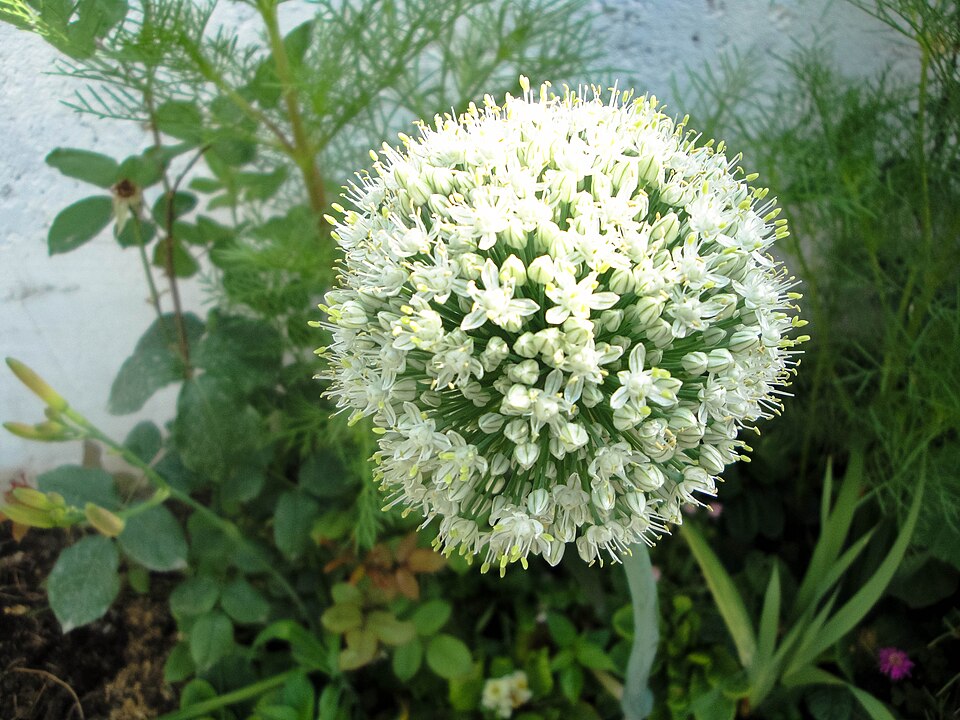
Allium angulosum
L.
Mouse garlic
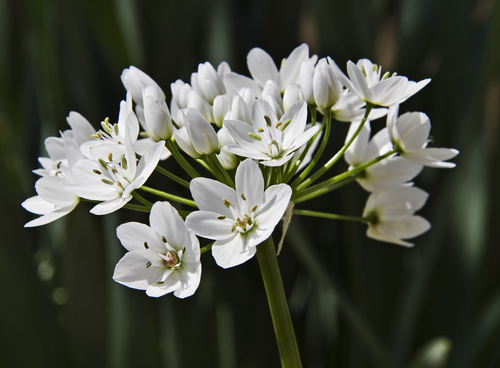
iNaturalist· cc-by-nc
(c) Надежда Орлова, some rights reserved (CC BY-NC), uploaded by Надежда Орлова
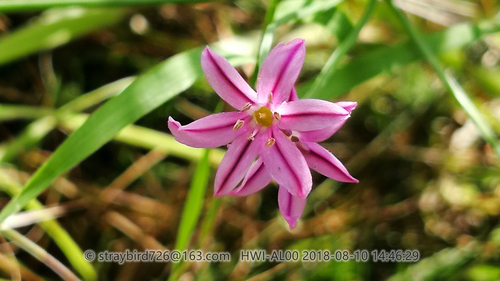
iNaturalist· cc-by-nc
(c) Sebastian J. Dunkl, some rights reserved (CC BY-NC), uploaded by Sebastian J. Dunkl
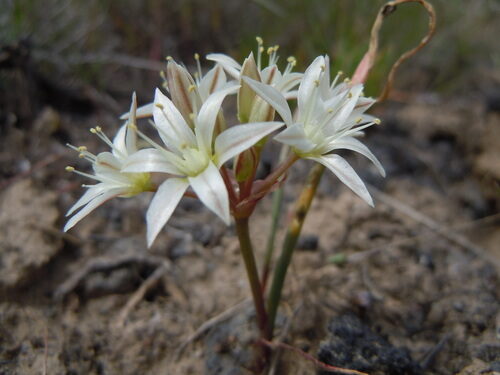
iNaturalist· cc-by-nc
(c) Вячеслав Юсупов, some rights reserved (CC BY-NC), uploaded by Вячеслав Юсупов
Summary
Source: WikipediaAllium angulosum, the mouse garlic, is a species of garlic native to a wide region of central Europe and northern Asia, from France and Italy to Siberia and Kazakhstan. Allium angulosum is a perennial herb up to 50 cm tall. Bulbs are narrow and elongated, about 5 mm in diameter. The plant produces a hemispherical umbel of small pink flowers on long pedicels.
Description
An onion family plant. It is a bulb. The plants grow to 45 cm high. The bulbs are slender and long. They are clustered on an underground stem or rhizome. The leaves are up to 5 mm wide. They have a blunt tip and a sharp keel underneath. The flowers are cup-shaped and white or red in half round heads.
Edible Uses
The bulbs can be eaten raw or cooked and can be preserved for winter use by salting. They are slender and elongated, around 5mm wide. The leaves are edible raw or cooked, though they carry a slight bitterness in flavour. The flowers are eaten raw and used as a garnish on salads.
Traditional Uses
The bulbs are eaten raw or cooked. They are also salted for later use. The leaves are eaten raw or cooked. The flowers are used raw or to flavour salads.
Medicinal Uses
No specific medicinal uses have been recorded for this species, but members of this genus are generally considered very healthy dietary additions. They contain sulphur compounds responsible for their onion flavour, and eaten regularly they help reduce blood cholesterol levels, act as a tonic to the digestive system, and support circulatory health.
Known Hazards
Allium angulosum is cultivated as an ornamental and also as an herb for kitchen gardens. Bulbs and leaves are edible cooked or in salads. There are, however, some reports of being toxic in large quantities.
Distribution
It is a cool temperate plant. It can tolerate frost. It can grow on a range of well-drained soils. It needs to be in a sunny position. It is best in moist soil. It grows naturally from Central Europe to Eastern Asia and Siberia in damp meadows near rivers.
Where It Grows
Asia, Australia, Cape Verde, Central Asia, Europe, Kazakhstan, Lithuania, Russia, Siberia, Slovenia,
Cultivation
An easily grown plant, it prefers a sunny position in a moist but well-drained soil. Succeeds in heavy soils and in light shade. The bulbs should be planted fairly deeply. This species is often sold in nurseries as A. pyrenaicum. Closely related to A. senescens, differing mainly in having keeled leaves. The flowers do not have the usual onion smell. Cultivated as a vegetable in Siberia. Grows well with most plants, especially roses, carrots, beet and chamomile, but it inhibits the growth of legumes. This plant is a bad companion for alfalfa, each species negatively affecting the other. Members of this genus are rarely if ever troubled by browsing deer.
Propagation
Sow seed in spring in a cold frame. Prick seedlings into individual pots when large enough to handle — placing three plants per pot will build clumps more quickly. Grow on in the greenhouse through at least their first winter, then plant out into permanent positions in spring once they are vigorous and of sufficient size. Division is best done in spring and is very straightforward; plants can be successfully divided at any point during the growing season and the divisions planted directly into permanent positions if needed.
Other Uses
The plant's juice can be used as a moth repellent, and the whole plant is said to deter insects and moles.
Other Information
It is cultivated as a vegetable in Siberia.
Notes
There are about 300-700 Allium species. Most species of Allium are edible (Flora of China). All alliums are edible but they may not all be worth eating! They have also been put in the family Alliaceae.
Synonyms
Also Known As
Mischei-tschesnok, Robati luk, Siberian garlic
References (10)
- Aipeisova S.A., et al, 2019, Wild useful herbs of Aktobe Region (Western Kazakhstan). Ukrainian Journal of Ecology, 9(3), 329-331
- Brevard Country Edible Acres
- Facciola, S., 1998, Cornucopia 2: a Source Book of Edible Plants. Kampong Publications, p 5
- Hedrick, U.P., 1919, (Ed.), Sturtevant's edible plants of the world. p 33
- INFOODSUpdatedFGU-list.xls
Show all 10 references Hide references
- Lim, T. K., 2015, Edible Medicinal and Non Medicinal Plants. Volume 9, Modified Stems, Roots, Bulbs. Springer p 3
- Plants for a Future database, The Field, Penpol, Lostwithiel, Cornwall, PL22 0NG, UK. http://www.scs.leeds.ac.uk/pfaf/ (Also as Allium angulare)
- Seidemann J., 2005, World Spice Plants. Economic Usage, Botany, Taxonomy. Springer. p 16
- Sp. pl. 1:300. 1753
- Woodward, P., 1996, Garlic and Friends. The History, Growth and Use of Edible Alliums. Hyland House. p 192