Allium macrostemon
Bunge
Chinese field garlic, Long-stamen onion
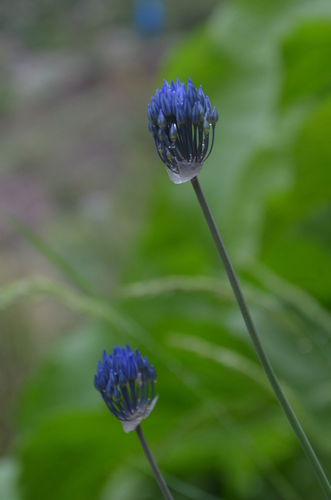
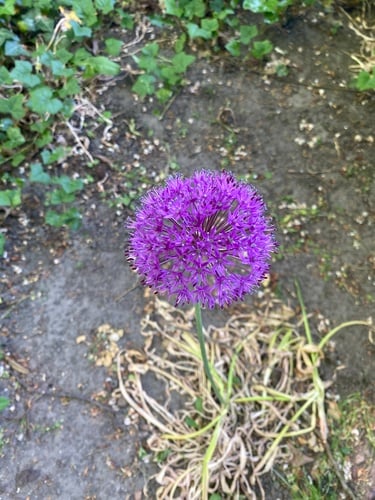
iNaturalist· cc-by-nc
(c) V.S. Volkotrub, some rights reserved (CC BY-NC), uploaded by V.S. Volkotrub
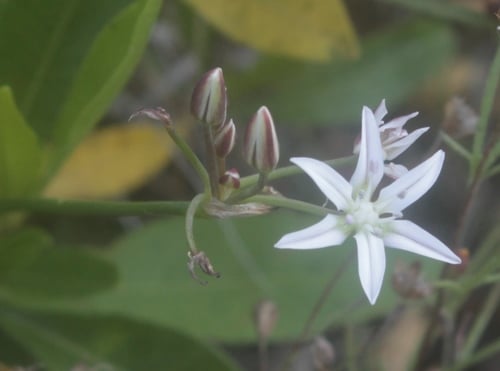
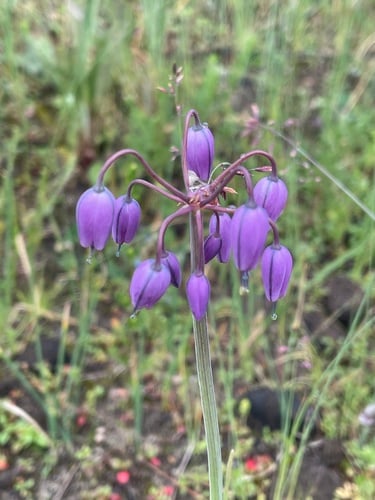
iNaturalist· cc-by-nc
(c) wresy, some rights reserved (CC BY-NC)
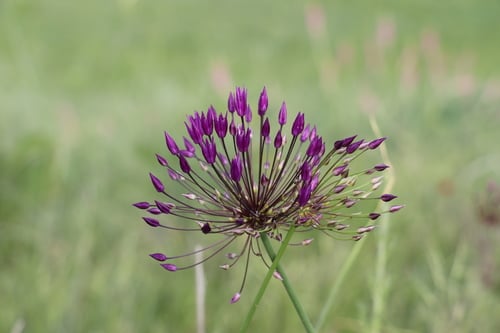
iNaturalist· cc-by-nc
(c) tofuinsect, some rights reserved (CC BY-NC)
Summary
Source: WikipediaAllium macrostemon (野蒜, ノビル), Japanese wild onion, Spring onion, Green onion, Chinese garlic, Japanese garlic or long-stamen onion, is a species of wild onion widespread across much of East Asia. It is known from many parts of China, as well as Japan (incl Ryukyu Islands), Korea, Mongolia, Tibet and Primorye. It has been collected from elevations ranging from sea level to 3000 m. Allium macrostemon produces one round bulb up to 2 cm in diameter. Scape is up to 70 cm tall. Leaves are shorter than the scape, long and hollow, round or triangular in cross-section. Umbel is large and crowded with many pale red or pale purple flowers. Allium macrostemon is mentioned in Huangdi Neijing as one of the five consumable herbs (五菜) which included mallow (Malva verticillata) (葵), pea leaves (藿), Welsh onion (蔥) and garlic chives (韭).
Description
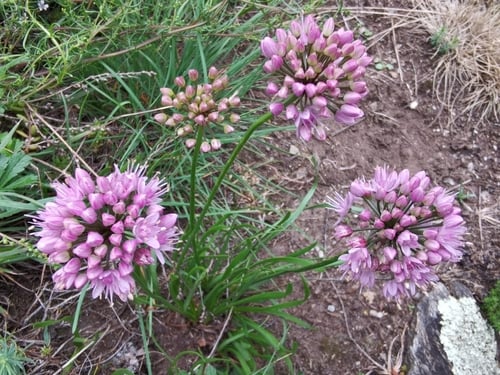
An onion family plant. A bulb plant. It grows to 60 cm high. There is only one bulb. It is 0.7-1.5 cm across. It can have small bulbils at the base. The covering is blackish and papery. The leave are shorter than the scape. They are 2-5 mm wide. They can be 3 angled. The scape is 30-70 cm long. The flower head is half round with many flowers and bulblets.
Edible Uses
The bulb, around 15mm in diameter, can be eaten raw or cooked. The leaves are also edible raw or cooked. The flowers are edible raw and can be used as a garnish on salads.
Traditional Uses
The bulbs are eaten raw or cooked. The leaves are eaten raw or cooked. The flowers are used raw to flavour salads. The young plants before flowering are mixed with flour and cooked in soups.
Medicinal Uses
The plant is astringent, carminative, and diuretic. It is used to treat stuffiness and pain in the chest, angina pectoris, pleurisy, bronchitis, diarrhoea, and tenesmus in cases of dysentery. A decoction of the bulb is cooling and depurative. The bulb and leaves, eaten as part of the diet, are considered emmenagogue, nervine, and tonic. More broadly, members of this genus contain sulphur compounds that give them their onion flavour, and regular dietary consumption can help reduce blood cholesterol levels, support digestion, and tonify the circulatory system.
Known Hazards
Although no individual reports regarding this species have been seen, there have been cases of poisoning caused by the consumption, in large quantities and by some mammals, of certain members of this genus. Dogs seem to be particularly susceptible.
Distribution
It is a temperate climate plant. It grows naturally on meadows and arable land in China, Japan. It grows from sea level to 1600 m altitude in N China and 3000 m in S China. It grows in Sichuan and Yunnan.
Where It Grows
Asia, China, Georgia, Himalayas, Japan, Korea, Mongolia, Russia, Tibet,
Cultivation
We have very little information on this species and do not know if it will be hardy in Britain, though judging by its native range it should succeed outdoors in many parts of the country. The following notes are based on the general needs of the genus. Prefers a sunny position in a light well-drained soil. The bulbs should be planted fairly deeply. Most members of this genus are intolerant of competition from other plants. Grows well with most plants, especially roses, carrots, beet and chamomile, but it inhibits the growth of legumes. This plant is a bad companion for alfalfa, each species negatively affecting the other. Members of this genus are rarely if ever troubled by browsing deer.
Propagation
Sow seed in spring in a cold frame. Prick out seedlings into individual pots once large enough to handle — placing three plants per pot will produce clumps more quickly. Grow on in the greenhouse for at least the first winter, then plant out in spring once vigorous and large enough. For division, split plants in spring; they divide successfully at any point during the growing season. Pot divisions in a cold frame or greenhouse until established before planting out permanently.
Other Uses
The plant's juice can be used as a moth repellent. The whole plant is also said to repel insects and moles.
Notes
There are about 300-700 Allium species. Most species of Allium are edible (Flora of China). All alliums are edible but they may not all be worth eating! They have also been put in the family Alliaceae.
Synonyms
Also Known As
Jiecong, No-binu, Nobiru, Sandallae, Tengern betehi, Togdausu, Togtuus, Wu tu, Xiao suan, Xie bai
References (22)
- Altschul, S.V.R., 1973, Drugs and Foods from Little-known Plants. Notes in Harvard University Herbaria. Harvard Univ. Press. Massachusetts. no. 263
- Chen Xinqi, Liang Songyun, Xu Jiemei, Tamura M.N., Liliaceae. Flora of China. p 129
- Enum. pl. China bor. 65. 1833 (Mem. Acad. Imp. Sci. St.-Petersbourg Divers Savans 2:139. 1835)
- Fan, L., et al, The Use of Edible Wild Plants and Fungi in Korean-Chinese Villages. Journal of Environmental Information Science 44-5 p 71-79
- https://en.wikipedia.org/wiki/List of wild edible plants in Mongolian cuisine
Show all 22 references Hide references
- Hu, Shiu-ying, 2005, Food Plants of China. The Chinese University Press. p 313
- Hwang, H., et al, 2013, A Study on the Flora of 15 Islands in the Western Sea of Jeollanamdo Province, Korea. Journal of Asia-Pacific Biodiversity Vol. 6, No. 2 281-310
- Kang, Y., et al, 2012, Wild food plants and wild edible fungi in two valleys on the Qinling Mountains (Shaanxi, central China) Journal of Ethnobiology and Ethnomedicine; 9:26
- Khasbagan, Hu-Yin Huai, and Sheng-Ji pei, 2000, Wild Plants in the Diet of Athorchin Mongol Herdsmen in Inner Mongolia. Economic Botany 54(4): 528-536
- Lim, T. K., 2015, Edible Medicinal and Non Medicinal Plants. Volume 9, Modified Stems, Roots, Bulbs. Springer p 3
- Ong, H. G., et al, 2015, Ethnobotany of the wild edible plants gathered in Ulleung Island, South Korea. Genet Resourc Crop Evol. Springer
- Plants for a Future database, The Field, Penpol, Lostwithiel, Cornwall, PL22 0NG, UK. http://www.scs.leeds.ac.uk/pfaf/
- Sachula, et al, 2020, Wild edible plants collected and consumed by the locals in Daqinggou, Inner Mongolia, China. Journal of Ethnobiology and Ethnomedicine (2020) 16:60
- Song, M., et al, 2013, Traditional knowledge of wild edible plants in Jeju Island, Korea. Indian Journal of Traditional Knowledge. 12(2) pp 177-194
- Urgamal, M., et al, 2014, Conspectus of the Vascular Plants of Mongolia. Mongolia Academy of Sciences Institute of Botany and National University of Mongolia Department of Biology. p 47
- Wang, J. et al, 2013, A Study on the Utilization of Wild Plants for Food in Liangshan Yi Autonomous Prefecture. Plant Diversity and Resources. 35(4): 416-471
- Wang, J., et al, 2020, An ethnobotanical survey of wild edible plants used by the Yi people of Liangshan Prefecture, Sichuan Province, China. Journal of Ethnobiology and Ethnomedicine 16:10
- Weckerle, C. S., et al, 2006, Plant Knowledge of the Shuhi in the Hengduan Mountains, Southwest China. Economic Botany 60(1):2-23
- Wiersema, J. H. & Leon, B., 2013, World Economic Plants. A Standard Reference CRC Press. 2nd Ed. p 34
- World Checklist of Useful Plant Species 2020. Royal Botanic Gardens, Kew
- Wujisguleng, W., & Khasbagen. K., 2010, An integrated assessment of wild vegetable resources in Inner Mongolian Autonomous Region, China. Journal of Ethnobiology and Ethnomedicine 6:34
- Zeven, A. C. & de West, J. M. J., 1982, Dictionary of cultivated plants and their regions of diversity. Wageningen. p 32