Allium humile
Kunth
Small alpine onion
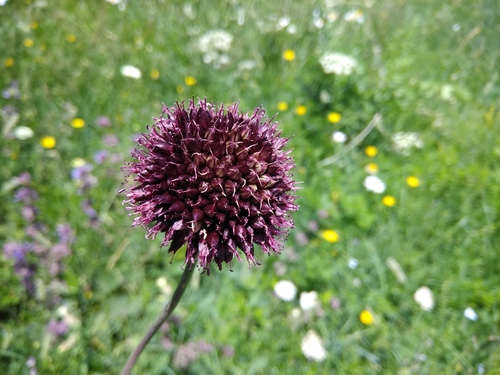
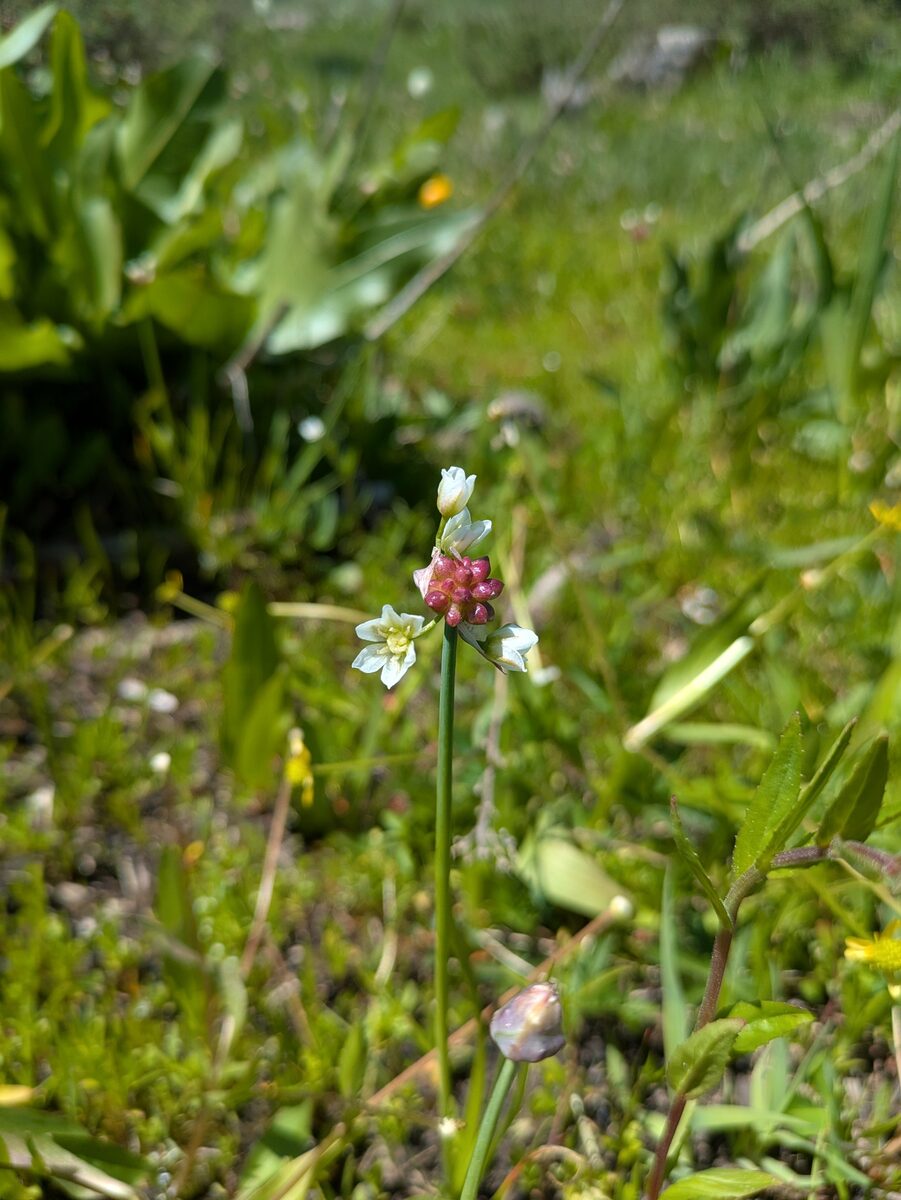
iNaturalist· cc-by-nc
(c) Jasmine Star Outdoor Photography, some rights reserved (CC BY-NC), uploaded by Jasmine Star Outdoor Photography
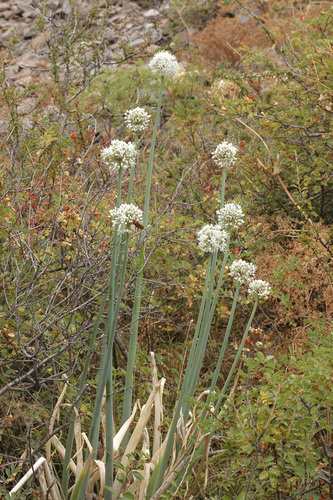
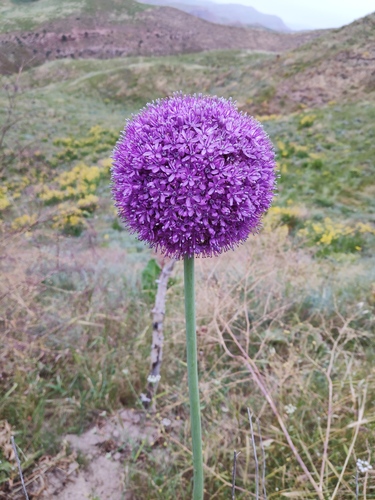
iNaturalist· cc-by-nc
(c) Jasmine Star Outdoor Photography, some rights reserved (CC BY-NC), uploaded by Jasmine Star Outdoor Photography
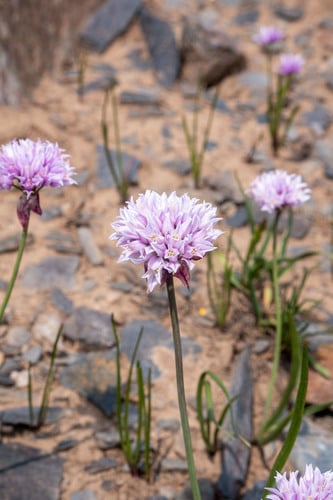
iNaturalist· cc-by-nc
(c) Jasmine Star Outdoor Photography, some rights reserved (CC BY-NC), uploaded by Jasmine Star Outdoor Photography
Summary
Source: WikipediaAllium humile is an Asian species of wild onion found at high elevations (4000–4500 m) in India (Jammu-Kashmir, Uttarakhand, Uttar Pradesh, Himachal Pradesh), Nepal, northern Pakistan, Tibet, and Yunnan. Allium humile has narrow, cylindrical bulbs. Scape is up to 15 cm tall, slightly compressed. Leaves are flat, fleshy, linear, about 5 mm wide. Umbel is hemispheric, crowded with many flowers. Tepals are white with yellowish-green midveins. The species formerly included a variety Allium humile var. trifurcatum F.T.Wang & Tang which is since 1991 called Allium trifurcatum (F.T.Wang & Tang) J.M.Xu.
Description
An onion family plant. A bulb plant. It as a single long bulb. The covering is brown and like a net. There are 4-7 leaves and they are narrow. They are 4-5 mm wide. They are flat and solid and fleshy. The scape is 5-15 cm long. It is covered with leaf sheaths only at the base. The flower head is half round with many flowers. They are white.
Edible Uses
The young leaves are used as a green vegetable fresh or are dried and used as a condiment.
Traditional Uses
The young leaves are used as a green vegetable. They are also dried and used as a condiment.
This uses section is brief — help expand it
Distribution
It is a temperate plant. It occurs on slopes at high elevations between 4000-4500 m altitude in S China. It occurs between 3000-4000 m altitude in Uttar Pradesh in India. It can grow in cold arid places.
Where It Grows
Asia, China, Himalayas, India, Pakistan, Tibet,
Notes
There are about 300-700 Allium species. Most species of Allium are edible (Flora of China). All alliums are edible but they may not all be worth eating! They have also been put in the family Alliaceae.
Synonyms
Also Known As
Darmi Dhun, Jamboo, Kue, Lasanya, Nik, Pangari, Pangri, Xue jiu
References (9)
- Chen Xinqi, Liang Songyun, Xu Jiemei, Tamura M.N., Liliaceae. Flora of China. p 111
- Dutt, B., et al, 2011, Ethnobotanical Survey of Plants used by Gaddi Tribe of Bharmour Area in Himachal Pradesh. ENVIS Bulletin: Himalayan Ecology 19, 2011 (As Allium govanianum)
- Misra, S., et al, 2008, Wild leafy vegetables: A study of their subsistence dietetic support to the inhabitants of Nanda Devi Biosphere Reserve, India. Journal of Ethnobiology and Ethnomedicine 2008, 4:15
- Murugan, Pal M., et al, 2010, Phytofoods of Nubra valley, Ladakh - The cold desert. Indian Journal of Traditional Knowledge. Vol. 9(2): 303-308
- Negi, K.S., 1988, Some little known wild edible plants of U.P. Hills. J. Econ. Tax. Bot. Vol. 12 No. 2 pp 345-360
Show all 9 references Hide references
- Negi, K. S., and Pant, K. C., 1992, Less-Known Wild Species of Allium L. (Amaryllidaceae) from Mountainous Regions of India. Economic Botany, Vol. 46, No. 1, pp. 112-114
- Rana, J.C. et al, 2011, Genetic resources of wild edible plants and their uses among tribal communities of cold arid regions of India. Genetic Resources and crop Evolution. (2012) 59:135-149
- Rawat, G.S., & Pangtey, Y.P.S., 1987, A Contribution to the Ethnobotany of Alpine Regions of Kumaon. J. Econ. Tax. Bot. Vol. 11 No. 1 pp 139-147 (As Allium govanianum)
- Thakur, D., et al, 2017, Why they eat, what they eat: patterns of wild edible plants consumption in a tribal area of Western Himalaya. Journal of Ethnobiology and Ethnomedicine (2017) 13:70