Allium sativum
L.
Garlic
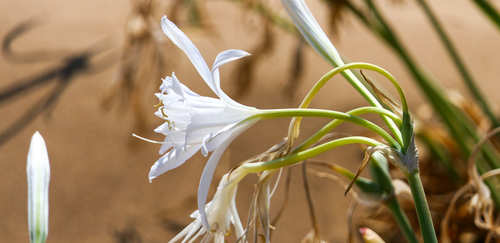
iNaturalist· cc-by-nc
(c) willem9, some rights reserved (CC BY-NC), uploaded by willem9
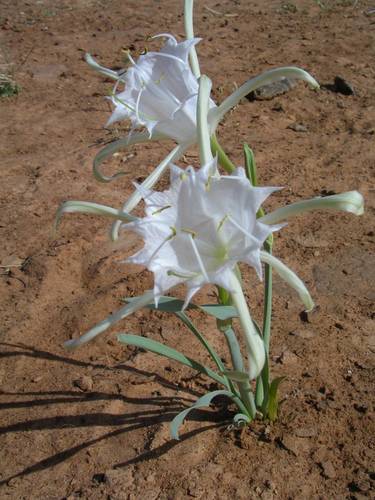
iNaturalist· cc-by-nc
(c) konstantin_m, some rights reserved (CC BY-NC)
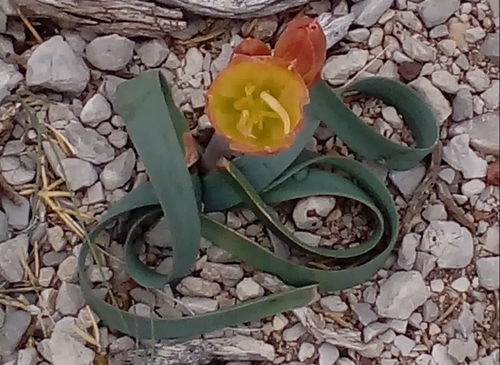
iNaturalist· cc-by-nc
(c) AndraTemruk, some rights reserved (CC BY-NC), uploaded by AndraTemruk
Summary
Source: WikipediaA bulbous plant reaching 0.6 m (2 ft) tall and 0.2 m (8 inches) wide, growing at a medium rate. Hardy to UK zone 8 and frost-hardy. Hermaphroditic, self-fertile, bee/insect-pollinated. Attracts wildlife. Grows in light sandy and medium loamy soils with good drainage, including very alkaline soils. Prefers full sun and tolerates dry or moist conditions. Bulbs reach up to 6 cm diameter.
Description
An onion family plant. It is an erect herb. It grows one year, then flowers the next. It grows about 40 cm high. This onion family plant has a number of tightly packed bulbs (cloves) wrapped in papery scale leaves. The true leaves of the plant are long, flat and solid. Leaves are 2.5 cm wide. The roots are side roots. The number of cloves per bulb varies from 16-50 depending on variety. Flowers are borne on a long stalk in a head where the flowers are on equal length stalks from one point forming a rounded head.
Edible Uses
The bulb — up to 6cm in diameter — is eaten raw or cooked and is widely used, especially in southern Europe, as a flavouring across a broad range of dishes. Garlic is highly nutritious but its strong flavour means it is mostly used in small quantities in salads and cooked foods. Per 100g dry weight the bulb provides 360 calories, with 0% water, 13.5g protein, 0.7g fat, 82g carbohydrate, 3g fibre, and 3.5g ash. Mineral content per 100g includes 65mg calcium, 400mg phosphorus, 4.3mg iron, 53mg sodium, and 1250mg potassium. Vitamins per 100g include 0.7mg thiamine (B1), 0.2mg riboflavin (B2), 1.25mg niacin, and 35mg vitamin C. The leaves are milder in flavour than the bulbs and are chopped raw into salads or used as a cooked flavouring; the Chinese commonly grow garlic specifically for its leaves, which can be harvested during mild winters. The flowering stems are also used as a flavouring and are sometimes available in Chinese shops. Sprouted seed can be added to salads. Figures given are the median of a range reported in the source.
Traditional Uses
The cloves are used in small amounts to flavour food. The leaves can also be used. Leaves should be cut before they are mature.
This uses section is brief — help expand it
Medicinal Uses
Garlic has a long folk history of treating a wide range of ailments. Its fungicidal, antiseptic, tonic, and parasiticidal properties have made it particularly useful against ringworm, Candida, and vaginitis. It produces inhibitory effects on gram-negative germs of the typhoid-paratyphoid-enteritis group, demonstrates outstanding germicidal properties, and can keep amoebic dysentery at bay. It is also reported to have anticancer activity and has been shown to aid detoxification in cases of chronic lead poisoning. Regular dietary use benefits the body broadly, with particular effects on the blood and heart: demographic studies link heavy garlic consumption in parts of Italy and Spain to low rates of arteriosclerosis, and recent research indicates it reduces glucose metabolism in diabetics, slows the development of arteriosclerosis, and lowers the risk of further heart attacks in patients who have experienced myocardial infarction. Applied externally, the expressed juice is an effective antiseptic for wounds. Fresh bulbs are medicinally superior to stored ones, as extended storage significantly reduces antibacterial potency. The bulb is considered anthelmintic, antiasthmatic, anticholesterolemic, antiseptic, antispasmodic, cholagogue, diaphoretic, diuretic, expectorant, febrifuge, hypoglycaemic, stimulant, stomachic, tonic, and vasodilator. The German Commission E Monographs approve Allium sativum for arteriosclerosis, hypertension, and high cholesterol levels.
Known Hazards
The scent of garlic is known to linger upon the human body and cause bad breath (halitosis) and body odor. This is caused by allyl methyl sulfide (AMS). AMS is a volatile liquid which is absorbed into the blood during the metabolism of garlic-derived sulfur compounds; from the blood it travels to the lungs (and from there to the mouth, causing garlic breath) and skin, where it is exuded through skin pores. Since digestion takes several hours, and release of AMS several hours more, the effect of eating garlic may be present for a long time. Washing the skin with soap is only a partial and imperfect solution to the smell. Studies have shown sipping milk at the same time as consuming garlic can significantly neutralize bad breath. Mixing garlic with milk in the mouth before swallowing reduced the odor better than drinking milk afterward. Plain water, mushrooms, and basil may also reduce the odor; the mix of fat and water found in milk, however, was the most effective. Garlic breath is allegedly alleviated by eating fresh parsley. Abundant sulfur compounds in garlic are also responsible for turning garlic green or blue during pickling and cooking. Under these conditions (i.e., acidity, heat) the sulfur-containing compound alliin reacts with common amino acids to make pyrroles, clusters of carbon-nitrogen rings. These rings can be linked together into polypyrrole molecules. Ring structures absorb particular wavelengths of light and thus appear colored. The two-pyrrole molecule looks red, the three-pyrrole molecule looks blue, and the four-pyrrole molecule looks green (like chlorophyll, a tetrapyrrole). Like chlorophyll, the pyrrole pigments are safe to eat. Upon cutting, similar to a color change in onion caused by reactions of amino acids with sulfur compounds, garlic can turn green. The green, dry "folds" in the center of the garlic clove are especially pungent. The sulfur compound allicin, produced by crushing or chewing fresh garlic, produces other sulfur compounds: ajoene, allyl polysulfides, and vinyldithiins. Aged garlic lacks allicin, but may have some activity due to the presence of S-allylcysteine. Some people suffer from allergies to garlic and other species of Allium. Symptoms can include irritable bowel, diarrhea, mouth and throat ulcerations, nausea, breathing difficulties, and, in rare cases, anaphylaxis. Garlic-sensitive people show positive tests to diallyl disulfide, allylpropyldisulfide, allylmercaptan, and allicin, all of which are present in garlic. People who suffer from garlic allergies are often sensitive to many other plants, including onions, chives, leeks, shallots, garden lilies, ginger, and bananas. Several reports of serious burns resulting from garlic being applied topically for various purposes, including naturopathic uses and acne treatment, indicate care must be taken for these uses, usually testing a small area of skin using a low concentration of garlic. On the basis of numerous reports of such burns, including burns to children, topical use of raw garlic, as well as insertion of raw garlic into body cavities, is discouraged. In particular, topical application of raw garlic to young children is not advisable. The side effects of long-term garlic supplementation are largely unknown. Possible side effects include gastrointestinal discomfort, sweating, dizziness, allergic reactions, bleeding, and menstrual irregularities. Some breastfeeding mothers have found, after consuming garlic, that their babies can be slow to feed, and have noted a garlic odor coming from them. Conversely an experiment showed, "infants were attached to the breast for longer periods of time and sucked more when the milk smelled like garlic". If higher-than-recommended doses of garlic are taken with anticoagulant medications, this can lead to a higher risk of bleeding. Garlic may interact with warfarin, saquinavir, antihypertensives, calcium channel blockers, the quinolone family of antibiotics such as ciprofloxacin, and hypoglycemic drugs, as well as other medications. The American Veterinary Medical Association considers garlic to be toxic to pets.
Distribution
A temperate plant. It grows in the tropical highlands mostly between 1600 and 2200 m but will grow satisfactorily down to 500 m. In Nepal it grows to 3000 m altitude. There are kinds that will grow in hot coastal tropical places. Best bulb development occurs with temperatures up to 30°C. It is frost resistant. High humidity or high rainfall is not suitable. It is best grown in low rainfall areas with irrigation. Bulb development is favoured with long day lengths. It does best with pH 6-7. It suits hardiness zones 8-10. In Yunnan.
Where It Grows
Africa, Albania, Andes, Andorra, Angola, Armenia, Asia, Australia, Azerbaijan, Balkans, Bangladesh, Bhutan, Bolivia, Botswana, Brazil, Britain, Burkina Faso, Cambodia, Canada, Cape Verde, Caucasus, Central Africa, Central America, Central Asia, Chad, China, Colombia, Costa Rica, Cuba, East Africa, Ecuador, Egypt, Eritrea, Ethiopia, Europe, Fiji, Georgia, Guam, Guatemala, Guinea, Guinée, Hawaii, Himalayas, India, Indochina, Indonesia, Italy, Japan, Jordan, Kazakhstan, Kenya, Korea, Kyrgyzstan, Laos, Lebanon, Lithuania, Macedonia, Madagascar, Malawi, Malaysia, Mali, Marshall Islands, Mauritania, Mediterranean, Mexico, Micronesia, Middle East, Moldova, Mozambique, Myanmar, Nauru, Nepal, Nicaragua, Niger, Nigeria, North Africa, North America, Northeastern India, Pacific, Pakistan, Papua New Guinea, PNG, Philippines, Sahel, Saudi Arabia, SE Asia, Senegal, Sikkim, Slovenia, Somalia, South Africa, Southern Africa, South America, Spain, Sri Lanka, Switzerland, Tajikistan, Tanzania, Tasmania, Thailand, Timor-Leste, Turkey, Türkiye, Tuvalu, Uganda, Uruguay, USA, Uzbekistan, Vanuatu, Vietnam, West Africa, West Indies, Zambia, Zimbabwe,
Cultivation
Succeeds in most soils but prefers a sunny position in a moist light well-drained soil. Dislikes very acid soils. Tolerates a pH in the range 4.5 to 8.3. The bulb is liable to rot if grown in a wet soil. Hardy to at least -10°c. The bulbs should be planted fairly deeply. Garlic has a very long history of use as a food and a medicine. It was given to the Egyptian labourers when building the pyramids because it was believed to confer strength and protect from disease, it was also widely used by the Romans. It is widely cultivated in most parts of the world for its edible bulb, which is used mainly as a flavouring in foods. There are a number of named varieties. Bulb formation occurs in response to increasing daylength and temperature. It is also influenced by the temperature at which the cloves were stored prior to planting. Cool storage at temperatures between 0 and 10°c will hasten subsequent bulb formation, storage at above 25°c will delay or prevent bulb formation. Grows well with most plants, especially roses, carrots, beet and chamomile, but it inhibits the growth of legumes. This plant is a bad companion for alfalfa, each species negatively affecting the other. Members of this genus are rarely if ever troubled by browsing deer. Alliums are typically harvested in late spring to early summer, when the bulbs mature and the tops begin to yellow. Allium species typically flower in late spring to early summer, depending on the species and local climate conditions. Allium species generally have a moderate growth rate, with bulbs typically taking about 100 to 150 days from planting to harvest, depending on the variety and growing conditions.
Propagation
Plant cloves in late autumn for an early summer harvest, or in late winter to early spring, though autumn planting typically gives better yields. Set cloves with their noses just below the soil surface. Bulbs left in the ground year-round will often produce tender young leaves during winter.
Other Uses
Juice from the bulb repels insects, though its powerful smell is noted as a drawback. The juice can also be applied to insect stings to ease pain. An insecticide spray can be made by infusing 3–4 tablespoons of chopped garlic and 2 tablespoons of grated soap in 1 litre of boiling water, then allowing the mixture to cool before use. Garlic juice makes an effective glue: spread on glass, it allows clean holes to be cut, and it also bonds broken glass and china. A plant extract can be used as a fungicide against blight, mould, and other fungal diseases of tomatoes and potatoes. Placing a few cloves among stored fruit delays rotting. The growing plant is said to repel insects, rabbits, and moles.
Production
Bulbs should be ready about 90-120 days from planting. Bulbs can be stored at 25-30°C for 90 days with low humidity and good air circulation.
Other Information
At present not widely grown or used in Papua New Guinea. It is a commercially cultivated vegetable.
Notes
There are about 300-700 Allium species. Most species of Allium are edible (Flora of China). All alliums are edible but they may not all be worth eating! They have also been put in the family Alliaceae. It has anticancer properties.
Nutrition
| Part | Moisture | kJ | kcal | Protein | Vit A | Vit C | Iron | Zinc |
|---|---|---|---|---|---|---|---|---|
| Bulb | 66 | 512 | 122 | 5 | — | 7 | 1.2 | — |
| Leaves | 87 | 50 | 12 | 2.1 | 684 | 38 | 0.4 | 1 |
| Seed | — | — | — | — | — | — | — | — |
Synonyms
Also Known As
Ahos, Ahus, Ail, Ajo, Akcha, Arishtha, Bawang bodas, Bawang putih, Bellulli, česen, Chyet-thon-phew, Da suan, Galik, Harsun kelok, Hela lunu, Hom-tiam, Kathiem, Katiam, Krathiam, Kratiem, Kthem, Kyetthun-byu, Lasan, Lashuna, Lasun, Maneul, Ma nl, Nin-niku, Ramuza, Rosun, Sarymsak, Suan, Sudu lunu, Suen tau, Tafornua, Tellagadda, Thom, Thoom bari, Toi, Tongologasy, Tongolonkova, Top-setting wild garlic, Ulli, Vellaipundu, Vellavengayam, Velluli
References (105)
- Ali, A. M. S., 2005, Homegardens in Smallholder Farming Systems: Examples from Bangladesh. Human Ecology, Vol. 33, No. 2 pp. 245-270
- Ambasta S.P. (Ed.), 2000, The Useful Plants of India. CSIR India. p 28
- Anderson, E. F., 1993, Plants and people of the Golden Triangle. Dioscorides Press. p
- Ara, R. I. T., 2015, Leafy Vegetables in Bangladesh. Photon eBooks. p 48
- Bernal, R., et al, (Eds), 2016, Catalogo de Plantas y Liquenes de Colombia, Volumen 2, Magnoliaceae a Zygophyllaceae. Universidad Nacional de Colombia. p 2495
Show all 105 references Hide references
- Bernholt, H. et al, 2009, Plant species richness and diversity in urban and peri-urban gardens of Niamey, Niger. Agroforestry Systems 77:159-179
- Bianchini, F., Corbetta, F., and Pistoia, M., 1975, Fruits of the Earth. Cassell. p 84
- Bodkin, F., 1991, Encyclopedia Botanica. Cornstalk publishing, p 66
- Bodner, C. C. and Gereau, R. E., 1988, A Contribution to Bontoc Ethnobotany. Economic Botany, 43(2): 307-369
- Bremness, L., 1994, Herbs. Collins Eyewitness Handbooks. Harper Collins. p 143
- Brickell, C. (Ed.), 1999, The Royal Horticultural Society A-Z Encyclopedia of Garden Plants. Convent Garden Books. p 97
- Brown, D., 2002, The Royal Horticultural Society encyclopedia of Herbs and their uses. DK Books. p 113
- Burkill, I.H., 1966, A Dictionary of the Economic Products of the Malay Peninsula. Ministry of Agriculture and Cooperatives, Kuala Lumpur, Malaysia. Vol 1 (A-H) p 102
- Burnie, G & Fenton-Smith, J., 1999, A Grower's Guide to Herbs. Murdoch Books. p 36
- Bussman, R. W., et al, 2016, A comparative ethnobotany of Khevsureti, Samtskhe-Javakheti, Tusheti, Svaneti, and Racha-Lechkhumi, Republic of Georgia (Sakartvelo), Caucasus. Journal of Ethnobiology and Ethnomedicine (2016) 12:43
- Bussman, R. W. et al, 2017, Ethnobotany of Samtskhe-Javakheti, Sakartvelo (Republic of Georgia), Caucasus. Indian Journal of Traditional Knowledge Vol. 16(1) pp 7-24
- Caballero-Serrano, V., et al, 2019, Traditional ecological knowledge and medicinal plant diversity in Ecuadorian Amazon home gardens. Global Ecology and Conservation 17 (2019) e00524 p 7
- Cheifetz, A., (ed), 1999, 500 popular vegetables, herbs, fruits and nuts for Australian Gardeners. Random House p 112
- Chen Xinqi, Liang Songyun, Xu Jiemei, Tamura M.N., Liliaceae. Flora of China. p 131
- Chin, H. F., 1999, Malaysian Vegetables in Colour. Tropical Press. p 35
- Coe, F.G., and Anderson, G.J., 1996, Ethnobotany of the Garifuna of Eastern Nicaragua. Economic Botany 50(1) pp 71-107
- Coe, F. G. and Anderson, G. J., 1999, Ethnobotany of the Sumu (Ulwa) of Southeastern Nicaragua and Comparisons with Miskitu Plant Lore. Economic Botany Vol. 53. No. 4. pp. 363-386
- Creasy, R., 2000, The Edible Asian Garden. Periplus p 42
- Cundall, P., (ed.), 2004, Gardening Australia: flora: the gardener's bible. ABC Books. p 128
- D'Ambrosio, U., & Puri, R. K., 2016, Foodways in transition: food plants, diet and local perceptions of change in a Costa Rican Ngäbe community. Journal of Ethnobiology and Ethnomedicine (2016) 12:3 p 26
- Dahlen, M., 1995, A Cook's Guide to Chinese Vegetables. Odyssey Guides. p 19
- Duarte, M. C., et al, 2022, Diversity of Useful Plants in Cabo Verde Islands: A Biogeographic and Conservation Perspective. Plants 2022, 11, 1313 p 8
- Ertug, F, Yenen Bitkiler. Resimli Türkiye Florası -I- Flora of Turkey - Ethnobotany supplement (As Allium longicuspis)
- Esperanca, M. J., 1988. Surviving in the wild. A glance at the wild plants and their uses. Vol. 1. p 375
- Ethnobotany of Karbis. Chapter 4 in p 106
- Facciola, S., 1998, Cornucopia 2: a Source Book of Edible Plants. Kampong Publications, p 6, p 5 (As Allium longicuspis)
- Flora of China. www.eFloras.org
- Foo, J.T.S.(ed), 1996, A Guide to Common Vegetables. Singapore Science Foundation. p 110
- Fowler, D. G., 2007, Zambian Plants: Their Vernacular Names and Uses. Kew. p 85
- French, B., 1986, Food Plants of Papua New Guinea, Asia Pacific Science Foundation p 126
- Grubben, G. J. H. and Denton, O. A. (eds), 2004, Plant Resources of Tropical Africa 2. Vegetables. PROTA, Wageningen, Netherlands. p 56
- Hadfield, J., 2001, The A-Z of Vegetable Gardening in South Africa. Struik p 134
- Hedrick, U.P., 1919, (Ed.), Sturtevant's edible plants of the world. p 41
- Hemphill, I, 2002, Spice Notes Macmillan. p 194
- Hepper, E.N., 1993, Illustrated Encyclopedia of Bible Plants, IVP, England. p 127
- Hovsepyan, R., et al, 2016, Food as a marker for economy and part of identity: traditional vegetal food of Yezidis and Kurds in Armenia. Journal of Ethnic Foods. 3:32-41
- Hutton, W., 1997, Tropical Herbs and Spices of Indonesia. Periplus. p 35
- Hu, Shiu-ying, 2005, Food Plants of China. The Chinese University Press. p 314
- Jardin, C., 1970, List of Foods Used In Africa, FAO Nutrition Information Document Series No 2.p 53
- Kapelle, M., et al, 2000, Useful plants within a Campesino Community in a Costa Rican Montane Cloud Forest. Mountain Research and Development, 20(2): 162-171
- Kays, S. J., and Dias, J. C. S., 1995, Common Names of Commercially Cultivated Vegetables of the World in 15 languages. Economic Botany, Vol. 49, No. 2, pp. 115-152
- Kiple, K.F. & Ornelas, K.C., (eds), 2000, The Cambridge World History of Food. CUP p 433, 1776
- Kybal, J., 1980, Herbs and Spices, A Hamlyn Colour Guide, Hamlyn Sydney p28
- Larkcom, J., 1991, Oriental Vegetables, John Murray, London, p 91
- Lazarides, M. & Hince, B., 1993, Handbook of Economic Plants of Australia, CSIRO. p 14
- Lim, T. K., 2015, Edible Medicinal and Non Medicinal Plants. Volume 9, Modified Stems, Roots, Bulbs. Springer p 5
- Liu, Yi-tao, & Long, Chun-Lin, 2002, Studies on Edible Flowers Consumed by Ethnic Groups in Yunnan. Acta Botanica Yunnanica. 24(1):41-56
- Manandhar, N.P., 2002, Plants and People of Nepal. Timber Press. Portland, Oregon. p 81
- Martin, F.W. & Ruberte, R.M., 1979, Edible Leaves of the Tropics. Antillian College Press, Mayaguez, Puerto Rico. p 202
- McCollum, G.D., 1979, Onions and allies, in Simmonds N.W.,(ed), Crop Plant Evolution. Longmans. London. p 186
- Mertz, O., Lykke, A. M., and Reenberg, A., 2001, Importance and Seasonality of Vegetable Consumption and Marketing in Burkina Faso. Economic Botany, 55(2):276-289
- Molla, A., Ethiopian Plant Names. http://www.ethiopic.com/aplants.htm
- Mulherin, J., 1994, Spices and natural flavourings. Tiger Books, London. p 50
- Murtem, G. & Chaudhrey, P., 2016, An ethnobotanical note on wild edible plants of Upper Eastern Himalaya, India. Brazilian Journal of Biological Sciences, 2016, v. 3, no. 5, p. 63-81
- Niwano, Y. et al., 2009, Extensive Screening for Plant Foodstuffs in Okinawa, Japan with Anti-Obese Activity on Adipocytes, in vitro. Plant Foods in Human Nutrition 64:6-10
- Ochse, J.J. et al, 1931, Vegetables of the Dutch East Indies. Asher reprint. p 453
- Oran, S. A. S., 2015, Selected Wild Aromatic Plants in Jordan. International Journal of Medicinal Plants. Photon 108 (2015) 686-699
- Paniagua Zambrana, N. Y., et al, 2017, Traditional knowledge hiding in plain sight - twenty-first century ethnobotany of the Chacobo in Beni, Bolivia. Journal of Ethnobiology and Ethnomedicine (2017) 13:57
- Pieroni, A., 2008, Local plant resources in the ethnobotany of Theth, a village in the Northern Albanian Alps. Genet Resour Crop Evol (2008) 55:1197–1214
- Phatlamphu, N., et al, 2021, Ethnobotany of edible plants in Muang District, Kalasin Province, Thailand, Biodiversitas Vol. 22, No. 12 pp 5432-5444
- Plants for a Future database, The Field, Penpol, Lostwithiel, Cornwall, PL22 0NG, UK. http://www.scs.leeds.ac.uk/pfaf/
- PROSEA handbook Volume 13 Spices. p 273
- Purseglove, J.W., 1972, Tropical Crops. Monocotyledons. Longmans p 52
- Rajapaksha, U., 1998, Traditional Food Plants in Sri Lanka. HARTI, Sri Lanka. p 280
- Rashid, H. E., 1977, Geography of Bangladesh. Westview. p 273
- Ruiters-Welcome, A. K., 2019, Food plants of southern Africa. Ph.D. thesis. Univ. of Johannesburg p 8
- Schneider, E., 2001, Vegetables from Amaranth to Zucchini: The essential reference. HarperCollins. p 204
- Seidemann J., 2005, World Spice Plants. Economic Usage, Botany, Taxonomy. Springer. p 24
- Shah, S. K., 2014, Dietary contribution of underutilized minor crops and indigenous plants collected from uncultivated lands and forests in Nepal. in Promotion of Underutilized Indigenous Food Resources for Food Security and Nutrition in Asia and Pacific. FAO. Bangkok p 64
- Sharma, B.B., 2005, Growing fruits and vegetables. Publications Division. Ministry of Information and broadcasting. India. p 154
- Siemonsma, J. S. and Piluek, K. (Eds), 1994, Plant Resources of South-East Asia No. 8 Vegetables. Prosea Foundation, Bogor, Indonesia, p 77
- Small, E., 2009, Top 100 Food Plants. The world's most important culinary crops. NRC Research Press. p 273
- Solomon, C., 2001, Encyclopedia of Asian Food. New Holland. p 166
- Song, M., et al, 2013, Traditional knowledge of wild edible plants in Jeju Island, Korea. Indian Journal of Traditional Knowledge. 12(2) pp 177-194 (As Allium scorodoprasum var. viviparum)
- Sp. pl. 1:296. 1753
- Staples, G.W. and Herbst, D.R., 2005, A tropical Garden Flora. Bishop Museum Press, Honolulu, Hawaii. p 680
- Sukenti, K., et al, 2016, Ethnobotanical study on local cuisine of the Sasak tribe in Lombok Island, Indonesia. Journal of Ethnic Foods. 3 (2016) 189-200 p 198
- Teron, R. & Borthakur, S. K., 2016, Edible Medicines: An Exploration of Medicinal Plants in Dietary Practices of Karbi Tribal Population of Assam, Northeast India. In Mondal, N. & Sen, J.(Ed.) Nutrition and Health among tribal populations of India. p 152
- Terra, G.J.A., 1973, Tropical Vegetables. Communication 54e Royal Tropical Institute, Amsterdam, p 20
- Thaman, R. R., et al, 1994, The Flora of Nauru. Atoll Research Bulletin No. 392. Smithsonian Institute p 54
- Thaman, R. R, 2016, The flora of Tuvalu. Atoll Research Bulletin No. 611. Smithsonian Institute p 35
- Tindall, H.D., & Williams, J.T., 1977, Tropical Vegetables and their Genetic Resources, International Board for Plant Genetic Resources, Rome, p 62
- Tindall, H.D., 1983, Vegetables in the tropics. Macmillan p. 27
- Torre, de la L., et al, 2008, Enciclopedia de las Plantas Útiles del Ecuador. Herbario QCA. Pontificia Universidad Católica del Ecuador. p 151
- Tyagi, R. K., et al, 2004, Conservation of Spices Germplasm in India. Indian J. Plant Genet. Resour. 17(3): 163-174
- Vander Velde, N, 2003, The Vascular Plants of Majuro Atoll, Republic of the Marshall Islands. Atoll research Bulletin. No. 503. Smithsonian Institute. p 21
- van Wyk, B., 2005, Food Plants of the World. An illustrated guide. Timber press. p 50
- Vermeulen, N, 1998, The Complete Encyclopedia of Herbs. Rebo Publishers. p 37
- Vlkova, M., et al, 2015, Edible Plants Sold on Marginal Rural Markets in Fergana Valley, Southern Kyrgyzstan. Bulgarian Journal of Agricultural Science, 21 (No 2) 2015, 243–250
- Walter, A. & Lebot, V., 2007, Gardens of Oceania. ACIAR Monograph No. 122. p 223
- Wiersema, J. H. & Leon, B., 2013, World Economic Plants. A Standard Reference CRC Press. 2nd Ed. p 35
- Wiriadinata, H., Ethnobotany of Economic Plants in the Baliem Valley, Jayawijaya, Irian Jaya, Indonesian Institute of Science, Bogor, Indonesia
- Woodward, P., 1996, Garlic and Friends. The History, Growth and Use of Edible Alliums. Hyland House. p 1
- Woodward, P., 2000, Asian Herbs and Vegetables. Hyland House. p 15
- World Checklist of Useful Plant Species 2020. Royal Botanic Gardens, Kew
- Yasukawa, K., Medicinal and Edible Plants as Cancer Preventive Agents. Drug Discovery Research in Pharmacognosy. p185 www.intechopen.com
- Yeshi, K. et al, 2017, Taxonomical Identification of Himalayan Edible Medicinal Plants in Bhutan and the Phenolic Contents and Antioxidant Activity of Selected Plants. TBAP 7 (2) 2017 pp 89 - 106
- Youssef, R. S. A., 2013, Medicinal and non-medicinal uses of some plants found in the middle region of Saudi Arabia. Journal of Medicinal Plants Research. Vol. 7(34), pp. 2501-2517
- Zeven, A. C. & de West, J. M. J., 1982, Dictionary of cultivated plants and their regions of diversity. Wageningen. p 32, p 81, 88, 103
- Zhang, L., et al, 2016, Ethnobotanical study of traditional edible plants used by the Naxi people during droughts. Journal of Ethnobiology and Ethnomedicine. 12:39