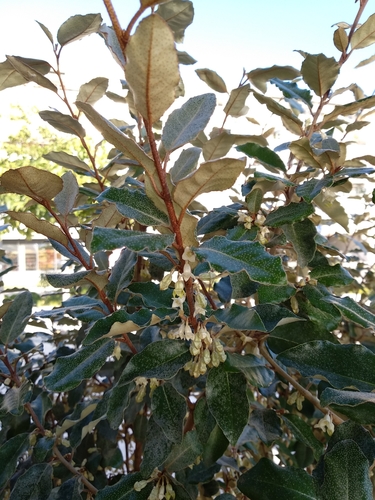
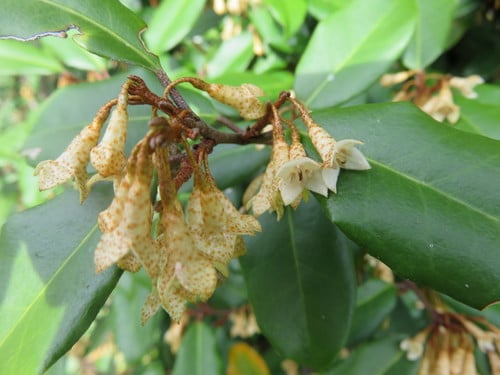
Hippophae gyantsensis
(Rousi.)Y.S.Lian
iNaturalist· cc-by
(c) 王天, some rights reserved (CC BY), uploaded by 王天
iNaturalist· cc-by
(c) 王天, some rights reserved (CC BY)
Summary
Source: WikipediaHippophae gyatsensis, is a plant species in the sea-buckthorn genus Hippophae endemic to the Qinghai-Tibet Plateau in China. These small hardy trees have good drought resistance, barren resistance, saline-alkali resistance and cold resistance, making them ideal for windbreak and sand-fixing forests.
Description
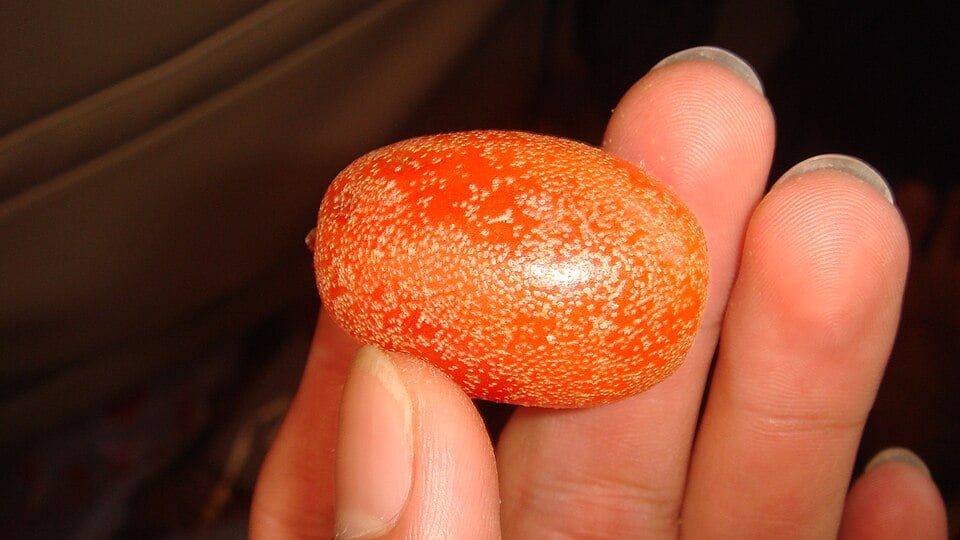
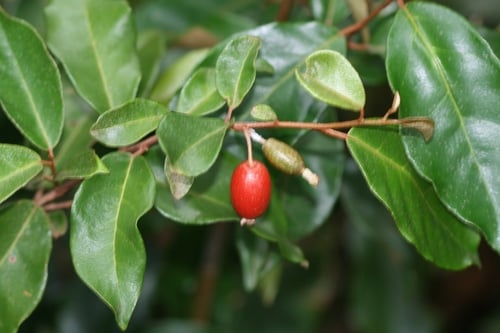
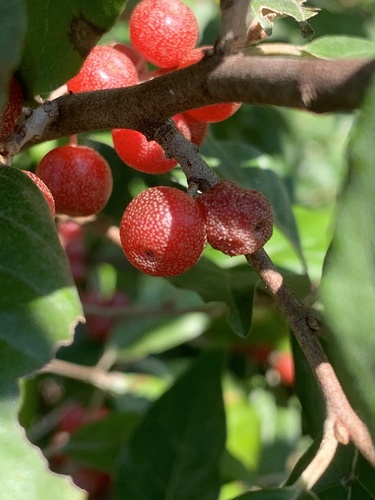
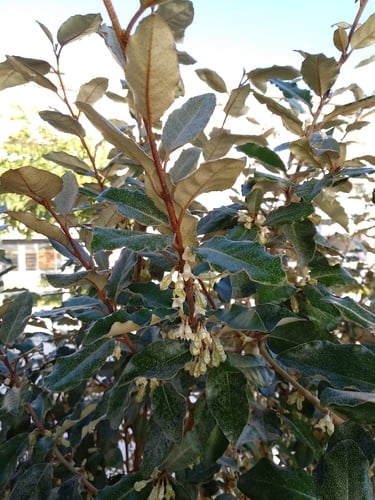
A shrub or small tree. It grows 5-8 m tall. The branches are long and slender. The leaves are alternate and white underneath. They are oblong and 4-6 cm long by 3-5 mm wide. The fruit are oval and 5-7 mm long by 3-5 mm wide. The seed is flattened and 4.5 mm long.
Edible Uses
The fruit can be eaten raw or cooked, though its strongly acidic, lemon-like flavour makes it too sharp for most people when raw. Some species and cultivars (not specified) yield fruit containing up to 9.2% oil. The fruit works well for preserves and becomes noticeably less acid after a frost or when cooked.
Medicinal Uses
An oil produced from the tender branches and leaves — distinct from the fruit oil — is used as an ointment for treating burns. A high-quality medicinal oil made from the fruit is used in the treatment of cardiac disorders and is said to be particularly effective when applied to the skin for burns, eczema, and radiation injury; it is also taken internally for stomach and intestinal diseases. The fruit is an exceptionally rich source of vitamins A, C, and E, flavonoids, other bio-active compounds, and essential fatty acids — the last being unusual for a fruit. It is being investigated for its potential to reduce cancer incidence and to halt or reverse tumour growth.
Distribution
It is a cold temperate plant. It grows on gravelly dry river beds between 3,500-4,000 m above sea level in Tibet.
Where It Grows
Asia, China, Tibet,
Propagation
Sow seed in spring in a sunny position in a cold frame. Germination is usually quick and reliable, though 3 months of cold stratification may improve the rate. Alternatively, sow in a cold frame as soon as seed ripens in autumn. Prick seedlings into individual pots when large enough to handle and grow on in a greenhouse through their first winter. Plant out in late spring. In spring, male seedlings have very prominent axillary buds, while females are smooth and clear at this time. Cuttings of half-ripe wood taken in June/July in a frame are possible but difficult, and represent the easiest method of vegetative propagation. Cuttings of mature wood in autumn are also difficult — take them at the end of autumn or in early spring before buds burst, store in sand and peat until April, cut into 7–9cm lengths, and root in a plastic tent with bottom heat; rooting should occur within 2 months. Division of suckers in winter can be planted directly into permanent positions and usually establishes well. Layering in autumn is also possible.
Other Uses
The wood is used for fuel.
Notes
There are about 8 Hippophae species.
References (1)
- Plants for a Future database, The Field, Penpol, Lostwithiel, Cornwall, PL22 0NG, UK. http://www.scs.leeds.ac.uk/pfaf/