Hibiscus splendens
C. Fraser ex Graham
Pink Hibiscus, Hollyhock tree, Splendid hibiscus
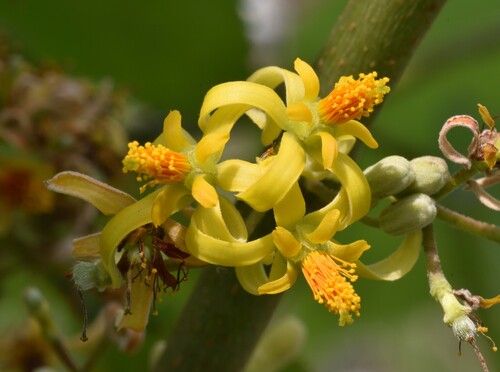
iNaturalist· cc-by-nc
(c) callumadams, some rights reserved (CC BY-NC)
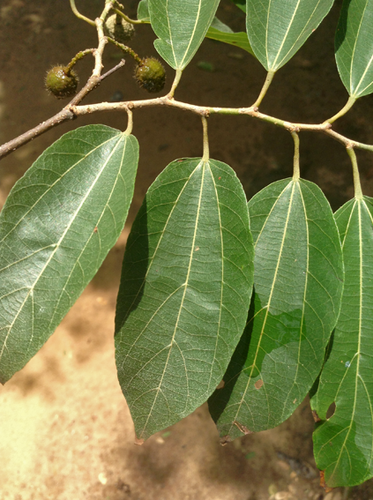
iNaturalist· cc-by-nc
(c) Adrian Gale, some rights reserved (CC BY-NC)
iNaturalist· cc-by-nc
(c) Paolo Candotti, some rights reserved (CC BY-NC), uploaded by Paolo Candotti
Summary
Source: WikipediaHibiscus splendens, the splendid hibiscus, is a species of flowering shrub or tree in the mallow family, Malvaceae. Other common names include hollyhock tree and pink cottonwood. H. splendens is a fairly common plant native to eastern Australia. The range of natural distribution is from Wollongong (35° S) in the state of New South Wales to Blackdown Tableland National Park (23° S) in central east Queensland. The habitat is on clearings or disturbances around the margins of the drier rainforests.
Description
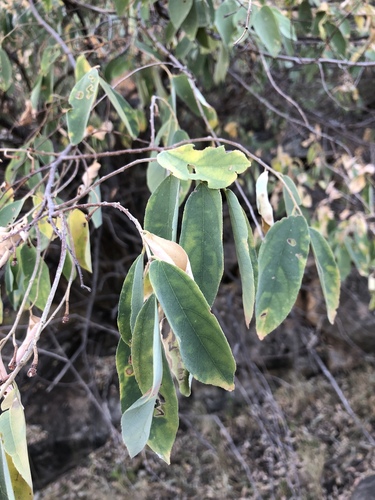
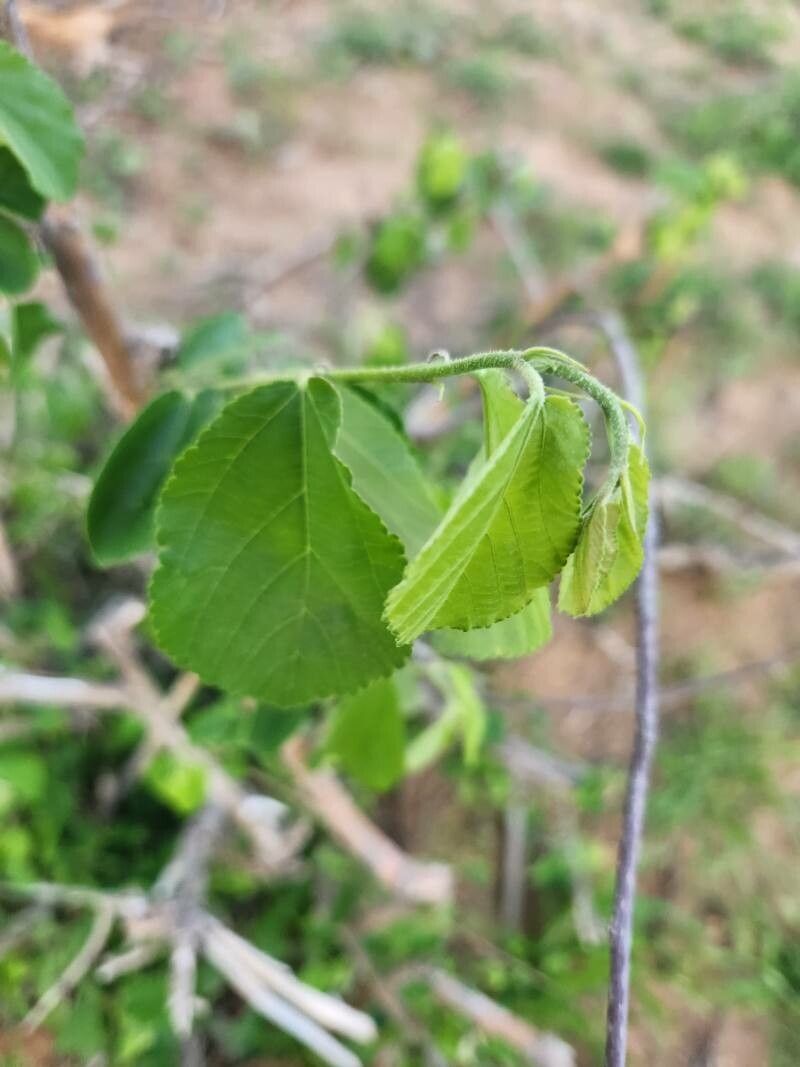
A large shrub or small tree. It grows 3-6 m high and spreads 2-3 m across. The branches are at an angle but erect. They are grey and velvety. There are a few prickles. The leaves are broad and bright green. They are 7-18 cm long by 3-15 cm wide. The lower leaves often have 3-5 lobes. The leaves have teeth along the edge. The leaf stalks are 1-9 cm long. The flowers are large and pink with a dark red blotch in the centre. They are 12-15 cm across. The flowers occur singly in the axils of the upper leaves. The fruit is a capsule 2.5-3 cm long by 2-2.5 cm wide. They are oval and densely hairy. The seeds are smooth.
Edible Uses
The leaves are edible.
Known Hazards
The hairs on the seed capsules can cause severe skin irritation and need to be handled with care.
Distribution
It grows in warm temperate regions. It can also grow in the subtropics. It needs well drained soil. It can stand light frosts only. It is damaged by drought. Melbourne Botanical gardens. It suits hardiness zones 10-12.
Where It Grows
Australia*, Britain, Europe,
Cultivation
Plants can be grown from seed or cuttings.
Propagation
Seed - sow in situ or in containers. Germination is usually fairly rapid and no special pretreatment is needed, although germination will be faster if the seed is abraded or soaked prior to sowing. Prick out container-grown seedlings into individual pots when they are large enough to handle and plant them out into their permanent positions when they are 10cm or more tall. Cuttings of half-ripe wood in a frame. They generally strike readily, particularly if cuttings are taken on an angle through a node and rooting hormone is applied to their ends.
Other Uses
A very strong, white fibre with a fine texture Is obtained by maceration of the inner bark.
Notes
There are about 220 Hibiscus species.
Synonyms
References (10)
- Anon., 2003, Native Plants for the Fitzroy basin. Society for Growing Australian Plants Inc. (Rockhampton Branch) p 60
- Cooper, W. and Cooper, W., 2004, Fruits of the Australian Tropical Rainforest. Nokomis Editions, Victoria, Australia. p 278
- Cronin, L., 1989, The Concise Australian Flora. Reed. p 94
- Edinburgh New Philos. J. 8:175. 1830
- Etherington, K., & Imwold, D., (Eds), 2001, Botanica's Trees & Shrubs. The illustrated A-Z of over 8500 trees and shrubs. Random House, Australia. p 382
Show all 10 references Hide references
- Hibbert, M., 2002, The Aussie Plant Finder 2002, Florilegium. p 139
- Leiper, G & Houser, J., Mutooroo. Plant Use by Australian Aboriginal People. Assembly press, Queensland.
- Melzer, R. & Plumb, J., 2011, Plants of Capricornia. Belgamba, Rockhampton. p 171
- Molyneux, B. and Forrester, S., 1997, The Austraflora A-Z of Australian Plants. Reed. p 124
- Williams, J.B., Harden, G.J., and McDonald, W.J.F., 1984, Trees and shrubs in rainforests of New South Wales and Southern Queensland. Univ. of New England, Armidale. p 57